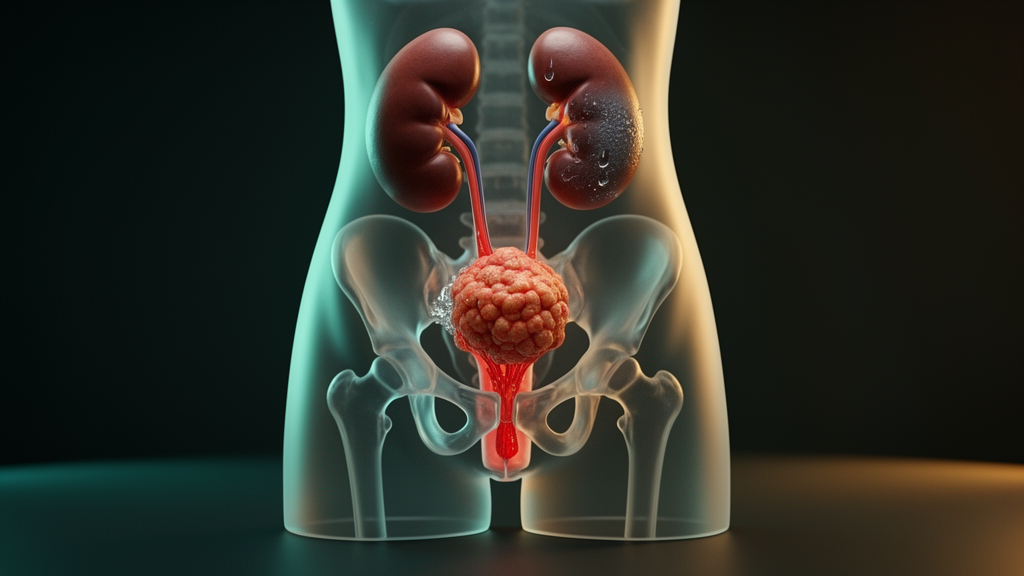
Women in Guinea who arrive at the hospital with cervical cancer that has blocked both ureters face a stark statistical divide, according to a prospective study from Conakry: those whose urinary drainage procedure succeeded lived markedly longer than those in whom both attempted techniques failed. The single-center study, conducted over 18 months at the Urology Department of Ignace Deen University Hospital Center in Conakry, followed 55 patients with cervical cancer complicated by obstructive renal failure and found that drainage failure was tied to death within six months in 83.3% of cases, with median survival of only 4.5 months. Median survival for the whole cohort was 7 months.
The research, published in the African Journal of Urology, set out to resolve a question that has divided urologists and oncologists for years: does relieving the obstruction caused by an advanced cervical tumor actually extend life, or does it merely improve laboratory numbers while the cancer continues its course? The authors report that successful drainage was strongly associated with both biochemical recovery and longer survival, and that the combination of successful drainage with a hemoglobin gain of at least 3 g/dl defined the group with the best outlook, at a median of 11.5 months.
Obstructive renal failure is one of the most frequent complications of advanced cervical cancer, affecting between 14% and 44% of patients according to the literature cited in the study, and it carries a high mortality. The obstruction arises when the cervical mass compresses the ureters from outside or when malignant extension invades the urinary tract directly, preventing urine from draining from the kidneys to the bladder. The resulting buildup damages kidney function and drives up serum creatinine, the waste-product marker used to track renal performance. In low- and middle-income countries, where more than 70% of patients are diagnosed at advanced stages, this complication is common enough that its management shapes outcomes for a large share of patients.
The Conakry team enrolled every patient diagnosed with cervical cancer and confirmed obstructive renal failure who underwent an attempted upper urinary tract drainage, agreed to participate, and could be followed for at least six months. Patients with non-obstructive kidney failure and those lost to follow-up were excluded. Data collection was prospective, meaning the researchers recorded information as patients moved through treatment rather than reconstructing it from records afterward. The cohort’s mean age was 56.3 years, and the disease was advanced across the board: 65.45% of patients had stage IIIB tumors, 27.27% stage IVA, and 7.27% stage IVB under the 2018 FIGO classification. Every patient had a poor performance status, with 61.8% classified as ECOG III and 38.2% as ECOG IV, indicating substantial limitation of daily activity or complete confinement to bed.
Drainage followed a fixed institutional protocol. Double-J stent placement, in which a soft internal tube is threaded through the ureter to hold it open, was the first-line procedure and was performed in 50.9% of patients. When retrograde stenting proved technically impossible, the team attempted percutaneous nephrostomy, in which a needle and catheter are guided through the skin of the flank directly into the dilated renal collecting system under ultrasound. Nephrostomy accounted for a further 27.3% of successful drainages, bringing the overall success rate to 78.2%. Failure was recorded only when both procedures proved unfeasible, typically because massive tumoral invasion of the ureteral meatus or insufficient dilation of the collecting system made access impossible. The authors stress that failure reflected genuine technical impossibility, not a palliative decision or a contraindication based on the patient’s general condition.
The biochemical results were pronounced. In patients whose drainage succeeded, mean creatinine fell by 3.7 mg/dl, against a fall of only 0.6 mg/dl when drainage failed, a difference the authors describe as a 36% reduction and highly statistically significant. Successful drainage carried an odds ratio of 19.5 for achieving a creatinine decrease of at least 30%, the threshold the study used as its criterion of meaningful renal improvement. Hemoglobin rose in parallel, with a mean gain of 3.8 g/dl after successful drainage versus 1.9 g/dl after failure, and an odds ratio of 7.2 for a gain of at least 3 g/dl. A mediation analysis added a mechanistic nuance: 38% of the positive effect of drainage on hemoglobin was mediated by the improvement in renal function, presumably through restored erythropoietin production and reduced uremic hemolysis, while the remaining 62% was attributed to other mechanisms such as decreased tumor bleeding and nutritional improvement.
Survival analysis sharpened the prognostic picture. Overall, 80% of patients were alive at three months but only 25% at twelve months, and 36.4% of the cohort died within the first six months. Survival did not differ significantly between the nephrostomy and stent groups, which the authors interpret as evidence that what matters is drainage success itself rather than the specific technique. By contrast, the log-rank comparison across drainage outcomes was highly significant, and drainage failure emerged as the dominant negative prognostic marker. A creatinine decrease of at least 30% was associated with a rise in median survival from 4.5 to 9.2 months and a hazard ratio of 0.45, corresponding to a 55% reduction in the hazard of death. The combination of successful drainage and a hemoglobin gain of at least 3 g/dl yielded a hazard ratio of 0.48 and the longest median survival in the study.
The authors are candid about the limits of these findings. The sample of 55 patients is modest relative to the number of covariates in the regression models, raising a risk of overfitting and inflated effect sizes that they say warrants caution in interpretation. The study was conducted at a single center, staging lacked systematic computed tomography, no quality-of-life data were collected, and access to complementary oncological treatments varied in ways that could confound survival comparisons. Chemotherapy eligibility in their setting, they note, depends not only on clinical criteria but on the patient’s financial resources, since Guinea has no universal health coverage and the cost of chemotherapy is prohibitive for most patients; they deliberately excluded chemotherapy access as an analytical parameter to avoid mixing clinical and socioeconomic determinants, and they flag this as an important interpretive limitation.
The therapeutic implications the authors draw are measured. They argue that the results support early drainage intervention, decided case by case within a multidisciplinary framework that weighs the patient’s general condition, tumor stage, and available resources. They also suggest that patients who fail to reach the biochemical thresholds despite successful drainage may warrant early multidisciplinary discussion about a transition to exclusive palliative care, to avoid disproportionate interventions at the end of life. Because drainage failure in this cohort was a technical event rather than a clinical choice, its identification before or during the procedure could, in principle, help clinicians and families calibrate expectations sooner.
For a resource-limited setting, the study offers a concrete benchmark: an overall drainage success rate of 78.2%, in the upper range of reported African data but below the 85–90% seen in Western series, a gap the authors attribute to patients’ precarious general condition, advanced tumor stages, and technical constraints such as the absence of an interventional radiologist and of fluoroscopic guidance. Whether the striking survival differences observed here hold in larger, multicenter prospective cohorts that incorporate quality-of-life and socioeconomic coverage data, as the authors themselves recommend, remains the essential next test. Until then, the study stands as a detailed single-center portrait of what obstructive renal failure means for survival in advanced cervical cancer, and of how much rides on whether a drainage tube can be placed at all.
Subject of Research: Prognostic impact of upper urinary tract drainage on survival in cervical cancer patients with obstructive renal failure in Guinea
Article Title: Prognostic impact of upper urinary tract drainage in obstructive renal failure related to cervical cancer in Guinea: drainage failure as a poor prognostic factor
Article References: Diallo, T. M. O., Gamamou, A. V., kanté, D., Sina, M. A., Gnammi, L. R., Cherif, A., Bah, M. D., Guilavogui, R. F. A., Diallo, A. B., & bah, O. R. (2026). Prognostic impact of upper urinary tract drainage in obstructive renal failure related to cervical cancer in Guinea: drainage failure as a poor prognostic factor. African Journal of Urology, 32(1), Article 58. https://doi.org/10.1186/s12301-026-00608-z
Image Credits: AI Generated
DOI: 10.1186/s12301-026-00608-z
Keywords: cervical cancer, obstructive renal failure, urinary drainage, double-J stent, percutaneous nephrostomy, overall survival, creatinine, hemoglobin, prognostic factors, Guinea, palliative care, urology
News Source: Nathaniel Bowman. (October 30, 2026). Failed urinary drainage flags early death in cervical cancer kidney obstruction. Scienmag.