Liver disease and cardiovascular disease are linked through metabolic, immune, hemodynamic, and vascular pathways, and a new review in Cardiovascular Diabetology argues that extracellular vesicles (EVs) add a cargo-specific mode of inter-organ communication at this interface. The authors, writing as a critical review rather than a single experimental study, emphasize that the strength of evidence differs markedly among the proposed signaling routes, and they set out to separate established inter-organ transfer from local EV signaling, systemic association, and mechanistic hypothesis.
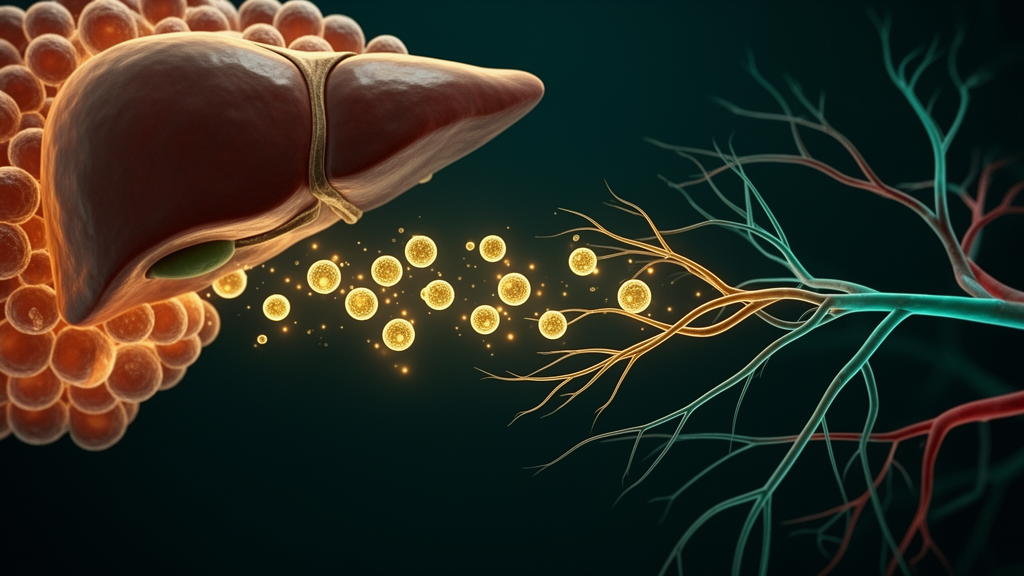
The strongest evidence, according to the review, lies in liver-to-vascular signaling. EVs released by steatotic or injured hepatocytes can promote endothelial activation and hyperpermeability, impair macrophage cholesterol efflux, induce osteogenic switching of vascular smooth muscle cells, and modify pulmonary or sinusoidal endothelial programs. These findings span multiple vascular cell types and disease-relevant phenotypes, but the review stresses that they arise from heterogeneous experimental systems whose rigor varies.
Context-specific liver-heart signaling has also been reported, notably after cardiac transplantation, where EV-mediated communication between the organs has been observed. In the reverse direction, cardiac-to-liver EV signaling remains an emerging field: cardiac ischemia-derived EVs have been linked to hepatic inflammatory responses in preclinical models, although the review flags that cardiac-cell-specific origin, hepatic recipient-cell identity, and cargo-level causality are still incompletely resolved.
Beyond cataloguing signaling routes, the authors assess the technological landscape shaping the field. They discuss EV phenotyping, single-vesicle and spatial technologies, endogenous EV-targeted interventions, engineered EV delivery, and organ-on-chip systems as tools that could clarify which vesicle populations carry which cargoes and to what cellular effect. The review argues that progress depends on standardized EV nomenclature and separation protocols, source-resolved tracing to confirm where vesicles originate, physiologically relevant dosing in experimental models, and study designs that phenotype both the hepatic and cardiovascular compartments rather than one in isolation.
The practical aim is an evidence hierarchy rigorous enough for EV biology to inform vascular mechanism research, patient stratification, and therapeutic design without overstating organ-to-organ causality. For readers following cardiometabolic medicine, the review positions extracellular vesicles as a mechanistic lens on the liver-cardiovascular axis, one whose translational promise depends on resolving origin, cargo, and causality with the same discipline applied to the signaling routes already best supported by evidence.
Subject of Research: Extracellular vesicle-mediated signaling between the liver and the cardiovascular system
Article Title: Extracellular vesicle-mediated liver-cardiovascular crosstalk: mechanistic evidence and translational perspectives
Article References: Zhang, J., Mo, W., Shen, M., Wang, Y., Deng, Q., Chen, Z., Fan, X., & He, Y. (2026). Extracellular vesicle-mediated liver-cardiovascular crosstalk: mechanistic evidence and translational perspectives. Cardiovascular Diabetology. https://doi.org/10.1186/s12933-026-03417-4
Image Credits: AI Generated
DOI: 10.1186/s12933-026-03417-4
Keywords: extracellular vesicles, liver-cardiovascular crosstalk, endothelial dysfunction, steatotic hepatocytes, vascular smooth muscle, cholesterol efflux, cardiac ischemia, organ-on-chip, EV phenotyping, review, Extracellular, vesicle-mediated
News Source: Ophelia Keating. (October 29, 2026). Extracellular vesicles carry liver signals that reshape the vasculature. Scienmag.