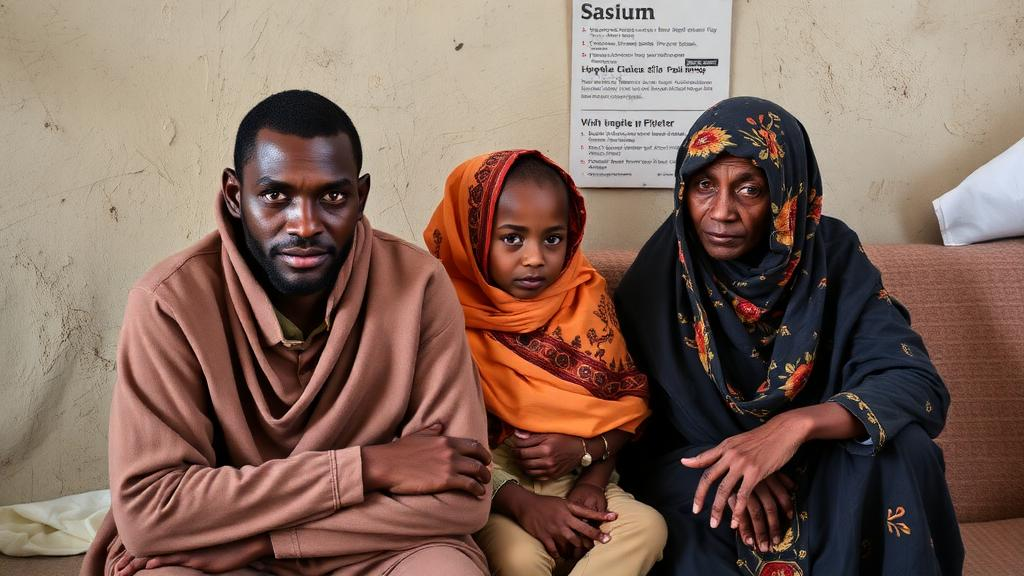
A cross-sectional study of Sudanese adults living with diabetes has found high levels of psychological distress during the armed conflict that began in Khartoum on 15 April 2023 and spread to multiple states, disrupting healthcare services and the continuous medication and care that diabetes patients require in fragile settings. The research, published in Conflict and Health, assessed depression, anxiety and stress symptoms among patients in Khartoum and Gezira states during 2024.
The study was a community-based, multi-source cross-sectional survey of Sudanese adults with type 1 or type 2 diabetes. Associations between conflict-related variables and psychological outcomes were tested using chi-square and Fisher’s exact tests, with a p-value below 0.05 considered statistically significant.
A total of 117 participants were included, corresponding to a response rate of 41.05 percent. Most participants were female, accounting for 57.26 percent of the sample, two-thirds were older than 50 years, and 87.18 percent had been displaced. This heavily displaced, middle-aged and older sample shapes how the findings should be read: they describe the psychological status of a specific, highly vulnerable subgroup rather than of all Sudanese diabetes patients.
The reported symptom burden was substantial. Severe and extremely severe anxiety symptoms were observed in 36.75 percent of participants, severe and extremely severe depression symptoms in 28.21 percent, and severe and extremely severe stress symptoms in 78.63 percent. The authors characterise these as high levels of depression, anxiety and stress symptoms among patients exposed to the ongoing conflict.
Displacement emerged as the conflict-related factor significantly associated with psychological outcomes. It was linked with anxiety symptoms, with a p-value of 0.04, and with stress symptoms, with a p-value of 0.012. These are unadjusted associations from bivariate tests, and the authors explicitly note that they may be influenced by confounding factors. Because the design is cross-sectional, the data show associations at a single point in time and cannot establish that displacement caused the elevated symptoms, nor can they rule out reverse or shared causes such as loss of income, interrupted medication supply or family separation.
The low response rate is a second important limitation. With only 41.05 percent of those approached participating, the possibility of selection bias is considerable: people experiencing the most severe distress, or conversely those too unwell or too displaced to take part, may be over- or under-represented. The modest sample of 117 participants also limits statistical power and precision, and the unadjusted analyses cannot separate the effect of displacement from other hardships of war.
Within those constraints, the study documents the psychological toll of the conflict on a chronic-disease population that depends on uninterrupted care. Patients with diabetes mellitus are particularly vulnerable in fragile settings because they need continuous medication, monitoring and clinical support, all of which the conflict disrupted after April 2023. The findings add to a body of recent work on Sudanese patients with chronic conditions during the war, including studies of healthcare disruption among patients with hypertension and diabetes, of glycemic control among displaced people living with diabetes, and of diabetic patients’ experiences during the war.
The authors conclude that Sudanese patients with diabetes mellitus exposed to the ongoing armed conflict experienced substantial psychological distress, with high levels of depression, anxiety and stress symptoms reported, and that displacement was significantly associated with increased anxiety and stress symptoms. As an unadjusted, cross-sectional, single-country survey with a modest response rate, the study should be interpreted as an early descriptive signal of mental health needs among displaced diabetes patients in Sudan rather than as evidence of causal effects or a basis for specific clinical recommendations.
Subject of Research: Psychological distress among Sudanese diabetes patients during the armed conflict
Article Title: Psychological status of sudanese diabetic patients during armed conflict: a multi-city cross-sectional study
Article References: Khidir, R. J. Y., Alshykh, A. M. A. K., Balal, M. A. A., Jabir, A. M. H., & Nasr, M. H. A. (2026). Psychological status of sudanese diabetic patients during armed conflict: a multi-city cross-sectional study. Conflict and Health. https://doi.org/10.1186/s13031-026-00842-w
Image Credits: AI Generated
DOI: 10.1186/s13031-026-00842-w
Keywords: Sudan, armed conflict, diabetes, mental health, displacement, DASS-21, cross-sectional study, depression, anxiety, stress, Khartoum, Gezira
News Source: Glenn Wilkins. (October 29, 2026). Displaced Sudanese Diabetes Patients Report High Distress During Armed Conflict. Scienmag.