
Enhancing Common Bean Yield in Ethiopia Through Targeted Agricultural Practices
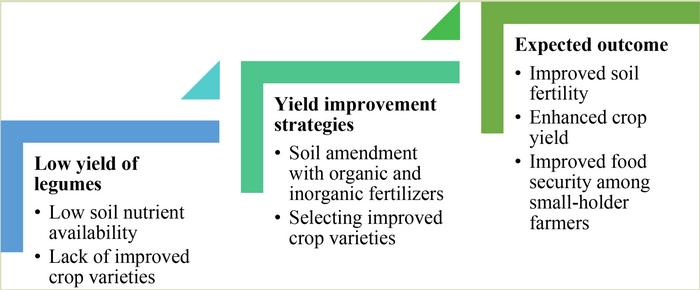
Common bean, scientifically known as Phaseolus vulgaris, is a staple leguminous crop with great importance in the agricultural landscape of Ethiopia. Despite its significance, the grain yield of this legume remains suboptimal. A key factor contributing to this issue is the inherent inefficiency of nitrogen fixation within the soil, which is largely dependent on the symbiotic relationship between common beans and rhizobia. These soil bacteria have the remarkable capability to convert atmospheric nitrogen into ammonia, thus providing essential nitrogen nutrition to leguminous plants. Surprisingly, common bean ranks among the least proficient at nitrogen fixation compared to other food legumes, raising concerns about its cultivation practices.
While the potential for improved nitrogen fixation exists, research indicates that many common bean farmers in Ethiopia do not take advantage of rhizobial inoculation or utilize mineral fertilizers at the recommended rates. This lack of intervention not only results in poor nitrogen availability but also limits phosphorus content, a nutrient critical for plant growth and development. Consequently, the fertility status of agricultural lands has long-term implications for grain yield, particularly in areas where low phosphorus availability constrains agricultural productivity. Given this context, a pressing question emerges: Can the combined utilization of rhizobium inoculation alongside controlled phosphorus application lead to enhanced yields in common bean crops?
To explore this scientific inquiry, notable researchers Felix D. Dakora and Tarekegn Y. Samago designed an experimental study focusing on two high-yield common bean cultivars in Ethiopia—Hawassa Dume and Ibbado. They strategically selected high-quality rhizobial strains, specifically HB-429 and GT-9, to examine their effects under various phosphorus fertilizer levels. The goal was to investigate how these combinations might influence plant growth, root nodulation, and the overall grain yield of the two common bean varieties in question.
Over the course of the study, the results demonstrated a significant response in the two common bean cultivars following the inoculation with rhizobia compared to uninoculated plants. Notably, strain HB-429 exhibited superior performance over GT-9 in both 2012 and 2013. For instance, the application of strain HB-429 resulted in impressive increases in shoot biomass, nodule numbers, and nodule dry matter per plant, demonstrating relative gains of 9%, 40%, and 54% respectively in 2012 and 20%, 39%, and 13% in 2013. These enhancements corresponded with an increase in pod number per plant, seed number per pod, and grain yield, showcasing the potential benefits of utilizing elite rhizobial strains for improved agricultural output.
Importantly, applying phosphorus fertilizers also contributed markedly to the performance of the common bean cultivars in the study. When levels of phosphorus application ranged between 10 to 30 kg·ha−1, the researchers noted substantial elevations in various measured parameters. For example, shoot biomass, nodule count, and nodule dry weight exhibited increases ranging from 7% to 39%, 23% to 59%, and 59% to 144% respectively in 2012. Comparatively, the data from 2013 indicated gains of 10% to 40% for shoot biomass, 21% to 43% for nodule numbers, and 12% to 35% for nodule dry matter. Such results underline the critical role of phosphorus in the growth and development of common beans.
Moreover, the study also revealed that even minimal phosphorus application could significantly enhance key yield parameters. When researchers added a mere 10 kg·ha−1 of phosphorus against a control group receiving no phosphorus, increases of 10%, 30%, and 61% were documented in terms of pod number per plant, seed number per pod, and overall grain yield in 2012. Similar trends were observed in 2013, supporting the concept that even low levels of nutrient application can yield meaningful improvements.
Ultimately, the findings from this research indicated that the inoculation of common bean with rhizobia—either as a standalone intervention or in conjunction with phosphorus application—can substantially increase grain yields for the two evaluated cultivars. These positive outcomes highlight the great potential for introducing better agricultural practices among resource-poor farmers in Ethiopia, specifically focusing on improved rhizobial strains and phosphorus fertilization methods to uplift local bean production.
In conclusion, based on the evidence presented in this study, Hawassa Dume presents a more favorable option for farmers compared to Ibbado, thanks to its superior yield potential. It is recommended that farmers adopt the combination of rhizobium inoculant strain HB-429 alongside a phosphorus application of 20 kg·ha−1 to achieve optimal productivity in their common bean crops. Implementing these agronomic practices could lead to enhanced nutritional quality of both the crops and the soil, ultimately contributing to food security in Ethiopia. Given the urgent need to address agricultural inefficiencies, adopting such strategies could transform the landscape of common bean production in the region.
Subject of Research:
Combined use of Rhizobium inoculation and low phosphorus application for common bean yield enhancement.
Article Title:
Combined use of Rhizobium inoculation and low phosphorus application increased plant growth, root nodulation and grain yield of common bean (Phaseolus vulgaris) in Ethiopia.
News Publication Date:
14-Jan-2025
Web References:
10.15302/J-FASE-2024556
References:
Information not available.
Image Credits:
Credit: Tarekegn Y. Samago, Felix D. Dakora
Keywords:
Common bean, Phaseolus vulgaris, Rhizobium inoculation, phosphorus application, agricultural productivity, Ethiopia, agricultural practices, soil fertility, nitrogen fixation, grain yield.
Tags: agricultural productivity challenges in East Africacommon bean agricultural practicesenhancing Phaseolus vulgaris productivityimproving nitrogen availability for legumeslow phosphorus effects on leguminous cropsmineral fertilizer use in Ethiopian agriculturenitrogen fixation efficiency in Ethiopiaphosphorus deficiency in common bean cultivationRhizobium impact on common bean yieldsoil bacteria and crop nutritionsustainable farming practices in Ethiopiasymbiotic relationships in crop growth