Glioblastoma remains one of the most difficult cancers to treat, and a major reason is its invasiveness. Tumor cells migrate into surrounding healthy brain tissue, making complete surgical removal nearly impossible and driving poor outcomes. According to the new study, average survival after diagnosis is around 15 months, and current treatments, including the standard cytostatic drug temozolomide, do little to specifically address the invasive behavior of these cells.
A research team led by Kim K. Wagner, Andrea J. Yool, Rohan A. Davis, Katrin Becker, Heike Franke and Achim Aigner set out to test a group of candidate compounds for their ability to restrain tumor cell invasion specifically. The compounds included the natural indole scaffold RAD114, three semisynthetic analogs designated RAD118, RAD119 and RAD120, and an aryl sulfonamide known as AqB011. The work has been published as an open-access research article in Cancer Cell International, released on 27 October 2026.
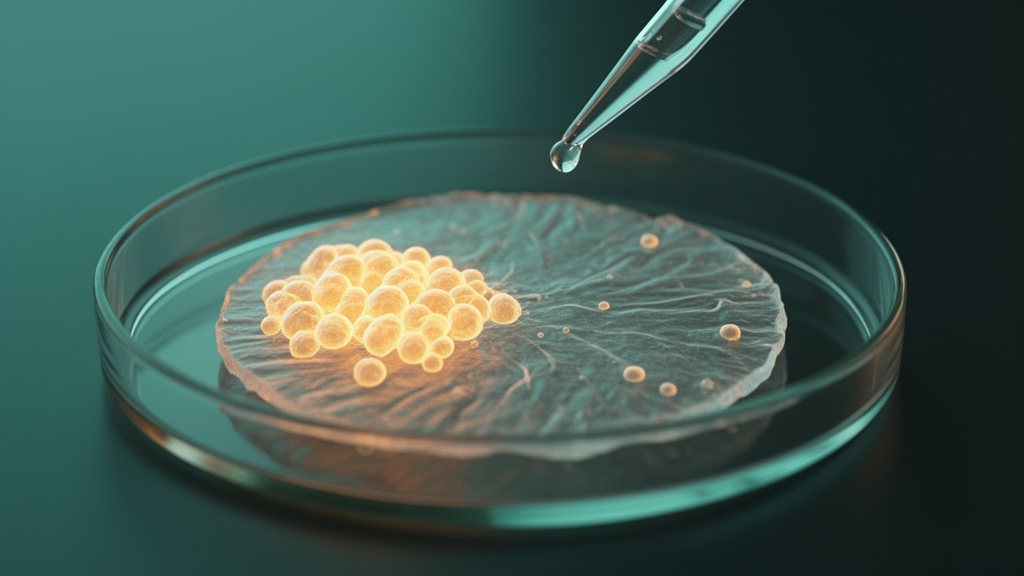
A central feature of the study is the experimental system the researchers used. Rather than relying on conventional cell cultures, they employed glioblastoma xenograft tissue slice tandem co-culture models, abbreviated XTCCs. In these ex vivo models, GBM xenograft tissue slices were co-cultured with mouse brain slices at an air-liquid interface. The authors note that these models closely reflect the in vivo patient situation and, importantly, allow researchers to distinguish between effects on bulk tumor growth and effects on tumor cell invasion into normal brain tissue.
The results showed profound anti-invasive effects across the tested compounds. In XTCC models based on G55T2 and U87-MG GBM xenografts, the natural indole scaffold RAD114, the three semisynthetic analogs and the aryl sulfonamide AqB011 all reduced tumor invasion. The magnitude of the effect depended on the specific compound, its dosage and the model used, with some conditions showing inhibition so strong that invasion was essentially abolished.
Notably, the effects on bulk tumor growth were described as rather moderate. This separation between growth inhibition and invasion inhibition is significant, because it suggests the compounds act on the migratory behavior of glioblastoma cells rather than simply killing them. The authors conclude that, rather than acting through cytotoxic effects, the compounds specifically inhibit cell migration into native brain tissue.
Among the tested substances, two stood out. At a non-toxic concentration of 10 micromolar, RAD118 and AqB011 showed the highest effectiveness in reducing tumor invasion. This finding identifies these two compounds as the most promising of the panel for further development against GBM invasiveness.
The study also explored combination treatment. When sub-optimal dosages of the compounds were combined, combination effects were observed as well, indicating that pairing agents from these chemical classes may enhance the anti-invasive outcome even when each compound is used at a lower dose. The authors report that the tested compounds strongly restrained GBM cell invasion both alone and in combination.
Based on these findings, the researchers conclude that both compound classes, the semisynthetic indole analogs and the sulfonamide derivative, may be promising lead candidates for drugs aimed specifically at the problem of GBM invasiveness. The framing is deliberately cautious: the compounds are described as lead candidates, meaning they are starting points for further drug development rather than ready-made therapies.
Several limitations deserve emphasis. The experiments were conducted in ex vivo xenograft tissue slice co-cultures using two established GBM xenograft lines, G55T2 and U87-MG, co-cultured with mouse brain slices. While these models preserve aspects of the tumor microenvironment and allow invasion into real brain tissue, they are laboratory systems and do not establish clinical efficacy in patients. Dose-response relationships varied across compounds and models, and the study is presented as an early-access, peer-reviewed accepted manuscript that remains subject to further edits before the final version of record.
Even so, the work addresses a genuine unmet need. Because invasiveness strongly contributes to poor survival and few treatment options target it, supplementary therapies beyond classical cytostatics are urgently sought. By demonstrating that specific small molecules can potently and selectively restrain glioblastoma cell invasion in a tissue-based model, without relying on cytotoxicity, the study offers a defined chemical starting point for developing anti-invasive strategies against this aggressive brain cancer.
Subject of Research: Testing indole analogs and the aryl sulfonamide AqB011 for inhibition of glioblastoma cell invasion in ex vivo xenograft tissue slice co-cultures
Article Title: Indole analogs and the aryl sulfonamide AqB011 potently restrain the invasiveness of glioblastoma cells, as determined in ex vivo xenograft tissue slice co-cultures (XTCCs)
Article References: Wagner, K. K., Yool, A. J., Davis, R. A., Becker, K., Franke, H., & Aigner, A. (2026). Indole analogs and the aryl sulfonamide AqB011 potently restrain the invasiveness of glioblastoma cells, as determined in ex vivo xenograft tissue slice co-cultures (XTCCs). Cancer Cell International. https://doi.org/10.1186/s12935-026-04489-8
Image Credits: AI Generated
DOI: 10.1186/s12935-026-04489-8
Keywords: glioblastoma, tumor invasion, indole analogs, AqB011, aryl sulfonamide, xenograft tissue slice co-culture, RAD118, RAD114, anti-invasive compounds, temozolomide, brain cancer, drug development
News Source: Nathaniel Bowman. (October 27, 2026). Experimental Compounds Curb Glioblastoma Cell Invasion in Tissue Slice Models. Scienmag.