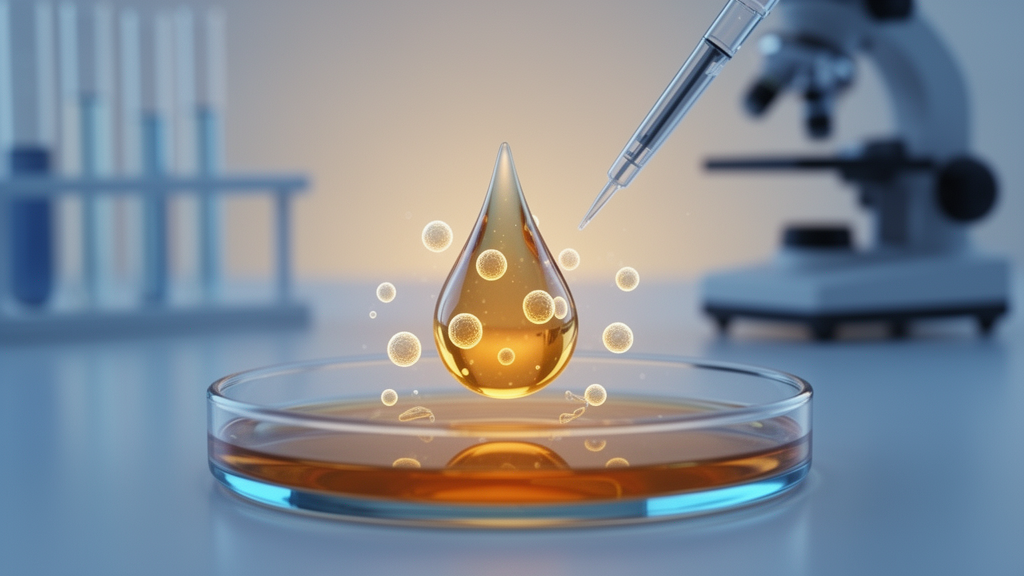
A review published in Molecular Biology Reports describes how these nanoscale carriers, which ferry proteins, lipids, metabolites and nucleic acids from their parent cells, are being harnessed as liquid biopsy biomarkers that reflect the molecular status of the tissues they came from.
Because exosomes can be isolated from different body fluids, they offer a less invasive route to diagnostic information than traditional tissue sampling. The review’s authors, led by Himadri Das Mohapatra and Abhishek Dutta, argue that this positions exosomes as a transformative horizon in biomedical liquid biopsy research, with the potential to reshape less-invasive diagnostics and tailored clinical applications.
Technological progress is a central driver of the field’s momentum. According to the review, recent advances have greatly accelerated exosome research, with proteomics now delivering protein signatures linked to many pathological conditions. These protein profiles, the authors note, enable quick and clinically scalable diagnostic tools, allowing laboratories to detect disease-associated molecular patterns without directly examining the affected tissue.
Alongside proteomics, high-throughput RNA-sequencing has opened the door to detailed transcriptome profiling of exosomal cargo. By sequencing the nucleic acids packaged inside these vesicles, researchers can build a molecular picture of disease states that would otherwise require invasive procedures to obtain. The review frames this combination of protein and transcript analysis as the technical backbone of the emerging exosomal diagnostics pipeline.
The clinical promise is already visible across multiple medical specialties. The authors report that exosomal biomarkers are showing promising clinical results in the early detection of neurological diseases, infectious disorders, cardiovascular conditions and cancer, and that these markers are also accelerating therapeutic monitoring.
Yet the review is equally clear about the obstacles standing between laboratory promise and routine clinical practice. The authors identify several challenges that continue to hinder clinical translation, including the lack of a standardized isolation protocol, variability in exosome yield and purity, biological heterogeneity among exosomes, and limited large-scale clinical validation. Each of these gaps, they argue, must be addressed before exosome-based liquid biopsy can be integrated into everyday care.
The review, published as Volume 53, article number 1519 of the journal, does not report new experimental data; the authors state that no datasets were generated or analysed during the study. Instead, it synthesizes the current state of exosomal content analysis, offering researchers a consolidated view of where proteomic and transcriptomic approaches stand and what remains unresolved.
For now, the authors conclude that exosomes, with their significant potential as diagnostic tools, represent a field whose trajectory will depend on solving the standardization and validation problems that currently separate promising research findings from clinical reality.
Subject of Research: Exosome-based liquid biopsy diagnostics and their clinical translation challenges
Article Title: Recent advancements in exosomal content analysis: the future of liquid biopsy
Article References: Das Mohapatra, H., Banerjee, S., Dash, L., Ramnani, D., Jati, P. P., Priyadarshini, P. B., Suar, M., Sarangi, C. K., Paul, S., & Dutta, A. (2026). Recent advancements in exosomal content analysis: the future of liquid biopsy. Molecular Biology Reports, 53(1), Article 1519. https://doi.org/10.1007/s11033-026-12661-6
Image Credits: AI Generated
DOI: 10.1007/s11033-026-12661-6
Keywords: exosomes, liquid biopsy, biomarkers, proteomics, RNA sequencing, diagnostics, oncology, neurological disease, cardiovascular disease, infectious disease, clinical translation, molecular biology
News Source: Amelia Parker. (October 27, 2026). Exosomes Emerge as Powerful Liquid Biopsy Biomarkers, Review Finds. Scienmag.