A new randomized controlled trial is set to test whether a structured exercise program can improve physical fitness, immune markers, and longer-term outcomes in people who have recently received a kidney transplant. The study, known as the EXercise Training in Kidney TRAnsplant Recipients Trial, or EXTRA Trial, has been registered with ClinicalTrials.gov under identifier NCT06216015, and its design is described in a study protocol published in Frontiers in Nephrology.
Kidney transplantation generally offers better survival and quality of life than long-term dialysis, but many recipients still live with reduced physiological reserve, cardiometabolic vulnerability, and ongoing risks related to the transplanted organ. Structured exercise has been proposed as a promising non-pharmacological strategy after transplantation, yet its potential immunometabolic and immunomodulatory effects, and how these might relate to longer-term graft-related trajectories, remain insufficiently characterized. The EXTRA Trial is designed to address that gap directly.
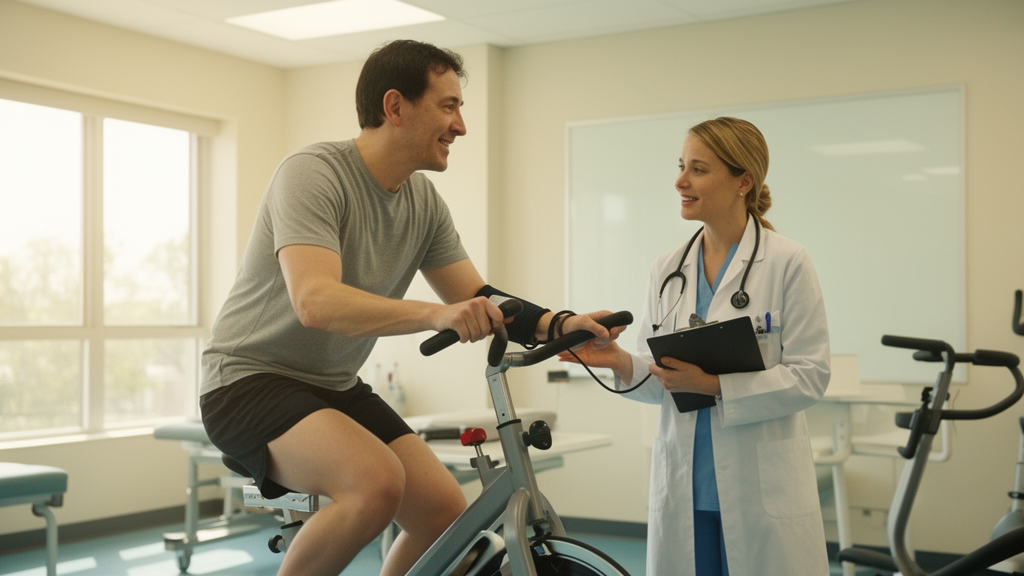
The trial is a randomized, assessor-blinded, parallel-group controlled study that enrolled adult kidney transplant recipients approximately six months after their transplantation. Participants are allocated one-to-one to either usual post-transplant care or a supervised, progressive exercise program that combines aerobic and resistance training. The exercise intervention consists of a two-week familiarization period followed by twenty-four weeks of training, allowing participants to adapt to the program before the main training block begins.
The primary outcomes are the between-group differences in change from baseline to the end of the randomized intervention in two measures: peak oxygen uptake, known as VO2peak, and handgrip strength. VO2peak serves as the principal cardiorespiratory outcome and forms the basis of the trial’s sample-size calculation, meaning the study is powered primarily around its ability to detect changes in aerobic capacity between the exercise group and the usual-care group.
Beyond these primary endpoints, the trial tracks a broad set of major secondary outcomes. These include patient-reported physical functioning, habitual physical activity, health-related quality of life, body composition, renal function, blood pressure, and metabolic markers.
A distinctive feature of the protocol is its exploratory immunological component. The trial will examine rejection-free survival and graft survival, along with circulating inflammatory cytokines including TNF-alpha, IL-6, and IL-2, and soluble PD-1 and PD-L1, molecules involved in immune checkpoint regulation. Longer-term trajectories will be assessed through twenty-four months after transplantation. This immune-related phenotyping is designed to explore whether exercise-induced improvements in physiological reserve are accompanied by measurable inflammatory, immune-checkpoint, and graft-related changes.
The protocol follows SPIRIT 2025 recommendations, the standard guideline for reporting trial protocols, and explicitly integrates exercise physiology, transplant medicine, and immune-related phenotyping in a single study design.
Because this is a protocol publication, the article describes the trial’s planned methods rather than efficacy results. No findings about whether the exercise program improves VO2peak, handgrip strength, immune markers, or graft outcomes are yet available; those answers will depend on the trial’s completed follow-up.
Subject of Research: A randomized controlled trial protocol testing supervised exercise training on fitness, immune markers, and graft-related outcomes in kidney transplant recipients.
Article Title: Exercise training in kidney transplant recipients (EXTRA Trial): protocol for a randomized controlled trial
Article References: Santos, R. L., Rosa, T. S., Sezana-Costa, S., Lisboa, S. R., Estivalet, M. A. M., Ferreira, C. E. S., de Melo, G. F., de Deus, L. A., Adeirton, J., Souza, M. K., Haro, A. S., Costa, F., Mattos, M. C. A., Neto, J. R. B., Tzanno-Martins, C., Mendes, D. M., Ribas, G. T., Freitas, G. R. R., Castro-Sepulveda, M., … Correa, H. L. (2026). Exercise training in kidney transplant recipients (EXTRA Trial): protocol for a randomized controlled trial. Frontiers in Nephrology, 6, Article 1972911. https://doi.org/10.3389/fneph.2026.1972911
Image Credits: AI Generated
DOI: 10.3389/fneph.2026.1972911
Keywords: kidney transplantation, exercise training, randomized controlled trial, VO2peak, handgrip strength, inflammation, PD-1/PD-L1, graft survival, cardiorespiratory fitness, trial protocol, Exercise, training
News Source: Ophelia Keating. (October 28, 2026). Exercise Trial Tests Whether Training Boosts Fitness and Immune Markers After Kidney Transplant. Scienmag.