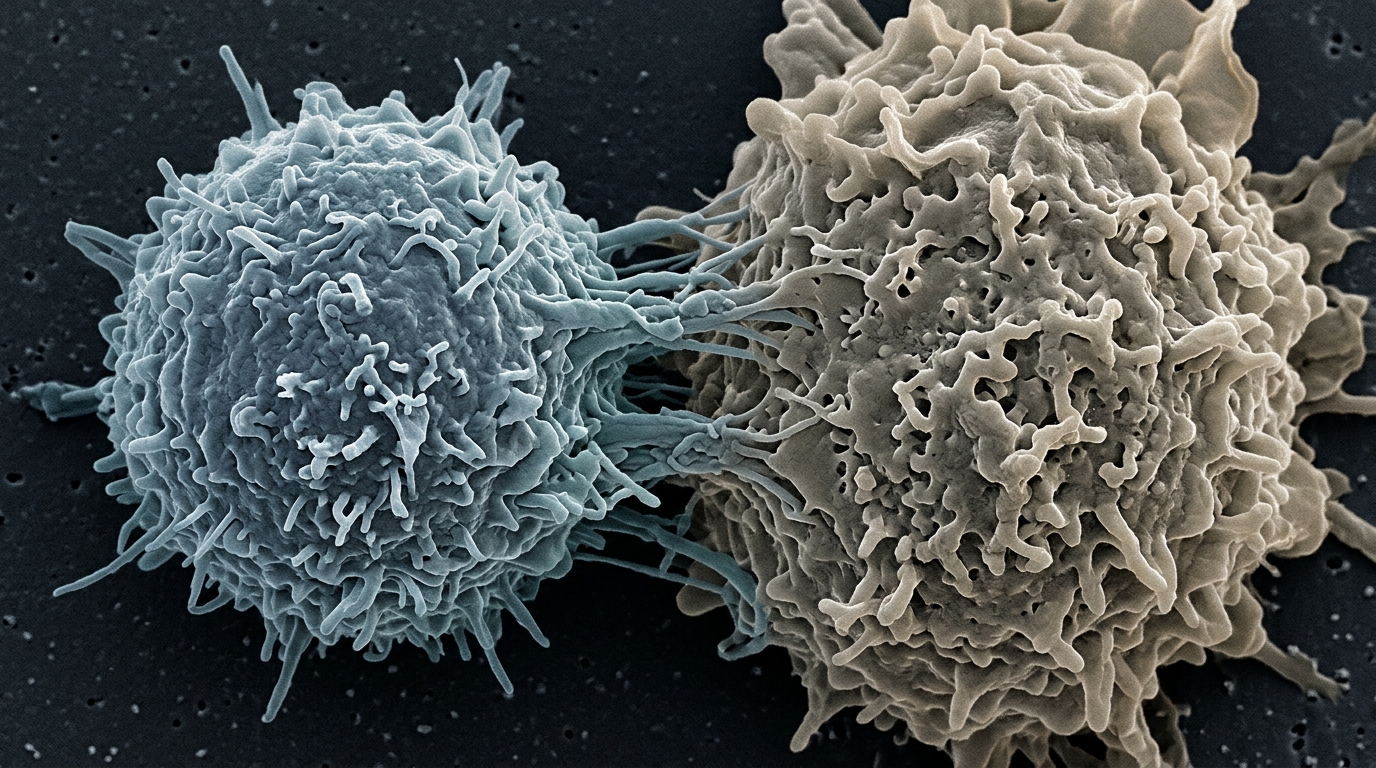
A 40-year-old woman who received a kidney and pancreas transplant faced a daunting scenario: her lymphoma, a post-transplant complication, had relapsed twice despite two lines of therapy. A case report now describes how her medical team navigated a delicate balancing act between two competing goals—attacking the cancer with chimeric antigen receptor (CAR) T cells while keeping her transplanted organs from being rejected. The solution involved a carefully timed switch in immunosuppressive drugs, and the outcome offers a potential roadmap for other transplant recipients facing this rare and dangerous complication.
The patient, who had undergone simultaneous pancreas-kidney transplantation for type 1 diabetes and end-stage renal disease caused by diabetic nephropathy, developed an immunodeficiency-associated lymphoproliferative disorder three years after her transplant. This condition, previously known as post-transplant lymphoproliferative disorder (PTLD), is a serious complication of solid organ transplantation. Under the WHO 2022 classification, her disease was staged as IIE lymphoma associated with immune deficiency and dysregulation, with histological features consistent with diffuse large B-cell lymphoma of the activated B-cell subtype. At the time of diagnosis, she was taking mycophenolate mofetil and tacrolimus to prevent organ rejection.
Her initial treatment followed standard lymphoma protocols. Mycophenolate was discontinued and replaced with low-dose corticosteroids, and she received rituximab at 375 mg/m² weekly for four weeks, achieving complete remission, followed by four additional courses every 21 days. Corticosteroids were then replaced with everolimus and tacrolimus. Two years later, the disease returned, prompting a second line of therapy with four cycles of R-CHOP—rituximab, cyclophosphamide, doxorubicin, vincristine, and prednisone—which again produced complete remission. In the context of that relapse, everolimus had been withdrawn and replaced by low-dose corticosteroids. A second relapse occurred two years afterwards while she was on prednisone 5 mg/day and tacrolimus.
Facing a third relapse, the team decided to pursue CAR T-cell therapy using axicabtagene ciloleucel, a CD19-directed cellular immunotherapy that has transformed outcomes for aggressive B-cell lymphomas in immunocompetent patients. However, applying this approach in solid organ transplant recipients has been limited by two major concerns: whether ongoing immunosuppression would blunt the CAR T cells’ effectiveness, and whether the therapy might trigger graft rejection. Previous case reports and small series have shown feasibility with acceptable toxicity, but graft rejection has been reported in more than 10 percent of patients, and the optimal management of baseline immunosuppression remains undefined.
The clinical course was complicated from the start. Tacrolimus was discontinued 15 days before leukapheresis, the procedure to collect the patient’s T cells for engineering, and prednisone was increased to 10 mg/day. On the day of apheresis, she developed high fever, abdominal pain, weight gain, deteriorating kidney function, and signs of inflammation. A renal biopsy confirmed acute T-cell mediated rejection of the kidney transplant, stage IIa according to the Banff Classification, with no features of antibody-mediated rejection and no detectable donor-specific antibodies. There were no signs of pancreas rejection. Immediately after leukapheresis, she received high-dose methylprednisolone, and immunosuppression with tacrolimus and everolimus was reinitiated, leading to kidney function recovery. Rituximab bridging—four weekly doses of 375 mg/m²—produced a partial response before cell infusion.
At hospital admission for the CAR T-cell infusion, the patient was on prednisone 10 mg/day, tacrolimus, and everolimus. Tacrolimus was discontinued again, and prednisone was raised to 20 mg/day on the first day of lymphodepletion chemotherapy with fludarabine and cyclophosphamide. Everolimus was continued, targeting blood levels of 5 to 6 µg/L. Axicabtagene ciloleucel administration was deliberately delayed until Day 8 after lymphodepletion began, at which point tacrolimus was undetectable in her blood, below 0.5 µg/L. This timing was not arbitrary; it reflected a specific hypothesis about how different immunosuppressive drugs interact with CAR T-cell biology.
That hypothesis rested on mechanistic reasoning about two drug classes. Calcineurin inhibitors like tacrolimus block a signaling pathway essential for T-cell activation, while mTOR inhibitors like everolimus act on a different pathway involved in cell growth and metabolism. The research team suspected that calcineurin inhibition would prevent CAR T cells from functioning, whereas mTOR inhibition might leave their antitumor activity intact. To test this experimentally, they turned to laboratory models. They first screened four CD19-expressing diffuse large B-cell lymphoma cell lines—Farage, DOHH-2, SUDHL-10, and OCI-LY-8—for sensitivity to both drugs. All four proved sensitive to everolimus, making them unsuitable as targets since the drug itself would suppress tumor growth independently of CAR T-cell activity. Instead, they engineered an acute myeloid leukemia cell line, OCI-AML2, to overexpress CD19 on its surface, after confirming that this modified line was not sensitive to either drug.
In co-culture experiments at an effector-to-target ratio of 2:1 over seven days, CAR T cells failed to control tumor growth in the presence of tacrolimus at both 5 and 10 ng/mL. Conversely, CAR T cells efficiently controlled tumor growth in the presence of everolimus at doses as high as 10 ng/mL, at an extent similar to the vehicle control condition. These in vitro results supported the hypothesis that mTOR inhibition by everolimus represents a permissive immunosuppressive option that allows CAR T-cell antitumor activity, while tacrolimus exposure completely blocked it. The findings provide a mechanistic rationale for the drug selection strategy used in the clinical case.
The clinical outcome aligned with the laboratory findings. After infusion, the patient experienced cytokine release syndrome of grade 1 at Day 4, with no other complications. CAR T-cell expansion was confirmed by droplet digital PCR and flow cytometry. A PET-CT scan performed at Day 7 after CAR T-cell therapy showed a complete metabolic response, which persisted at 1, 3, and 6 months after the infusion. Due to severe proteinuria, everolimus was discontinued three months after the CAR T cells and replaced by tacrolimus at target levels of 3 to 4 µg/L, along with prednisone 5 mg/day. Unfortunately, the PTLD relapsed 12 months after the CAR T cells. The authors note that although causality cannot be established, they cannot exclude the possibility that reintroducing tacrolimus contributed to the subsequent relapse by impairing residual CAR T-cell activity or endogenous antitumor immunity.
The report contributes to a growing body of evidence that CAR T-cell therapy can be administered safely and effectively to solid organ transplant recipients with relapsed or refractory PTLD. The treatment was well tolerated, and no new episodes of graft rejection occurred after the CAR T-cell infusion. The authors also note that other immunosuppressive agents may preserve CAR T-cell function, particularly sirolimus, another mTOR inhibitor that is mechanistically related to everolimus, though this possibility remains to be investigated and may be relevant in cases of everolimus intolerance or toxicity. Collectively, the case and the in vitro data support the use of mTOR-based, calcineurin inhibitor-free immunosuppression during CAR T-cell therapy for hematological malignancies in transplant recipients. As a single-patient report with laboratory corroboration, the findings are hypothesis-generating rather than definitive, and broader clinical experience will be needed to establish whether this immunosuppression strategy should become standard practice for this vulnerable patient population.
Subject of Research: Use of calcineurin inhibitor-free, mTOR-based immunosuppression during CD19 CAR T-cell therapy for post-transplant lymphoproliferative disorder in a solid organ transplant recipient
Article Title: Calcineurin Inhibitor–Free, mTOR‐Based Immunosuppression in Chimeric Antigen Receptor T‐Cell Therapy for Post‐Transplant Lymphoproliferative Disorder
Article References: Mappoura, M., Hajj Younes, Y., Wang, S., Baldet, K., De Ramon Ortiz, C., Morin, S., Marouridi‐Levrat, S., Pradier, A., Melotti, A., Purwar, P., Bernardi, C., Ho, L., Egervari, K., Ducreux, J., Longval, T., Bertoni, F., Chalandon, Y., Haidar, F., de Seigneux, S., … Simonetta, F. (2026). Calcineurin Inhibitor–Free, mTOR‐Based Immunosuppression in Chimeric Antigen Receptor T‐Cell Therapy for Post‐Transplant Lymphoproliferative Disorder. eJHaem, 7(6), Article e70437. https://doi.org/10.1002/jha2.70437
Image Credits: AI Generated
DOI: 10.1002/jha2.70437
Keywords: CAR T-cell therapy, post-transplant lymphoproliferative disorder, solid organ transplantation, everolimus, tacrolimus, axicabtagene ciloleucel, immunosuppression, diffuse large B-cell lymphoma, mTOR inhibition, graft rejection, kidney-pancreas transplant, calcineurin inhibitors
News Source: Nathaniel Bowman. (November 5, 2026). Everolimus, Not Tacrolimus, Let CAR T Cells Erase Relapsed Lymphoma in a Transplant Patient. Scienmag.