A single blood measurement of a chemically silenced tumor suppressor gene distinguished liver cancer from cirrhosis in a study of Egyptian patients with chronic hepatitis C, researchers report in the Egyptian Liver Journal. In 120 people split evenly between patients with hepatocellular carcinoma, patients with post-hepatitis C cirrhosis without cancer, and healthy controls, plasma levels of hypermethylated RASSF1A were markedly higher in the cancer group, and a cutoff derived from the data separated cancer from cirrhosis with 80 percent sensitivity and 75 percent specificity. The finding positions this circulating DNA signal as a candidate non-invasive adjunct to imaging and alpha-fetoprotein testing, though the authors themselves caution that it is not specific enough to stand alone.
Hepatocellular carcinoma is the third most common cause of cancer-related death worldwide, and in Egypt it is the most common cancer in men, the second most common in women, and the most common overall when both sexes are combined. The researchers attribute this rising burden largely to the country’s high frequency of hepatitis C virus infection and its complications, which have driven cumulative increases in cirrhosis, portal hypertension, and liver cancer over recent years. Because early disease is often silent, most cases are identified at advanced stages, creating what the authors describe as a clear and unmet demand for dependable biomarkers.
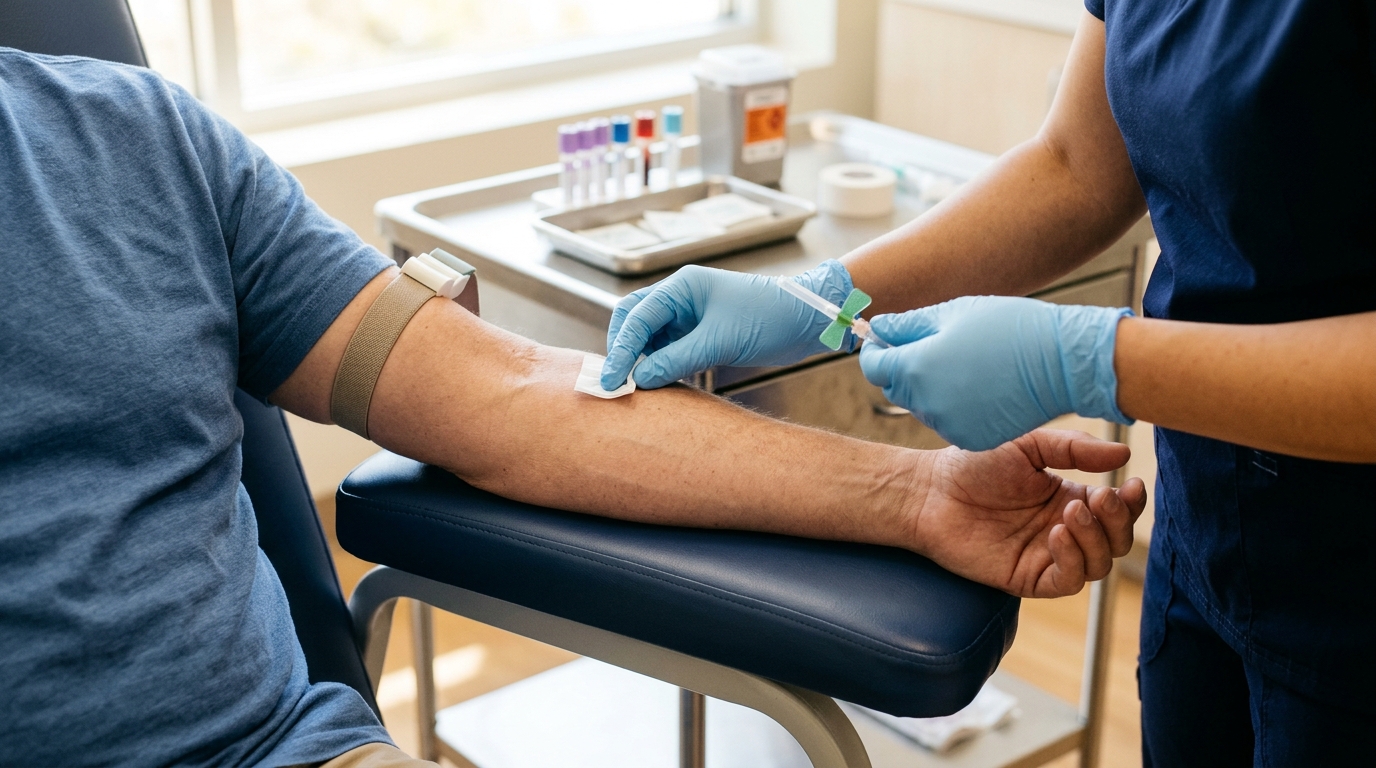
Diagnosis of this cancer differs from that of most solid tumors in that it relies mainly on imaging rather than tissue biopsies, which are rarely accessible. Even when obtained, a single biopsy may not reflect the full biology of a tumor because of tissue heterogeneity, and possible complications hinder repeated sampling. Liquid biopsy offers an alternative: the molecular analysis of circulating cancer-related biomarkers, including circulating nucleic acids, circulating tumor cells, and exosomes. This approach can, in principle, support early detection, treatment selection, monitoring of resistance and response, and detection of residual disease or recurrence, while allowing real-time tracking of a patient’s genomic profile.
The specific signal measured in the new study is cell-free DNA carrying methylation at the promoter of RASSF1A, a tumor suppressor gene. DNA methylation, the addition of methyl groups to promoter CpG islands, is a crucial epigenetic modification that can block the access of transcription factors, silencing the gene and altering cellular processes. Normal RASSF1A expression represses cyclin A2 and cyclin D1, inducing cell-cycle arrest and modulating apoptosis, and the protein helps maintain microtubule stability by inhibiting histone deacetylase 6 and by binding to microtubule-associated proteins. Epigenetic inactivation of the gene has the opposite effects, promoting microtubule instability, reduced apoptosis, and uncontrolled cell-cycle progression that favors tumor formation. Because methylated DNA released into the bloodstream can be detected in circulating cell-free DNA, its presence in plasma may reflect a somatically acquired event rather than normal gene inactivity.
The study enrolled 80 adults with post-hepatitis C cirrhosis admitted to the Hepatology and Gastroenterology Department of the National Liver Institute, Menoufia University, divided equally into a group of 40 with hepatocellular carcinoma and a group of 40 without, plus 40 healthy age- and sex-matched controls recruited from the hospital’s blood donation unit. Cirrhosis was diagnosed from physical examination, laboratory, and ultrasound findings, while cancer was diagnosed non-histologically using dynamic contrast-enhanced multiphasic CT or MRI according to established AASLD criteria. Disease severity was scored with Child-Pugh and MELD, and cancer was staged with the Barcelona system. Patients older than 75, co-infected with hepatitis B, carrying other infections, or harboring liver tumors other than hepatocellular carcinoma were excluded, and no participant had received prior treatment: the cancer patients had undergone no locoregional therapy, and the cirrhotic patients no antiviral therapy.
The laboratory method combined methylation-sensitive restriction enzyme digestion with real-time quantitative PCR. DNA was isolated from freshly collected plasma in EDTA tubes and cleaved with the enzyme Bsh1236I, also known as BstUI, which cuts unmethylated sequences while methylated DNA remains intact and can then be quantified. The duplex real-time PCR assay targeted RASSF1A with a FAM-labeled probe and used β-actin as an internal control with a VIC-labeled probe, run in duplicate on a QuantStudio 5 system with no-template negative controls in each run. Because the digestion capabilities for the two sequences are comparable, a persisting β-actin signal indicates incomplete digestion of unmethylated RASSF1A and flags the need for additional digestion. Concentrations were read from a standard curve with a slope of −3 and an intercept of 38.67.
The results were striking. Methylated RASSF1A sequences appeared in the plasma of 90 percent of the cancer patients, 57.5 percent of the cirrhotic patients without cancer, and only 7.5 percent of controls. The median level in the cancer group was 1.35 copies per microliter, against 0.19 copies per microliter in the cirrhosis group and 0.00 copies per microliter in controls, with all pairwise differences statistically significant. Levels in the cirrhosis group were also significantly higher than in healthy controls, which the authors interpret as evidence that hepatitis C infection itself promotes methylation and inactivation of tumor suppressor genes, potentially fueling tumor progression.
The methylation signal also tracked with disease severity and tumor burden. Plasma RASSF1A correlated significantly with Child-Pugh and MELD scores and with their components bilirubin and albumin. Within the cancer group, higher levels correlated positively with the size of the largest focal lesion and negatively with hemoglobin, and were significantly associated with large lesions of 5 centimeters or more, multiple lesions, Child-Pugh class C, ascites, encephalopathy, splenomegaly, and shrunken liver. Levels were elevated in patients with distant metastases, which affected 20 percent of the cancer group, but that difference was not statistically significant. In multivariate analysis, elevated methylated RASSF1A remained independently associated with cancer, with an adjusted odds ratio of 2.79, alongside alpha-fetoprotein and GGT, while male gender, age, MELD score, Child-Pugh class C, and ALP were not.
Diagnostic performance was assessed with receiver operating characteristic analysis. At a cutoff of 0.40 copies per microliter or less, RASSF1A discriminated cancer from cirrhosis with 80 percent sensitivity, 75 percent specificity, a positive predictive value of 76.2 percent, a negative predictive value of 78.9 percent, and 77.5 percent total accuracy, with an area under the curve of 0.81. Alpha-fetoprotein at its own cutoff of 22.14 nanograms per milliliter achieved 62.5 percent sensitivity, 77.5 percent specificity, and an area under the curve of 0.73. Combining both markers raised sensitivity to 82.5 percent and the area under the curve to 0.87, but specificity fell to 70 percent, a trade-off the authors note explicitly: the gain in sensitivity came at the expense of reduced specificity.
The authors are candid about the limits of their work. Elevated methylated RASSF1A appeared in 57.5 percent of cirrhotic patients without cancer, meaning the marker can yield false positives and should not be used as a standalone diagnostic but rather as an adjunct to established clinical, laboratory, and radiological surveillance. The cutoff they identified is population-specific and provisional, and its clinical applicability requires external validation and analytical standardization of sample processing, DNA extraction, assay methodology, and laboratory platforms. The study was conducted at a single center with a relatively small sample, des-γ-carboxy prothrombin could not be incorporated for comparison, and the absence of longitudinal follow-up prevented any prognostic or predictive evaluation. The correlations with severity scores are associative and do not establish causation or the ability to monitor progression or predict decompensation. Within those boundaries, the study adds a measurable, quantifiable circulating signal to the search for non-invasive liver cancer detection in a population where hepatitis C has made that search urgent.
Subject of Research: Circulating methylated RASSF1A as a non-invasive diagnostic marker for hepatocellular carcinoma in chronic hepatitis C patients
Article Title: Circulating hypermethylated RASSF1A as a possible marker of hepatocellular carcinoma in chronic hepatitis C patients
Article References: Hassona, M., Shafik, N. F., Abdelsameea, E., Estaphan, S., Mohammed, T. M. A., Ismail, S., Abdel-Samiee, M., & Naguib, M. (2026). Circulating hypermethylated RASSF1A as a possible marker of hepatocellular carcinoma in chronic hepatitis C patients. Egyptian Liver Journal, 16(1), Article 82. https://doi.org/10.1186/s43066-026-00569-6
Image Credits: AI Generated
DOI: 10.1186/s43066-026-00569-6
Keywords: hepatocellular carcinoma, RASSF1A, DNA methylation, hepatitis C, cirrhosis, liquid biopsy, cell-free DNA, biomarker, alpha-fetoprotein, ROC analysis, tumor suppressor gene, Egyptian Liver Journal
News Source: Nathaniel Bowman. (November 5, 2026). Blood test for methylated RASSF1A flags liver cancer in hepatitis C patients. Scienmag.