In recent years, the imperative to improve mobility among elderly populations has garnered significant attention from health care professionals and researchers alike. A groundbreaking study conducted at a geriatric clinic in Switzerland, soon to be published in BMC Geriatrics, provides an in-depth evaluation of the real-world implementation of a structured mobility plan aimed at enhancing the daily movement and independence of older adults. This quality improvement study delves into the complexities of translating theoretical mobility guidelines into practical interventions within a clinical setting, revealing profound implications for geriatric care worldwide.
Mobility, defined broadly as the ability to move independently and safely within one’s environment, is a cornerstone of healthy aging. Loss of mobility often precipitates a cascade of adverse health outcomes, including increased risk of falls, hospitalization, and even mortality. The Swiss research team led by Schäppi-Dändliker and colleagues has taken on the challenging task of assessing whether a tailored mobility plan can be effectively integrated into routine clinical practice in a geriatric population, which frequently contends with multifactorial impairments ranging from musculoskeletal degeneration to cognitive decline.
The methodology employed in this study is particularly innovative. It leverages a multi-disciplinary approach combining geriatricians, physical therapists, nurses, and occupational therapists to assess and address the multifaceted barriers to mobility in elderly patients. The intervention involves personalized mobility goals, regular physical activity sessions, and environmental adaptations, all orchestrated within the complex environment of a busy geriatric inpatient ward. By focusing on implementation processes as well as outcomes, the research team provides novel insights into the practical challenges and facilitators encountered by clinical staff.
One notable technical aspect of the study is the use of advanced mobility assessments, integrating wearable sensors and real-time monitoring technologies to capture nuanced changes in gait, balance, and activity levels. These data-rich inputs enable clinicians to refine mobility plans dynamically, adjusting interventions based on individual progress and emerging complications. This precision medicine approach represents a significant departure from conventional, static rehabilitation regimens, underscoring the potential for technology-enhanced geriatrics.
The study’s findings emphasize that the introduction of a structured mobility plan leads to measurable improvements in patient functional status over the course of hospitalization. Importantly, enhanced mobility was correlated not only with physical benefits but also with improved psychological well-being, including reduced symptoms of depression and anxiety, which are prevalent yet often underaddressed in geriatric populations. This holistic impact highlights the interdependency of physical and mental health in the aging process.
Challenges that emerged during the implementation phase included variability in staff engagement and fluctuating patient motivation, which underscore the necessity of continuous training and motivational strategies. The research identifies effective tactics, such as interdisciplinary team meetings and patient-centered communication, as critical enablers of sustained adherence to mobility protocols. These findings provide a valuable blueprint for other institutions seeking to replicate the program.
Critically, the study situates its results within the larger framework of health system resource allocation and policy. It argues compellingly for the incorporation of systematic mobility enhancement plans as standard practice in geriatric care, not only to improve outcomes but also to reduce long-term healthcare costs associated with immobility-related complications. The economic implications are profound, given the aging global population and the increasing burden of chronic diseases that impair mobility.
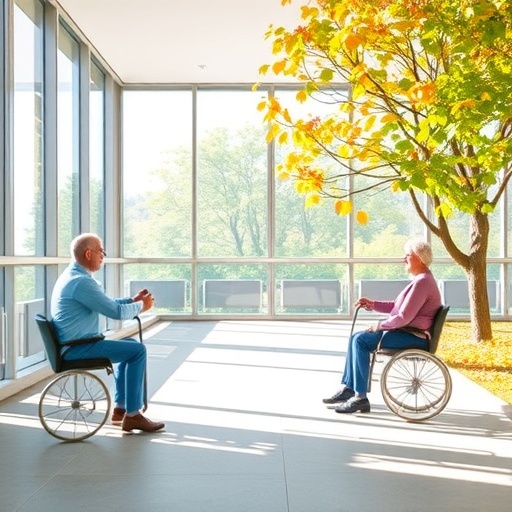
Moreover, the Swiss study places considerable emphasis on environmental modifications as a component of mobility improvement. Adaptations such as optimized ward layouts, installation of handrails, and use of assistive devices were integral to supporting patient autonomy and safety. This comprehensive perspective moves beyond patient-focused interventions alone to acknowledge the critical role of the physical environment in promoting mobility.
The research also advances the discourse on patient empowerment and autonomy in geriatrics. By involving patients in the goal-setting process and tailoring interventions to their preferences and lifestyles, the study fosters an ethic of respect for individual dignity and personal agency. This approach aligns with contemporary models of person-centered care, which have demonstrated effectiveness across various domains of healthcare for older adults.
Another significant contribution of this study lies in its exploration of the interplay between mobility and cognitive function. The data suggest that mobility enhancement may exert protective effects against cognitive decline, potentially mediated through increased cerebral perfusion and neuroplasticity stimulated by physical activity. This area offers fertile ground for future research, aiming to unravel the mechanisms linking physical and cognitive health in aging.
The research methodology also includes a rigorous quality improvement framework, utilizing Plan-Do-Study-Act cycles to iteratively refine the mobility plan based on real-time feedback and outcome measurements. This adaptive strategy exemplifies best practices in healthcare innovation, ensuring that interventions remain responsive to evolving clinical realities and patient needs.
Importantly, the study’s statistical analysis employed sophisticated models to control for confounding variables such as baseline functional status, comorbidities, and medication regimens, thereby enhancing the validity of its findings. These analytical rigor and methodological transparency bolster confidence in the reproducibility and generalizability of the results.
Looking ahead, the authors advocate for the broader dissemination and scaling of mobility enhancement programs, emphasizing the need for integration with community-based services post-discharge. Continuity of care and sustained physical activity are essential to maintain the gains achieved during hospitalization and to prevent functional decline in subsequent months.
The study presented by Schäppi-Dändliker et al. represents a milestone in geriatric medicine, demonstrating that well-designed, multidisciplinary interventions can overcome entrenched barriers to mobility in a vulnerable patient demographic. The insights gained have the potential to transform clinical practice, inform policy, and ultimately improve the quality of life for millions of older adults worldwide.
With the accelerating demographic shift towards an aging population, the imperative to foster mobility and independence assumes ever greater urgency. This Swiss quality improvement study provides a timely and compelling case for reimagining geriatric care through the lens of mobility enhancement, leveraging technology, teamwork, and patient-centered strategies to meet the complex needs of the elderly with innovation and compassion.
Subject of Research: Evaluation of the implementation of a mobility plan in a geriatric clinic in Switzerland
Article Title: Evaluation of the implementation of a mobility plan in a geriatric clinic in Switzerland – a quality improvement study
Article References: Schäppi-Dändliker, V.E., Fuchsberger, Y., Pohl, J. et al. Evaluation of the implementation of a mobility plan in a geriatric clinic in Switzerland – a quality improvement study. BMC Geriatr (2026). https://doi.org/10.1186/s12877-026-07664-8
Image Credits: AI Generated
Tags: cognitive decline and mobility interventionsenhancing independence in older adultsgeriatric clinic mobility plan evaluationimpact of mobility plans on fall preventionmobility and hospitalization risk reductionmobility improvement strategies for elderlymultidisciplinary approach to elderly caremusculoskeletal health in geriatric patientspractical interventions for elderly mobilityquality improvement in geriatric healthcarereal-world implementation of mobility guidelinesSwiss geriatric care research