In a groundbreaking study published in Nature Communications, researchers have unveiled a critical molecular pathway by which the gut’s barrier function is compromised in a condition known as Metabolic Dysfunction-Associated Steatohepatitis (MASH). The study centers on a protein called Angiopoietin-like 4 (Angptl4), which acts as a key integrator of dietary and microbial signals, ultimately disrupting the gut barrier and exacerbating disease progression. This discovery promises to reshape our understanding of the gut-liver axis and uncover new therapeutic avenues for treating liver inflammation linked to metabolic disorders.
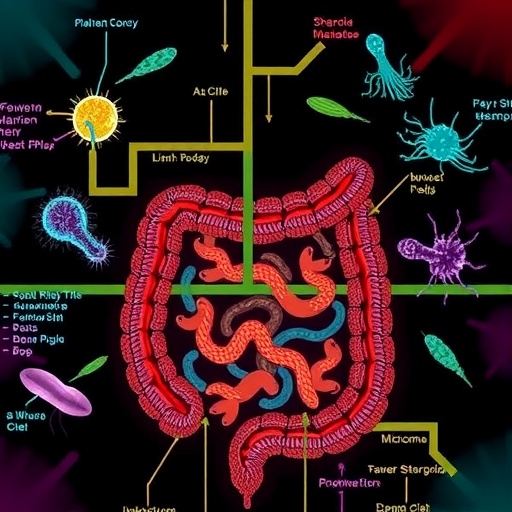
The human gut is a complex ecosystem teeming with trillions of microbes that play instrumental roles in digestion, immunity, and metabolic homeostasis. Under normal conditions, the intestinal barrier functions as a tightly regulated filter, allowing nutrient absorption while preventing invasion by pathogens and harmful compounds. However, in MASH, this barrier becomes compromised, allowing bacterial products such as lipopolysaccharides (LPS) to leak into circulation, triggering systemic inflammation and liver injury. Until now, the mechanisms that translate dietary patterns and microbial shifts into impaired barrier integrity remained largely elusive.
Chua, Low, Kim, et al. addressed this knowledge gap by focusing on Angptl4, a secreted protein known for its regulatory roles in lipid metabolism and inflammation. Using a combination of in vivo mouse models and ex vivo human tissue analyses, the research team demonstrated that Angptl4 expression is markedly upregulated in response to a high-fat diet combined with dysbiosis — an imbalance in gut microbial communities often observed in MASH patients. The elevated Angptl4, in turn, orchestrates molecular cascades that destabilize tight junction proteins, essential components of the gut barrier.
One of the study’s pivotal findings highlights how Angptl4 modulates intestinal epithelial cells by altering signaling pathways linked to inflammation and cellular permeability. Mechanistic dissection revealed that Angptl4 initiates the activation of the NF-κB pathway, a master regulator of immune responses. Activation of NF-κB leads to the downregulation of occludin and claudin proteins, which are crucial for maintaining tight junction integrity. Consequently, the gut barrier becomes “leaky,” permitting translocation of microbial metabolites that fuel hepatic inflammation characteristic of MASH.
Intriguingly, the research also uncovered that the gut microbiota itself influences Angptl4 expression through the production of short-chain fatty acids (SCFAs) and other metabolites. Certain bacterial species were identified as potent inducers of Angptl4, suggesting that microbial shifts not only reflect disease but actively participate in its pathogenesis by modulating this protein’s synthesis. This interplay illustrates an unprecedented communication axis between diet, microbiota, and host epithelial responses mediated by Angptl4.
To validate their findings, the researchers employed sophisticated lineage-tracing and knockout models. Deletion of Angptl4 specifically in the intestinal epithelium resulted in enhanced barrier function despite ongoing dietary insults, markedly reducing hepatic inflammation and fibrosis in mouse models of MASH. This experimental evidence firmly positions Angptl4 as a promising therapeutic target: modulating its activity could restore gut barrier resilience and ameliorate liver disease progression.
The implications of these findings extend far beyond MASH. Gut barrier disruption is a hallmark of numerous chronic conditions linked to metabolic dysfunction, including type 2 diabetes, inflammatory bowel disease, and cardiovascular disease. By elucidating a direct molecular link through Angptl4, this work offers a unified framework that integrates environmental cues, microbial dynamics, and host responses. It invites a paradigm shift towards targeting gut barrier homeostasis as a central strategy in managing metabolic and inflammatory diseases.
Furthermore, the study sheds light on how modern dietary patterns, especially the consumption of high-fat and processed foods, may inadvertently activate harmful gut molecular pathways. This underscores the intricate relationship between lifestyle, gut ecology, and disease and raises awareness about preventive strategies that can modulate these interactions through diet or microbiome interventions. Personalized nutrition and microbiota-directed therapies now appear more feasible with this mechanistic insight.
Technologically, this research leveraged a multi-omic approach combining transcriptomics, metabolomics, and advanced imaging. This comprehensive methodology allowed for simultaneous evaluation of microbial, dietary, and host factors, revealing complex, dynamic interactions within the gut microenvironment. Such integrative techniques empower researchers to delineate subtle molecular crosstalk that was previously inaccessible through isolated analyses.
The identification of Angptl4 as a mediator also opens avenues for diagnostic innovation. Early biomarkers based on Angptl4 levels or downstream signatures from barrier dysfunction could enable timely detection of gut permeability changes before overt liver damage occurs. This could be transformative for patient prognosis and for tailoring early interventions that prevent disease escalation.
Equally exciting is the potential for pharmaceutical development targeting Angptl4 pathways. Molecules that inhibit its expression or block its interaction with downstream signaling partners might serve as novel drugs to reinforce gut barrier integrity. Such precision medicine approaches could complement existing therapies aimed at reducing liver fat accumulation and inflammation, addressing the disease from multiple fronts.
Although promising, these findings also raise critical questions regarding the balance of Angptl4’s physiological roles. Since Angptl4 participates in lipid metabolism and is expressed in multiple tissues, future research must dissect tissue-specific functions and potential side effects of long-term modulation. This calls for detailed safety evaluations and the development of tissue-targeted delivery mechanisms.
The study’s authors emphasize collaborative efforts moving forward, integrating gastroenterology, hepatology, microbiology, and nutrition science. The complexity of gut barrier dynamics in metabolic disease demands multidisciplinary inquiry to translate these molecular insights into clinical practice. Large-scale clinical trials assessing Angptl4-modulating interventions will be pivotal to validate efficacy and safety in human populations.
In sum, the discovery of Angptl4 as a crucial integrator of dietary and microbial signals that compromise gut barrier function represents a major leap in understanding the pathobiology of MASH. This work not only identifies a novel molecular target but also intertwines nutrition, microbiome science, and immunology to illuminate the gut-liver axis’s centrality in metabolic disease. As the obesity and fatty liver epidemics continue to burgeon worldwide, such transformative knowledge equips the scientific and medical communities with novel tools to combat these formidable disorders.
With these findings, the research heralds an era where gut barrier reinforcement becomes a cornerstone of metabolic disease management. The prospect of preventing the cascade from diet and dysbiosis to liver inflammation through Angptl4 modulation offers hope for millions affected by MASH and related conditions. This study will undoubtedly catalyze a surge of research unraveling gut molecular networks, propelling the field towards innovative therapies and improved human health outcomes.
Subject of Research: The role of Angptl4 in integrating dietary and microbial signals that disrupt gut barrier function in Metabolic Dysfunction-Associated Steatohepatitis (MASH).
Article Title: Angptl4 integrates dietary and microbial signals to disrupt gut barrier function in MASH.
Article References:
Chua, D., Low, Z.S., Kim, J.H.S. et al. Angptl4 integrates dietary and microbial signals to disrupt gut barrier function in MASH. Nat Commun (2026). https://doi.org/10.1038/s41467-026-72575-6
Image Credits: AI Generated
Tags: Angptl4 dietary and microbial signal integrationAngptl4 gut barrier functionAngptl4 role in metabolic disordersdiet and gut microbiome interactiongut barrier breakdown in MASHgut-liver axis inflammationintestinal barrier regulation in liver diseaselipopolysaccharide leakage systemic inflammationmetabolic dysfunction-associated steatohepatitis mechanismsmetabolic homeostasis and gut microbesmicrobial influence on intestinal permeabilitytherapeutic targets for liver inflammation