• HOME
  • NEWS
  • EXPLORE
    • CAREER
      • Companies
      • Jobs
    • EVENTS
    • iGEM
      • News
      • Team
    • PHOTOS
    • VIDEO
    • WIKI
  • BLOG
  • COMMUNITY
    • FACEBOOK
    • INSTAGRAM
    • TWITTER
Saturday, June 27, 2026
BIOENGINEER.ORG
No Result
View All Result
  • Login
  • HOME
  • NEWS
  • EXPLORE
    • CAREER
      • Companies
      • Jobs
        • Lecturer
        • PhD Studentship
        • Postdoc
        • Research Assistant
    • EVENTS
    • iGEM
      • News
      • Team
    • PHOTOS
    • VIDEO
    • WIKI
  • BLOG
  • COMMUNITY
    • FACEBOOK
    • INSTAGRAM
    • TWITTER
  • HOME
  • NEWS
  • EXPLORE
    • CAREER
      • Companies
      • Jobs
        • Lecturer
        • PhD Studentship
        • Postdoc
        • Research Assistant
    • EVENTS
    • iGEM
      • News
      • Team
    • PHOTOS
    • VIDEO
    • WIKI
  • BLOG
  • COMMUNITY
    • FACEBOOK
    • INSTAGRAM
    • TWITTER
No Result
View All Result
Bioengineer.org
No Result
View All Result
Home NEWS Science News Cancer

Enzyme PHLPP2 could be a viable drug target for treating prostate cancer

Bioengineer by Bioengineer
May 15, 2019
in Cancer
Reading Time: 2 mins read
0
IMAGE
Share on FacebookShare on TwitterShare on LinkedinShare on RedditShare on Telegram

IMAGE

Credit: Trotman lab/CSHL

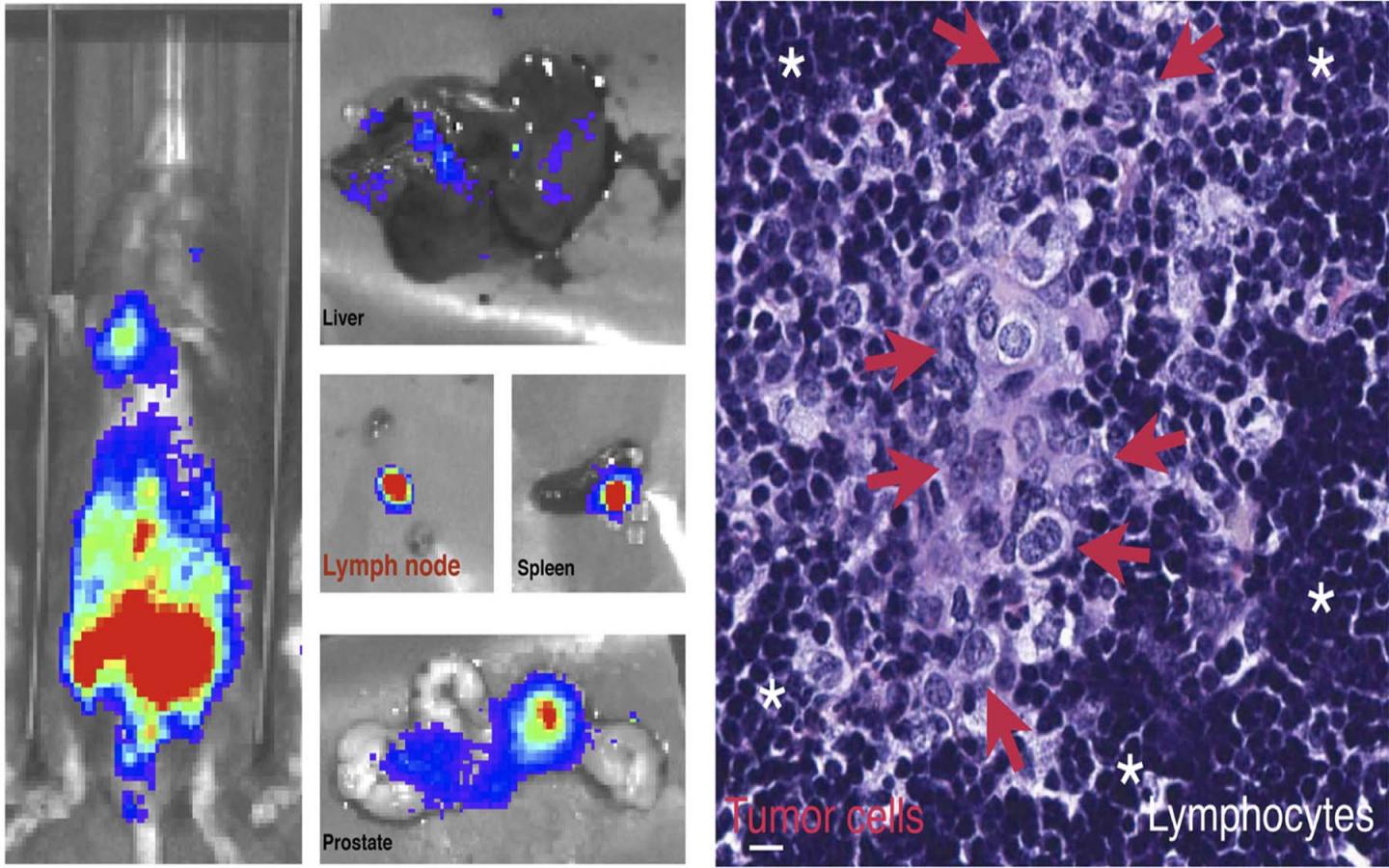
Cold Spring Harbor, NY — An estimated 450,000 Americans are diagnosed each year with a cancer that’s driven by MYC, an oncogene that hijacks growth and metabolism in cancer cells. MYC has a storied past of being notoriously hard for researchers to directly disable. “Now, we have a new way of getting at this old foe in cancer research,” said CSHL researcher Lloyd Trotman. And that’s with an enzyme called PHLPP2 which presents a back-door route to target the gene.

Dr. Lloyd Trotman and his lab have been focused on understanding and searching for a cure for prostate cancer, one of the most prevalent cancers among men. It’s the second leading cause of cancer death in American men. Prostate cancer can be confined to the organ, or the cancer cells can jailbreak the organ and metastasize to other parts of the body. Patients with cancers that have metastasized have a much lower rate of survival than if their cancer was contained in the organ. In a new study published in the Journal of Cell Biology, co-led by Dr. Trotman and Dr. Dawid Nowak, an assistant professor at Weill Cornell and a former postdoctoral fellow at the Trotman lab, researchers were able to halt the natural process of prostate cancer metastasis in mice by deleting the PHLPP2 enzyme.

PHLPP2 is the key to a signal pathway in the cell that controls cell growth and survival in response to extracellular communications and signal relays. It is required for prostate cancer progression to metastasis because it stabilizes and supports the MYC oncogene.

When the researchers completely blocked PHLPP2, they were able to stop prostate cancer growth and metastasis. Additionally, Trotman remarked that deleting this enzyme didn’t manifest signs of toxicity in mice or human cells. This makes PHLPP2 an attractive drug target for treating prostate cancer, with possible applications across other types of cancers as well.

###

About Cold Spring Harbor Laboratory

Founded in 1890, Cold Spring Harbor Laboratory has shaped contemporary biomedical research and education with programs in cancer, neuroscience, plant biology and quantitative biology. Home to eight Nobel Prize winners, the private, not-for-profit Laboratory employs 1,100 people including 600 scientists, students and technicians. The Meetings & Courses Program annually hosts more than 12,000 scientists. The Laboratory’s education arm also includes an academic publishing house, a graduate school and the DNA Learning Center with programs for middle and high school students and teachers. For more information, visit http://www.cshl.edu

Media Contact
Sara Roncero-Menendez
[email protected]

Related Journal Article

http://dx.doi.org/10.1083/jcb.201902048

Tags: BiologycancerCell BiologyGene TherapyGenesGeneticsMedicine/HealthMolecular BiologyProstate Cancer
Share12Tweet8Share2ShareShareShare2

Related Posts

Cracking the Code: How Cancer Evades Antibody-Drug Conjugates and New Strategies to Overcome Resistance

June 25, 2026

MSU Scientists Reveal Mechanism Behind Ovarian Cancer’s Chemotherapy Resistance and Strategies to Overcome It

June 25, 2026

Rare Mixed Liver Cancer Underscores Diagnostic and Therapeutic Challenges

June 25, 2026

How Socioeconomic Factors Shape Lung Cancer Screening Experiences

June 25, 2026
Please login to join discussion

POPULAR NEWS

  • Saying Goodbye to PGY-6: Pediatric Fellowship Realities

    103 shares
    Share 41 Tweet 26
  • Multi-Hospital Study Reveals Long Covid Burden Is Twice as High as Current Estimates

    92 shares
    Share 36 Tweet 23
  • Detection of EDCs in Breast Milk and Infant Urine Up to Six Months Highlights Early Exposure Risks

    77 shares
    Share 31 Tweet 19
  • New Drug Candidate Developed at McMaster Shows Potential for Treating Brain Cancer

    58 shares
    Share 23 Tweet 15

About

We bring you the latest biotechnology news from best research centers and universities around the world. Check our website.

Follow us

Recent News

Tracking Lanthanide-Labeled Microplastics in Plants

POSTECH Researchers Slash Cost of Reconstituted Cell-Free Systems by 95%

AI and Physics Collaborate to Design Advanced Hydrogen Storage Materials

Subscribe to Blog via Email

Success! An email was just sent to confirm your subscription. Please find the email now and click 'Confirm' to start subscribing.

Join 82 other subscribers
  • Contact Us

Bioengineer.org © Copyright 2023 All Rights Reserved.

Welcome Back!

Login to your account below

Forgotten Password?

Retrieve your password

Please enter your username or email address to reset your password.

Log In
No Result
View All Result
  • Homepages
    • Home Page 1
    • Home Page 2
  • News
  • National
  • Business
  • Health
  • Lifestyle
  • Science

Bioengineer.org © Copyright 2023 All Rights Reserved.