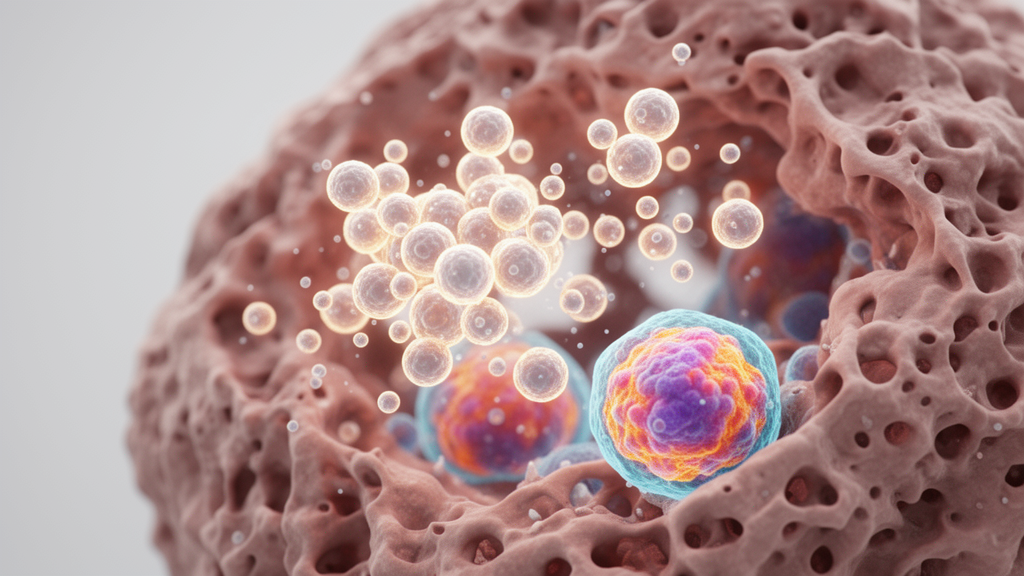
In an extensive review published in Materials Today Bio, researchers Xiaoke Gao, Fazhan Wang, and their colleagues examine how engineered nanomedicines can systematically harness the splenic immune reservoir to drive systemic therapeutic outcomes across oncology, autoimmunity, and cardiovascular conditions. Historically regarded alongside the liver primarily as a component of the mononuclear phagocyte system where circulating particulates undergo rapid filtration and clearance, the spleen has often been viewed in drug delivery as a pharmacokinetic obstacle. The authors argue that this perspective is incomplete. Instead of functioning merely as a passive sink for clearance, the spleen operates as an accessible immunological hub with specialized compartments that capture, process, and translate blood-borne signals into coordinated systemic immune responses. By deliberately targeting these splenic niches, nanomedicine platforms can modify the availability, functional phenotype, migration programs, and cargo-delivery capacity of circulating immune cells before they encounter distal pathological sites.
The biological accessibility of the spleen stems directly from its architectural segregation into red pulp, white pulp, and marginal zone. Within the red pulp, a macrophage-dominated microenvironment specialized for erythrophagocytosis, iron recycling, and particulate scavenging naturally captures blood-borne nanomaterials through scavenger receptors, Fc receptors, and complement-mediated opsonization. The red pulp also houses an undifferentiated monocyte reservoir that can be mobilized to peripheral tissues upon injury. Separated from the red pulp, the white pulp organizes conventional dendritic cells alongside T and B lymphocytes to orchestrate adaptive immune responses. Positioned at the vascular interface between these compartments, the marginal zone contains specialized marginal-zone macrophages and marginal metallophilic macrophages expressing CD169, which capture blood-borne antigens, apoptotic debris, and vesicular structures to relay antigenic information to dendritic cells and marginal-zone B cells. These spatial and cellular interfaces convert systemic intravenous nanoparticle exposure into specific immune recognition events rather than unspecific sequestering.
To conceptualize the therapeutic mechanisms of spleen-centered delivery, the authors establish a framework comprising four interconnected intervention layers: remodeling immune-cell pools, reprogramming functional activation states, regulating spatial trafficking, and exploiting immune cells as living transport vehicles. The first layer, quantitative and compositional remodeling, involves altering the abundance or makeup of disease-relevant immune populations. In cancer immunotherapy, liposomal nanovaccines composed of DOPE lipids exploit complement-associated protein coronas and interactions with splenic antigen-presenting cells to trigger marked expansion of antigen-specific CD8+ cytotoxic T cells. Similarly, topology-controlled PEG-PDLLA polymersomes loaded with β-glucan selectively engage red-pulp myeloid cells, driving extramedullary hematopoiesis and trained granulopoiesis that expand monocytes and neutrophils to suppress melanoma progression. Compositional remodeling extends to in vivo lymphocyte engineering, where targeted ionizable lipid nanoparticles and biodegradable PBAE nanoparticles carrying chimeric antigen receptor messenger RNA selectively transduce endogenous T cells, generating transient CD19-targeting CAR-T cells while depleting targeted B-cell pools without ex vivo manufacturing.
The second intervention layer focuses on the functional reprogramming of splenic immune-cell phenotypes without necessarily altering absolute cell numbers. Splenic conventional dendritic cells, particularly cDC1 and cDC2 subsets, can be directed toward opposing immunological outcomes depending on formulation chemistry and innate signaling cues. While stearic acid-doped lipid nanoparticles co-delivering messenger RNA and the TLR4 agonist MPLA stimulate robust costimulation and Th1-skewed antitumor immunity, pairing nucleoside-modified messenger RNA with the anti-inflammatory compound celastrol downregulates CD40, CD80, CD86, and MHC-II expression on dendritic cells, suppressing NF-κB activation and expanding antigen-specific regulatory T cells to halt allergic airway inflammation. Beyond dendritic cells, splenic monocytes and macrophages exhibit high phenotypic plasticity. Glabridin-loaded PEG-DSPE nanoparticles take advantage of splenic red-pulp uptake to downregulate M1 markers while upregulating CD206, dampening inflammatory cytokine release during cerebral ischemia-reperfusion injury. In B-cell compartments, lipid-polymer nanoparticles delivering FcγRIIB messenger RNA restore inhibitory signaling through the Lyn and SHP-1 axis, curbing abnormal intracellular calcium flux and joint destruction in collagen-induced arthritis.
The third layer addresses spatial regulation, directing whether splenic immune populations remain anchored within reservoir niches or deploy into circulating blood and peripheral lesions. During acute tissue damage, such as myocardial ischemia-reperfusion injury, splenic Ly6Chigh inflammatory monocytes are rapidly mobilized via the cardiosplenic axis to invade damaged myocardium, intensifying local necrosis and fibrosis. Delivering spleen-targeted liposomes loaded with melatonin promotes an anti-inflammatory phenotype in splenic myeloid cells and inhibits the MCP-1 and CCR2 signaling axis, retaining inflammatory monocytes in the spleen and mitigating cardiac tissue scarring. Conversely, in situations requiring cellular accumulation for tissue repair, nano-hypoxia liposomal formulations loaded with cobalt chloride engage splenic CD11b+ myeloid cells and prompt their migration toward ischemic vascular lesions, enhancing blood-flow recovery and revascularization in hindlimb ischemia models. In oncology, apolipoprotein nanoparticles delivering CCR2-targeting small interfering RNA downregulate CCR2 in splenic and bone marrow monocytes, blocking their migration into colorectal tumors and cutting tumor-associated macrophage accumulation.
Building directly upon cellular mobilization, the fourth layer leverages migrating splenic leukocytes as endogenous, living delivery vehicles that transport therapeutic cargo across restrictive physiological barriers. Because circulating monocytes and monocytic myeloid-derived suppressor cells naturally follow chemoattractant gradients toward inflamed or neoplastic tissues, nanoparticles captured within the splenic reservoir can hitchhike within these moving cells. Yu and colleagues demonstrated that splenic monocytes internalize aspirin-loaded liposomes and transport them to inflamed carotid arteries, transferring the therapeutic cargo to recipient endothelial cells through caveolin-dependent endocytosis and extracellular vesicles to suppress local vascular inflammation. In recurrent glioblastoma models, an erythrocyte-membrane-coated liposomal system termed αLy-6C-LAMP targets splenic monocytic myeloid-derived suppressor cells, enabling these cells to traverse the intact blood-brain barrier and express a local PD-L1 trap plasmid within irradiated brain tumors, prolonging survival in mice.
The researchers also emphasize that therapeutic strategies must align precisely with the underlying pathology and the physiological role of the splenic reservoir in each disease context. In chronic inflammatory conditions, atherosclerosis, and myocardial infarction, splenic myeloid output predominantly supplies detrimental inflammatory cascades, making retention or recruitment blockade the preferred goal. In contrast, in neoplastic malignancies, the spleen can either be spurred into generating protective adaptive immunity and trained innate resistance or relieved of immunosuppressive myeloid output. However, achieving successful translation from preclinical rodent models to human medicine presents formidable challenges. Splenic white-pulp architecture, marginal-zone boundaries, and cellular distributions diverge markedly between mice and humans, with human spleens possessing a distinct perifollicular zone and sheathed capillaries rather than the classic rodent marginal zone. Furthermore, species-specific discrepancies in complement activation-related pseudoallergy and target-receptor affinity, such as observed with cross-reactive CD169 nanobodies, underline the risk of relying exclusively on rodent biodistribution profiles.
Translating spleen-centered nanomedicines into clinical reality requires establishing an integrated framework combining advanced mechanistic validation, stringent immunotoxicity evaluation, and scalable chemistry, manufacturing, and controls. The authors stress that bulk organ fluorescence or total splenic accumulation is insufficient to predict clinical success; nanocarriers must be characterized by cell-level uptake, endosomal escape kinetics, intracellular routing, and precise immune circuit activation. Rigorous techniques including splenectomy models, adoptive transfer, lineage tracing, and chemokine pathway blockade are essential to distinguish true spleen-mediated systemic signaling from direct local tissue delivery. In parallel, early assessment of complement activation, anti-carrier antibody formation, and cytokine release is vital to ensure that repetitive administration does not compromise protective host immunity. Through targeted material engineering and AI-assisted formulation screening, redirecting nanomedicines toward specific splenic immune niches holds significant promise for transforming the spleen into an active control center for systemic immunotherapy.
A critical consideration highlighted by the authors involves the precise intracellular routing that occurs once nanocarriers enter target cells within splenic compartments. Reaching splenic antigen-presenting cells or phagocytes represents only the primary stage of an immune cascade; intracellular processing pathways fundamentally determine whether a payload triggers degradation, presentation, translation, or adverse inflammatory signaling. For nucleic acid-loaded nanomedicines such as ionizable lipid nanoparticles, escaping acidic endosomes into the cytosol remains a major efficiency bottleneck. RNA retained inside endosomes can trigger endosomal Toll-like receptors such as TLR3, TLR7, or TLR8, whereas cytosolic RNA engages RIG-I-like receptors including RIG-I and MDA5. Incorporating nucleoside modifications into RNA sequences dampens such innate pattern recognition, allowing researchers to uncouple therapeutic antigen expression from uncontrolled systemic cytokine release.
Material design strategies are increasingly incorporating computational modeling and machine learning to systematically optimize these multi-layered biological interactions. For instance, artificial intelligence tools have been applied to screen extensive lipid libraries, such as evaluations examining 180 formulation variants, to identify compositions that achieve preferential splenic expression in mouse models. Computational workflows leveraging molecular dynamics simulations have further linked specific three-tail lipid conformations to the formation of IgM-enriched protein coronas, which guide selective messenger RNA transfection toward splenic tissues. Nevertheless, translating these computational candidates into dependable therapeutics requires prospective experimental validation that connects physicochemical formulation parameters directly to cellular uptake patterns and downstream immune phenotypes.
Finally, the authors note that repeated clinical dosing introduces distinct immunological and pharmacology challenges that must be addressed early during development. Formulations containing PEGylated lipids, ionizable lipids, or nucleic acids can provoke anti-carrier antibody responses, accelerated blood clearance, altered organ biodistribution, or complement activation-related pseudoallergy upon subsequent administrations. To address these hurdles, development programs must establish critical quality attributes and reproducible manufacturing processes that maintain stable particle size, surface charge, and polydispersity across production batches while verifying sustained efficacy across diverse physiological settings.
Subject of Research: Nanotechnology strategies targeting the splenic immune reservoir for systemic immunotherapy
Article Title: Nanostrategy-directed reprogramming of the splenic immune reservoir for systemic immunotherapy
Article References: Gao, X., Guo, X., Ren, Y., Miao, J., Wang, J., Xie, B., Qin, B., Li, Y., Deng, W., Lei, N., & Wang, F. (2026). Nanostrategy-directed reprogramming of the splenic immune reservoir for systemic immunotherapy. Materials Today Bio, 41, Article 103820. https://doi.org/10.1016/j.mtbio.2026.103820
Image Credits: AI Generated
DOI: 10.1016/j.mtbio.2026.103820
Keywords: nanomedicine, splenic immune reservoir, immunotherapy, lipid nanoparticles, dendritic cells, macrophages, monocyte trafficking, CAR-T cell engineering, antigen presentation, extramedullary hematopoiesis, protein corona, cardiosplenic axis, tolerogenic vaccines, myeloid cells, biomimetic nanocarriers, endosomal escape
News Source: Denise Maddox. (November 19, 2026). Engineered Nanoparticles Target the Spleen to Reprogram Systemic Immune Responses Across Diseases. Scienmag.