• HOME
  • NEWS
  • EXPLORE
    • CAREER
      • Companies
      • Jobs
    • EVENTS
    • iGEM
      • News
      • Team
    • PHOTOS
    • VIDEO
    • WIKI
  • BLOG
  • COMMUNITY
    • FACEBOOK
    • INSTAGRAM
    • TWITTER
Monday, July 6, 2026
BIOENGINEER.ORG
No Result
View All Result
  • Login
  • HOME
  • NEWS
  • EXPLORE
    • CAREER
      • Companies
      • Jobs
        • Lecturer
        • PhD Studentship
        • Postdoc
        • Research Assistant
    • EVENTS
    • iGEM
      • News
      • Team
    • PHOTOS
    • VIDEO
    • WIKI
  • BLOG
  • COMMUNITY
    • FACEBOOK
    • INSTAGRAM
    • TWITTER
  • HOME
  • NEWS
  • EXPLORE
    • CAREER
      • Companies
      • Jobs
        • Lecturer
        • PhD Studentship
        • Postdoc
        • Research Assistant
    • EVENTS
    • iGEM
      • News
      • Team
    • PHOTOS
    • VIDEO
    • WIKI
  • BLOG
  • COMMUNITY
    • FACEBOOK
    • INSTAGRAM
    • TWITTER
No Result
View All Result
Bioengineer.org
No Result
View All Result
Home NEWS Science News Cancer

Engineered cancer cells can fight primary and metastatic cancer

Bioengineer by Bioengineer
July 11, 2018
in Cancer
Reading Time: 2 mins read
0
Share on FacebookShare on TwitterShare on LinkedinShare on RedditShare on Telegram
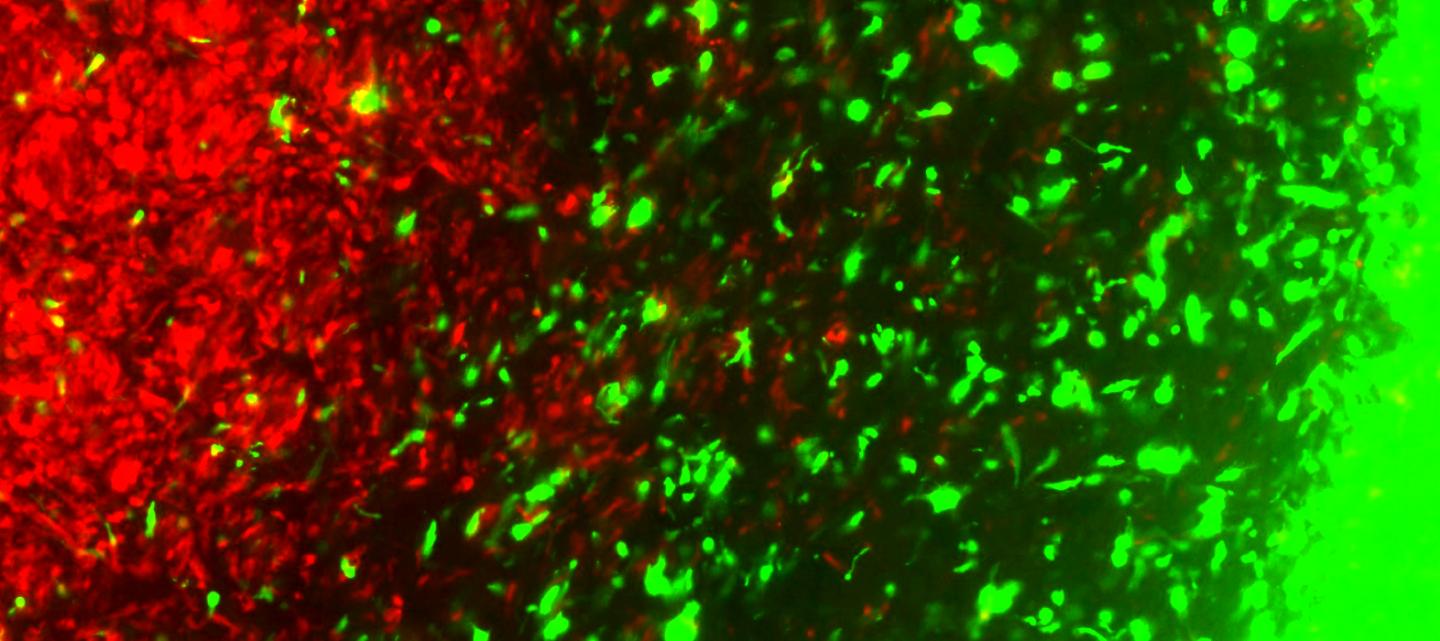
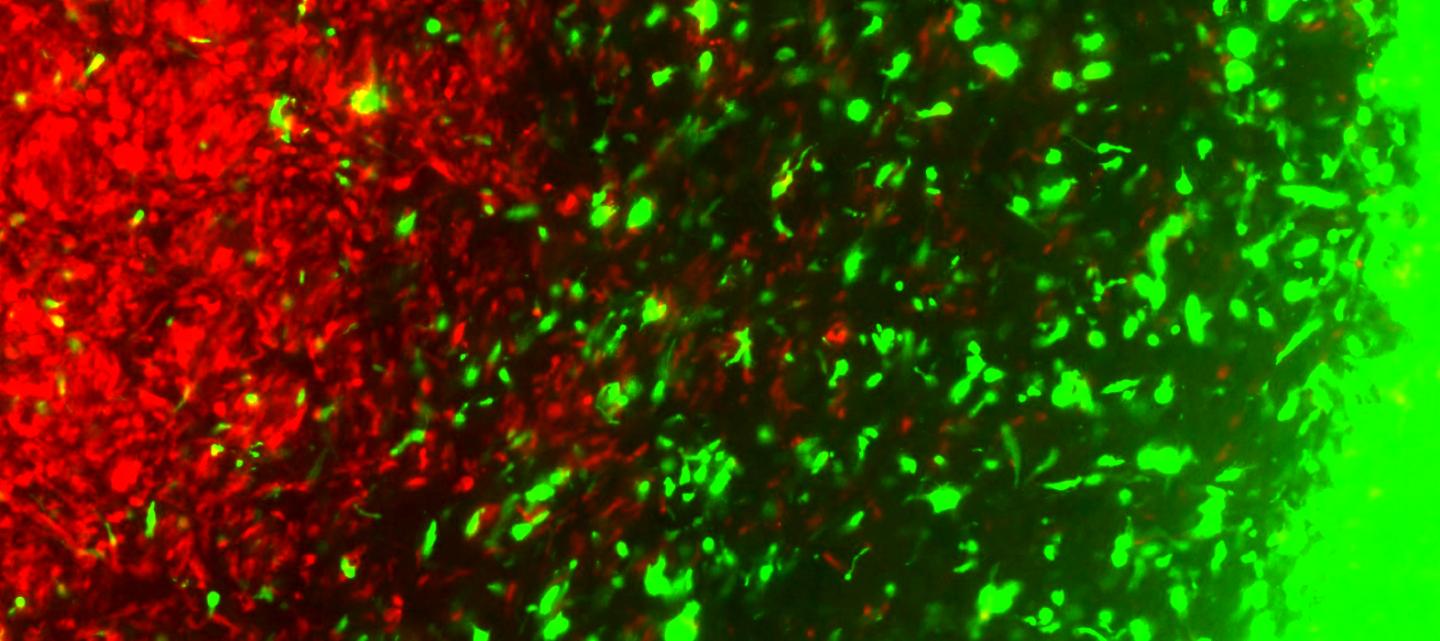
IMAGE

Credit: CSTI/Khalid Shah lab

Boston, MA — What if cancer cells could be re-engineered to turn against their own kind? A new study led by researchers at Brigham and Women's Hospital leverages the power of gene editing to take a critical step toward using cancer cells to kill cancer. The team reports promising results in preclinical models across multiple types of cancer cells, establishing a potential roadmap toward clinical translation for treating primary, recurrent and metastatic cancer. Results are published in Science Translational Medicine.

"This is just the tip of the iceberg," said corresponding author Khalid Shah MS, PhD, director of the Center for Stem Cell Therapeutics and Imaging (CSTI) in the BWH Department of Neurosurgery and faculty at Harvard Medical School and Harvard Stem Cell Institute (HSCI). "Cell-based therapies hold tremendous promise for delivering therapeutic agents to tumors and may provide treatment options where standard therapy has failed. With our technique, we show it is possible to reverse-engineer a patient's own cancer cells and use them to treat cancer. We think this has many implications and could be applicable across all cancer cell types."

The new approach capitalizes on cancer cells' self-homing ability – the process in which cancer cells can track the cells of their kind that have spread within the same organ or to other parts of the body. Harnessing this power could overcome drug delivery challenges, helping get therapeutics to tumor sites that may otherwise be difficult to reach.

The team developed and tested two techniques to harness the power of cancer cells. The "off the shelf" technique used pre-engineered tumor cells that would need to be matched to a patient's HLA phenotype (essentially, a person's immune fingerprint). The "autologous" approach used CRISPR technology to edit the genome of a patient's cancer cells and insert therapeutic molecules. These cells could then be transferred back into the patient.

To test both approaches, the team used mouse models of primary and recurrent brain cancer and breast cancer that has spread to the brain. The team saw direct migration of engineered cells to the sites of tumors and found evidence that the engineered cells specifically targeted and killed recurrent and metastatic cancer in the mice. The researchers report that the treatment increased the survival of the mice. Engineered cells were equipped with a "kill switch" that could be activated after treatment – PET imaging showed that this kill switch worked to eliminate the cells.

"Our study demonstrates the therapeutic potential of using engineered tumor cells and their self-homing properties for developing receptor-targeted therapeutics for various cancers," said Shah.

###

This study was supported by James S. McDonnell Foundation and Departmental funds.

Media Contact

Haley Bridger
[email protected]
617-525-6383
@BrighamWomens

http://www.brighamandwomens.org

Share13Tweet8Share2ShareShareShare2

Related Posts

Genomic and Epigenomic Insights into Acute Lymphoblastic Leukemia

July 4, 2026

Nutrient Absorption Zones in Small Intestine Explained

July 4, 2026

AI Tool Enhances Accuracy in Predicting Patient Response to Cancer Immunotherapy Drugs

July 4, 2026

Apelin-APLNR Pathway: Endothelial Roles in Health

July 2, 2026
Please login to join discussion

POPULAR NEWS

  • Detection of EDCs in Breast Milk and Infant Urine Up to Six Months Highlights Early Exposure Risks

    77 shares
    Share 31 Tweet 19
  • Saying Goodbye to PGY-6: Pediatric Fellowship Realities

    103 shares
    Share 41 Tweet 26
  • New Drug Candidate Developed at McMaster Shows Potential for Treating Brain Cancer

    58 shares
    Share 23 Tweet 15
  • KTU Researchers Explore Ultrasound’s Role in Enhancing Blood Flow Beyond Diagnostics

    53 shares
    Share 21 Tweet 13

About

We bring you the latest biotechnology news from best research centers and universities around the world. Check our website.

Follow us

Recent News

Quasi-Bound States Boost Quantum Well Photoresponse

Lysine Pyruvylation Links Glycolysis to Epigenetics

Multiphysics Coupling: Single vs. Multiple DeepONet Branches

Subscribe to Blog via Email

Success! An email was just sent to confirm your subscription. Please find the email now and click 'Confirm' to start subscribing.

Join 83 other subscribers
  • Contact Us

Bioengineer.org © Copyright 2023 All Rights Reserved.

Welcome Back!

Login to your account below

Forgotten Password?

Retrieve your password

Please enter your username or email address to reset your password.

Log In
No Result
View All Result
  • Homepages
    • Home Page 1
    • Home Page 2
  • News
  • National
  • Business
  • Health
  • Lifestyle
  • Science

Bioengineer.org © Copyright 2023 All Rights Reserved.