• HOME
  • NEWS
  • EXPLORE
    • CAREER
      • Companies
      • Jobs
    • EVENTS
    • iGEM
      • News
      • Team
    • PHOTOS
    • VIDEO
    • WIKI
  • BLOG
  • COMMUNITY
    • FACEBOOK
    • INSTAGRAM
    • TWITTER
Tuesday, November 17, 2026
BIOENGINEER.ORG
No Result
View All Result
  • Login
  • HOME
  • NEWS
  • EXPLORE
    • CAREER
      • Companies
      • Jobs
        • Lecturer
        • PhD Studentship
        • Postdoc
        • Research Assistant
    • EVENTS
    • iGEM
      • News
      • Team
    • PHOTOS
    • VIDEO
    • WIKI
  • BLOG
  • COMMUNITY
    • FACEBOOK
    • INSTAGRAM
    • TWITTER
No Result
View All Result
Bioengineer.org
No Result
View All Result
Home NEWS Science News Health

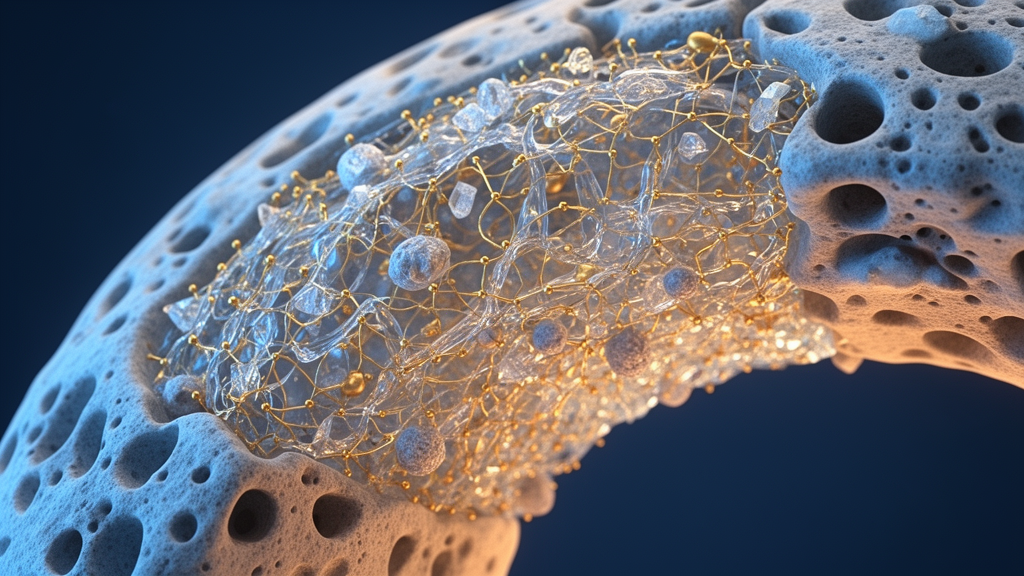
Elastin peptides in silk hydrogels aid cranial bone repair

by
November 10, 2026
in Health
Reading Time: 2 mins read
0
Elastin peptides in silk hydrogels aid cranial bone repair

Elastin peptides in silk hydrogels aid cranial bone repair

Share on FacebookShare on TwitterShare on LinkedinShare on RedditShare on Telegram

A study published in the Journal of Translational Medicine has identified a mechanism by which the extracellular matrix protein elastin influences bone formation. The study, published on 10 November 2026, demonstrates that elastin-associated epigenetic regulation of the ROCK1/Wnt/β-catenin signaling pathway promotes osteogenesis in bone marrow-derived mesenchymal stem cells (BMSCs). This finding provides a mechanistic basis for using elastin peptides in biomaterials designed to enhance cranial bone regeneration, particularly in the context of osteoporosis.

Osteoporosis is a prevalent metabolic bone disorder characterized by progressive bone loss and increased fragility. While the elastin gene (ELN) has emerged as a potential regulator of BMSC osteogenic differentiation, its specific regulatory mechanisms remained incompletely understood prior to this investigation. The research team sought to elucidate the role of ELN in this process by combining transcriptomic screening with functional biomaterial evaluations.

To screen for osteogenesis-associated regulators during BMSC differentiation, the authors conducted single-cell transcriptomic analyses. The team then assessed the epigenetic function of ELN through chromatin remodeling and pathway activation analyses.

The results indicated that ELN expression increased during osteogenic differentiation, accompanied by enhanced nuclear enrichment of the elastin protein. Mechanistically, the study found that ELN-associated chromatin enrichment at ROCK1 regulatory regions was accompanied by increased ROCK1 expression. This upregulation was accompanied by activation of Wnt/β-catenin signaling, thereby promoting osteogenic differentiation. The data suggest that elastin acts as a pivotal epigenetic regulator, modulating the expression of ROCK1 to drive the osteogenic differentiation of BMSCs.

Building on these molecular findings, the researchers designed a functionalized silk fibroin (SF) hydrogel incorporating ELN peptides. This biomaterial was evaluated both in vitro for osteogenic induction and in vivo using an osteoporosis-related cranial defect model.

In vitro evaluations demonstrated that the ELN-functionalized SF hydrogel exhibited excellent biocompatibility and promoted the osteogenic differentiation of BMSCs.

In vivo experiments using an osteoporosis-related cranial defect model showed that the ELN-functionalized SF hydrogel effectively repaired cranial defects.

The study concludes that ELN is a pivotal epigenetic regulator of BMSC osteogenesis, acting through the ROCK1/Wnt/β-catenin axis. The incorporation of ELN peptides into a silk fibroin hydrogel provides a novel biomaterial-based strategy for enhancing bone regeneration.

Subject of Research: Epigenetic regulation of osteogenesis by elastin in silk fibroin hydrogels

Article Title: Elastin-associated epigenetic regulation of ROCK1/Wnt/β-catenin signaling promotes BMSC osteogenesis and cranial bone regeneration

Article References: Zhang, Y., Chuai, Y., Zhang, W., Feng, L., Liu, D., Sun, W., Hong, B., Wang, Q., Wang, Y., Luo, Z., Wang, X., & Zhang, H. (2026). Elastin-associated epigenetic regulation of ROCK1/Wnt/β-catenin signaling promotes BMSC osteogenesis and cranial bone regeneration. Journal of Translational Medicine. https://doi.org/10.1186/s12967-026-09190-y

Image Credits: AI Generated

DOI: 10.1186/s12967-026-09190-y

Keywords: osteoporosis, bone regeneration, elastin, silk fibroin, hydrogel, epigenetics, Wnt signaling, ROCK1, BMSC, tissue engineering, Elastin-associated, epigenetic

News Source: Ophelia Keating. (November 10, 2026). Elastin peptides in silk hydrogels aid cranial bone repair. Scienmag.
Tags: BMSCBone regenerationelastinElastin-associatedepigeneticepigeneticshydrogelosteoporosisROCK1silk fibroinTissue EngineeringWnt Signaling
Share12Tweet7Share2ShareShareShare1

Related Posts

Fusobacterium nucleatum Extracellular Vesicles Trigger Neuroinflammation and Anxiety-Like Behaviors via IL-1β

Fusobacterium nucleatum Extracellular Vesicles Trigger Neuroinflammation and Anxiety-Like Behaviors via IL-1β

November 17, 2026
Immune Cell Exhaustion May Drive Neurodegeneration in Alzheimer's and Parkinson's

Immune Cell Exhaustion May Drive Neurodegeneration in Alzheimer’s and Parkinson’s

November 17, 2026

Posterior Cruciate Ligament Continuously Lengthens Across Knee Flexion in Healthy Adults

November 17, 2026

3D-Printed Guide Template Associated With Improved Spinal Deformity Correction in Cohort

November 17, 2026

POPULAR NEWS

  • Review Highlights Multi-Level Factors Influencing Clinical AI Adoption by Healthcare Providers

    Review Highlights Multi-Level Factors Influencing Clinical AI Adoption by Healthcare Providers

    29 shares
    Share 12 Tweet 7
  • Gut Microbiota and Metabolites Influence Immunotherapy Response in Liver Cancer

    29 shares
    Share 12 Tweet 7
  • Nonlinear Sex-Specific Remodeling of the TCRβ Repertoire During Adult Aging

    29 shares
    Share 12 Tweet 7
  • Capped Nanovials Enable Extended Cell Growth and Screening in UCLA Study

    29 shares
    Share 12 Tweet 7

About

We bring you the latest biotechnology news from best research centers and universities around the world. Check our website.

Follow us

Recent News

Fusobacterium nucleatum Extracellular Vesicles Trigger Neuroinflammation and Anxiety-Like Behaviors via IL-1β

Experiential Workshop Expands Mexican Students’ Understanding of Bat Diets and Ecological Roles

Immune Cell Exhaustion May Drive Neurodegeneration in Alzheimer’s and Parkinson’s

Subscribe to Blog via Email

Enter your email address to subscribe to this blog and receive notifications of new posts by email.

Join 88 other subscribers
  • Contact Us

Bioengineer.org © Copyright 2023 All Rights Reserved.

Welcome Back!

Login to your account below

Forgotten Password?

Retrieve your password

Please enter your username or email address to reset your password.

Log In
No Result
View All Result
  • Homepages
    • Home Page 1
    • Home Page 2
  • News
  • National
  • Business
  • Health
  • Lifestyle
  • Science

Bioengineer.org © Copyright 2023 All Rights Reserved.