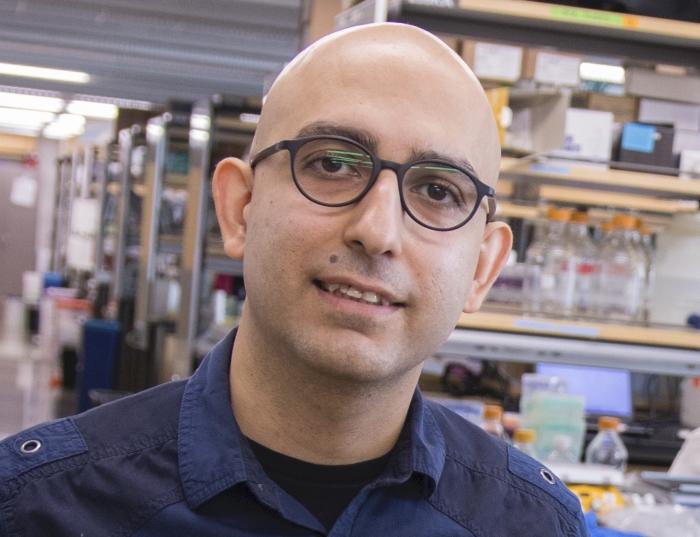
Credit: University of Pittsburgh
PITTSBURGH, Sept. 3, 2020 – Gene therapy generally relies on viruses, such as adeno-associated virus (AAV), to deliver genes into a cell. In the case of CRISPR-based gene therapies, molecular scissors can then snip out a defective gene, add in a missing sequence or enact a temporary change in its expression, but the body’s immune response to AAV can thwart the whole endeavor.
To overcome that obstacle, researchers at the University of Pittsburgh School of Medicine created a system that uses CRISPR in a different way. Their system briefly suppresses genes that are related to AAV antibody production so the virus can deliver its cargo unimpeded. These results published today in Nature Cell Biology.
“Many clinical trials fail because of the immune response against AAV gene therapy,” said study co-senior author Samira Kiani, M.D., associate professor of pathology at Pitt and member of the Pittsburgh Liver Research Center (PLRC) and McGowan Institute for Regenerative Medicine (MIRM). “And then you can’t readminister the shot because people have developed immunity.”
So Kiani and her long-time collaborator Mo Ebrahimkhani, M.D., associate professor of pathology at Pitt, member of PLRC and MIRM, set out to modify gene expression related to the body’s immune response to AAV. But this gene is important for normal immune function, so the researchers didn’t want to shut it down forever, just tamp it down momentarily.
Since CRISPR is such a convenient system for editing the genome, the pair figured they would put it to use for altering the master switches that orchestrate genes involved in immune response.
“We’re hitting two birds with one stone,” said Ebrahimkhani. “You can use CRISPR to do your gene therapy, and you also can use CRISPR to control the immune response.”
When the researchers treated mice with their CRISPR-controlled immune suppression system and then exposed them to AAV again, the animals didn’t make more antibodies against the virus. These animals were more receptive to subsequent AAV-delivered gene therapy compared to controls.
Beyond gene therapy, the study also shows that CRISPR-based immune suppression can prevent or treat sepsis in mice, highlighting the potential for this tool to be broadly useful for a range of inflammatory conditions, including cytokine storm and acute respiratory distress syndrome, both of which can crop up with COVID-19, though more studies are needed to engineer safety features.
“The main goal of this study was to develop CRISPR-based tools for inflammatory conditions,” said study lead author Farzaneh Moghadam, a Ph.D. student in Kiani’s lab. “But when we looked at bone marrow samples, we saw that the group treated with our tool showed a lower immune response to AAV compared to the control group. That was very interesting, so we started exploring how this tool contributes to antibody formation against AAV and could potentially address safety and efficacy concerns with gene therapy trials.”
Kiani cofounded SafeGen Therapeutics with the goal of bringing this technology to the clinic.
###
This study was supported by grants from the National Institute of Biomedical Imaging and Bioengineering (R01EB024562), National Institute of Diabetes and Digestive and Kidney Diseases (P30DK120531), National Institutes of Health (8-U01-EB029372-02), and a DARPA Young Faculty Award (D16AP00047).
Additional authors on the study include Ryan LeGraw and Jeremy Velazquez of Pitt; Nan Cher Yeo, Ph.D., of the University of Alabama; Chenxi Xu, M.S., and Jin Park, Ph.D., of Arizona State University; and Alejandro Chavez, M.D., Ph.D., of Columbia University.
To read this release online or share it, visit http://www.
About the University of Pittsburgh School of Medicine
As one of the nation’s leading academic centers for biomedical research, the University of Pittsburgh School of Medicine integrates advanced technology with basic science across a broad range of disciplines in a continuous quest to harness the power of new knowledge and improve the human condition. Driven mainly by the School of Medicine and its affiliates, Pitt has ranked among the top 10 recipients of funding from the National Institutes of Health since 1998. In rankings recently released by the National Science Foundation, Pitt ranked fifth among all American universities in total federal science and engineering research and development support.
Likewise, the School of Medicine is equally committed to advancing the quality and strength of its medical and graduate education programs, for which it is recognized as an innovative leader, and to training highly skilled, compassionate clinicians and creative scientists well-equipped to engage in world-class research. The School of Medicine is the academic partner of UPMC, which has collaborated with the University to raise the standard of medical excellence in Pittsburgh and to position health care as a driving force behind the region’s economy. For more information about the School of Medicine, see http://www.
http://www.
Media Contact
Erin Hare
[email protected]
Related Journal Article
http://dx.