


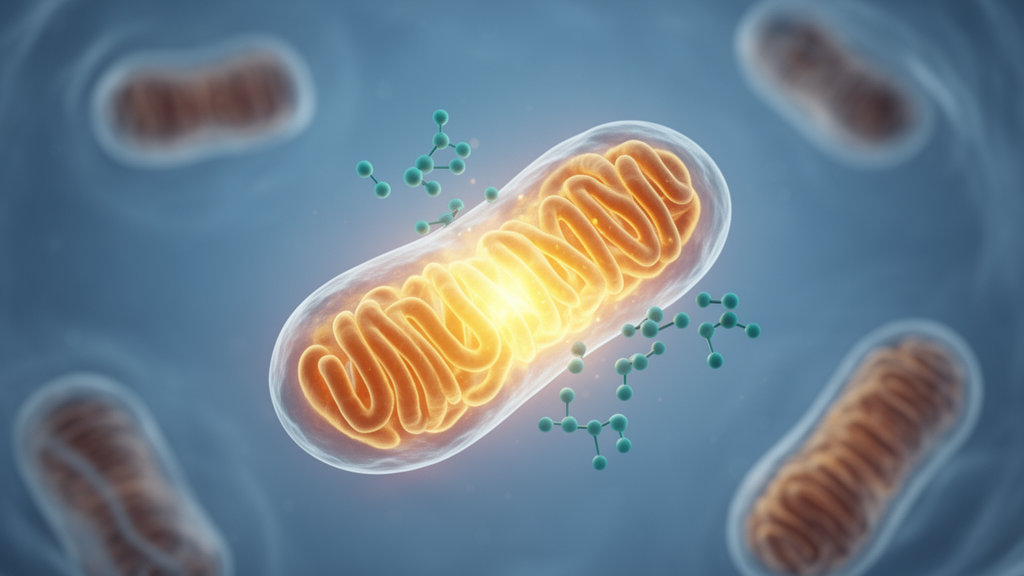
Ebselen, an organoselenium compound already tested in human clinical trials for other conditions, improved mitochondrial function across a strikingly broad range of preclinical models of inherited mitochondrial disease, according to a study published in EMBO Molecular Medicine. Working in yeast, patient-derived cells, stem-cell-derived heart cells and a mouse model of Barth syndrome, researchers report that the compound enhanced respiration and ATP production regardless of the underlying genetic defect, acting not through its well-known antioxidant activity but through a conserved metabolic program centered on lysosome-associated mTOR signaling.
Barth syndrome is a rare, X-linked recessive disorder affecting roughly one male per million. It arises from mutations in the TAZ gene, which encodes tafazzin, an enzyme that remodels cardiolipin, a signature lipid of the inner mitochondrial membrane. Loss of tafazzin activity reduces mature cardiolipin and causes accumulation of monolysocardiolipin, impairing oxidative phosphorylation and ATP production. The consequences are particularly damaging in the heart, where mitochondria supply about 95 percent of the energy demand, and the disease is marked by cardiomyopathy, skeletal myopathy, neutropenia, growth delay and high infant mortality. Effective disease-modifying therapies remain scarce; elamipretide, the only FDA-approved drug for Barth syndrome, has so far shown only modest effects in patients.
The team identified ebselen through a phenotypic drug screen in a yeast model lacking Taz1, the yeast counterpart of tafazzin. In that screen, ebselen produced a marked halo of restored respiratory growth, and structural analogs showed little or no activity, indicating the effect is not a general property of the chemical family. In liquid cultures, the compound improved respiratory growth of the mutant over a broad concentration range from 1 nanomolar to 9 micromolar, with toxicity appearing only at higher doses. Ebselen also significantly increased mitochondrial oxygen consumption in the yeast cells.
The benefits carried over to human cells. In fibroblasts from eight unrelated Barth syndrome patients and in patient myoblasts, ebselen promoted proliferation and mitochondrial ATP content over a comparable concentration range. Notably, lipidomic analysis showed that ebselen did not restore total cardiolipin abundance in either the yeast or the human cells, although it shifted the remaining cardiolipin pool toward species with longer and more unsaturated acyl chains. That observation suggested the compound works independently of the primary lipid defect and might therefore help in other mitochondrial diseases as well.
That broader activity was confirmed. Ebselen improved respiratory growth in six additional yeast models covering defects in complex IV biogenesis, mitochondrial DNA maintenance, mitochondrial translation, and ATP synthase assembly, and it was also effective in a filamentous fungus, Podospora anserina, carrying a mutation modeling human complex I deficiency. In human cells, the compound significantly increased mitochondrial respiration in Barth syndrome fibroblasts, CRISPR-generated FMC1 knockout cells, and fibroblasts from a patient with isolated complex I deficiency, with benefits spanning nanomolar to low micromolar concentrations before toxicity emerged at 5 micromolar.
In a physiologically relevant cardiac model, the researchers turned to cardiomyocytes derived from induced pluripotent stem cells of a patient carrying biallelic NDUFV1 variants, since Barth syndrome iPSCs proved difficult to differentiate stably. The mutant cardiomyocytes showed sarcomeric disorganization and a dilated, elongated shape; ebselen treatment partially restored sarcomere organization and returned cell length-to-width ratio, volume and perimeter toward control values. Mitochondrial networks appeared less fused and closer to the control pattern, and functional assays on cardiac spheroids showed restored contraction amplitude, contraction and relaxation speeds, and calcium transient decay times. Morphological findings were replicated with an independent patient-derived iPSC clone.
The most striking results came from a mouse model. Male Taz-knockout mice on a C57BL/6N background display features mirroring the human disease, including reduced body weight, progressive exercise intolerance from three months of age and ventricular dysfunction detectable by echocardiography from four months. After pharmacokinetic analysis revealed a short half-life of roughly two to three hours, the team gave 10 milligrams per kilogram of ebselen by oral gavage twice daily from weaning to three months of age. Treated mice showed approximately threefold higher endurance on treadmill tests, significantly enhanced oxygen consumption in isolated cardiac mitochondria under both phosphorylating and uncoupled conditions, restored ATP synthesis capacity, and recovery of mitochondrial volume and tissue architecture, with aligned fibers and properly positioned mitochondria resembling the wild-type organization. A 2.5-fold higher dose of 50 milligrams per kilogram once daily maintained the benefits without apparent adverse effects, and wild-type mice treated at that dose showed neither benefit nor harm.
Mechanistically, the study ruled out several obvious explanations. Ebselen did not restore the abundance of oxidative phosphorylation subunits, the assembly of respiratory supercomplexes or ATP synthase oligomers, and it did not stimulate mitochondrial biogenesis, as TFAM levels were unchanged by treatment. Although ebselen reduced reactive oxygen species in patient fibroblasts, an oxidized derivative lacking antioxidant activity still improved respiration in human disease models and restored respiratory growth in yeast, while the classical antioxidants ascorbate and N-acetylcysteine failed to do so. Clinically used inositol monophosphatase inhibitors, carbamazepine and valproate, were also ineffective, excluding that known ebselen target as the mechanism.
Instead, a fluorescent ebselen probe accumulated predominantly in lysosome-associated compartments and colocalized with mTOR, and affinity proteomics across yeast, human cells and mouse heart identified a conserved set of ebselen-associated proteins involved in cytosolic translation, TOR signaling and central mitochondrial metabolism. Quantitative proteomics showed that cytosolic translation proteins were predominantly downregulated, while TCA cycle enzymes were preferentially upregulated. Functional assays confirmed a moderate reduction of cytosolic protein synthesis of about 25 percent in yeast mutants, accompanied by decreased levels of the proteostatic stress markers HSP70 and CHOP in BTHS mouse hearts. Phosphorylated RPS6, a downstream readout of mTOR activity, was reduced in diseased mouse hearts and restored by ebselen, and rapamycin-mediated inhibition of mTOR prevented full rescue in yeast, indicating mTOR activity is required. In parallel, ebselen reduced the abundance of PDK4, an inhibitor of the pyruvate dehydrogenase complex, and increased PDP1, its activating phosphatase, a reciprocal shift predicted to push more pyruvate-derived carbon into the TCA cycle.
The authors emphasize that these are preclinical findings across yeast, cellular and animal models, with efficacy and toxicity varying between models and direct quantitative comparisons across assay conditions requiring caution. Even so, the consistency of the response across genetically distinct defects, together with ebselen’s established safety record, good bioavailability and blood-brain barrier penetration from prior clinical trials in bipolar disorder and Ménière’s disease, supports its further exploration as a genotype-independent therapeutic candidate for Barth syndrome and a broader spectrum of inherited mitochondrial disorders.
Subject of Research: Preclinical evaluation of ebselen as a genotype-independent therapeutic candidate for Barth syndrome and inherited mitochondrial disorders
Article Title: Ebselen restores mitochondrial function through metabolic rewiring in Barth syndrome and related mitochondrial diseases
Article References: Almyre, C., Cayer, A.-L., Bounaix, N., Hoarau, A., Derieppe, M.-A., Martineau, J., Costet, P., Charles, C., Dufossée, M., Duplaa, C., Dompierre, J., Salin, B., D’Elia, M.-A., Blancard, C., Massoni-Laporte, A., Claverol, S., Tokarski, C., Hashem, Y., Favereaux, A., … Tribouillard-Tanvier, D. (2026). Ebselen restores mitochondrial function through metabolic rewiring in Barth syndrome and related mitochondrial diseases. EMBO Molecular Medicine. https://doi.org/10.1038/s44321-026-00518-1
Image Credits: AI Generated
DOI: 10.1038/s44321-026-00518-1
Keywords: ebselen, Barth syndrome, mitochondrial diseases, tafazzin, cardiolipin, mTOR signaling, oxidative phosphorylation, pyruvate dehydrogenase, drug repurposing, preclinical study, Taz-KO mice, proteostasis
News Source: Ophelia Keating. (October 30, 2026). Drug Repurposing Candidate Ebselen Boosts Mitochondrial Function Across Disease Models. Scienmag.



