• HOME
  • NEWS
  • EXPLORE
    • CAREER
      • Companies
      • Jobs
    • EVENTS
    • iGEM
      • News
      • Team
    • PHOTOS
    • VIDEO
    • WIKI
  • BLOG
  • COMMUNITY
    • FACEBOOK
    • INSTAGRAM
    • TWITTER
Thursday, June 25, 2026
BIOENGINEER.ORG
No Result
View All Result
  • Login
  • HOME
  • NEWS
  • EXPLORE
    • CAREER
      • Companies
      • Jobs
        • Lecturer
        • PhD Studentship
        • Postdoc
        • Research Assistant
    • EVENTS
    • iGEM
      • News
      • Team
    • PHOTOS
    • VIDEO
    • WIKI
  • BLOG
  • COMMUNITY
    • FACEBOOK
    • INSTAGRAM
    • TWITTER
  • HOME
  • NEWS
  • EXPLORE
    • CAREER
      • Companies
      • Jobs
        • Lecturer
        • PhD Studentship
        • Postdoc
        • Research Assistant
    • EVENTS
    • iGEM
      • News
      • Team
    • PHOTOS
    • VIDEO
    • WIKI
  • BLOG
  • COMMUNITY
    • FACEBOOK
    • INSTAGRAM
    • TWITTER
No Result
View All Result
Bioengineer.org
No Result
View All Result
Home NEWS Science News Immunology

Dog rabies vaccination programs affect human exposure, prophylaxis use

Bioengineer by Bioengineer
September 26, 2019
in Immunology
Reading Time: 2 mins read
0
IMAGE
Share on FacebookShare on TwitterShare on LinkedinShare on RedditShare on Telegram

IMAGE

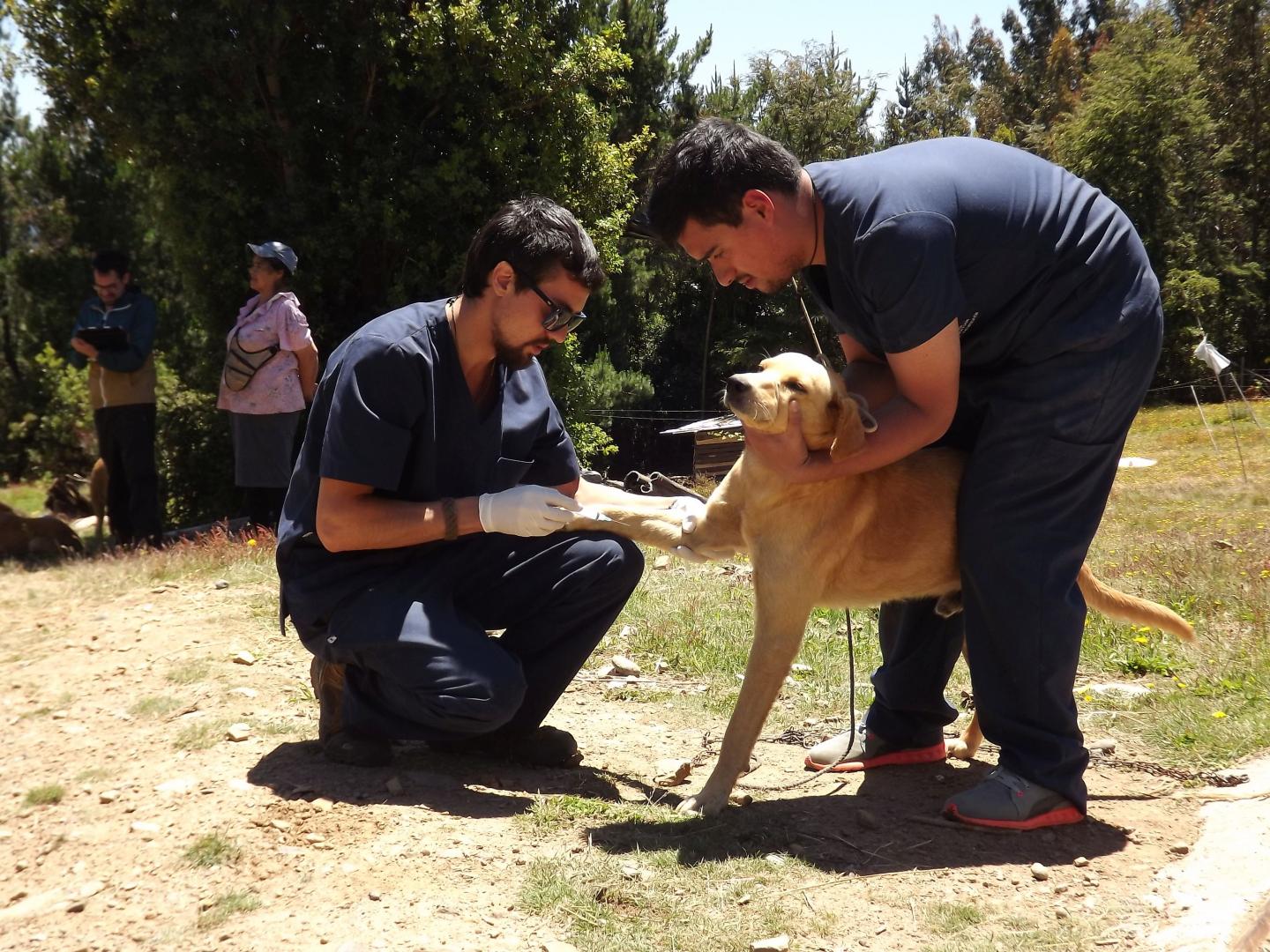
Credit: Javier Cabello Stom (CC BY 4.0)

The World Health Organization has made it a goal to eliminate human rabies deaths due to dog bites by the year 2030. An increase in dog rabies vaccination rates decreases dog rabies cases, human exposure, and human deaths, researchers now report in PLOS Neglected Tropical Diseases.

Implementing the goal of rabies elimination requires understanding the complex interaction between dog rabies vaccination and human risk and response. Between 1995 and 2005, there was a rapid decline in dog and human rabies cases in seven Latin American countries following investments in both dog vaccination programs and human post-exposure prophylaxis (PEP) use.

New research by Jonathan Yoder, Washington State University, USA, and colleagues analyzed data from those seven countries–Brazil, Colombia, Peru, Venezuela, Nicaragua, Dominican Republic and Mexico. The data, compiled from reports published by the Reunión de Directores de los Programas de Rabia de las Américas (REDIPRA) from 1995 through 2006, included rates of dog vaccinations, dog rabies cases, reported human exposures, human PEP use, and human rabies cases.

The researchers found that a 10% increase in dog rabies vaccination rates decreases dog rabies cases by 2.3%. While human exposures decline as dog rabies cases decline, exposures per dog rabies case increase, likely due to increased awareness. In addition, a 10% increase in dog vaccination leads to a 2.8% decrease in PEP use, and each 10% increase in PEP use decreases human deaths by 7%. Overall, a 10% increase in dog vaccination reduces human deaths by 12.4%.

“The findings highlight the critical importance of mass dog vaccination, heightened public awareness, treatment access, and the use of clinical algorithms to reduce both false negatives leading to death and false positives leading to costly unnecessary PEP prescriptions,” the researchers say.

###

In your coverage please use this URL to provide access to the freely available paper: http://journals.plos.org/plosntds/article?id=10.1371/journal.pntd.0007630

Citation: Yoder J, Younce E, Lankester F, Palmer GH (2019) Healthcare demand in response to rabies elimination campaigns in Latin America. PLOS Neglected Tropical Diseases 13(9): e0007630. https://doi.org/10.1371/journal.pntd.0007630

Funding: Funding was provided to Washington State University by the late Paul G. Allen. Neither Mr. Allen nor members of the Paul G. Allen Family Foundation had any role in study design, data collection and analysis, decision to publish, or preparation of the manuscript.

Competing Interests: The authors declare that no competing interests exist.

Media Contact
Jonathan Yoder
[email protected]

Related Journal Article

http://dx.doi.org/10.1371/journal.pntd.0007630

Tags: BiologyDisease in the Developing WorldHealth Care Systems/ServicesInfectious/Emerging DiseasesMedicine/HealthPets/EthologyVirologyZoology/Veterinary Science
Share12Tweet8Share2ShareShareShare2

Related Posts

IMAGE

UMass Amherst grad student awarded fellowship for food allergy research

July 23, 2021
IMAGE

Less-sensitive COVID-19 tests may still achieve optimal results if enough people tested

July 22, 2021

Public trust in CDC, FDA, and Fauci holds steady, survey shows

July 20, 2021

USC study shows male-female differences in immune cell function

July 19, 2021
Please login to join discussion

POPULAR NEWS

  • Saying Goodbye to PGY-6: Pediatric Fellowship Realities

    103 shares
    Share 41 Tweet 26
  • Multi-Hospital Study Reveals Long Covid Burden Is Twice as High as Current Estimates

    92 shares
    Share 36 Tweet 23
  • Detection of EDCs in Breast Milk and Infant Urine Up to Six Months Highlights Early Exposure Risks

    77 shares
    Share 31 Tweet 19
  • New Drug Candidate Developed at McMaster Shows Potential for Treating Brain Cancer

    58 shares
    Share 23 Tweet 15

About

We bring you the latest biotechnology news from best research centers and universities around the world. Check our website.

Follow us

Recent News

Energy-Saving Membrane Technology Developed by KAIST and Georgia Tech Enables Crude Oil Separation Without Boiling

Cracking the Code: How Cancer Evades Antibody-Drug Conjugates and New Strategies to Overcome Resistance

Chiral Laser Gyroscopes Surpass Lock-In Limit

Subscribe to Blog via Email

Enter your email address to subscribe to this blog and receive notifications of new posts by email.

Join 82 other subscribers
  • Contact Us

Bioengineer.org © Copyright 2023 All Rights Reserved.

Welcome Back!

Login to your account below

Forgotten Password?

Retrieve your password

Please enter your username or email address to reset your password.

Log In
No Result
View All Result
  • Homepages
    • Home Page 1
    • Home Page 2
  • News
  • National
  • Business
  • Health
  • Lifestyle
  • Science

Bioengineer.org © Copyright 2023 All Rights Reserved.