Credit: UAHS BioCommunications
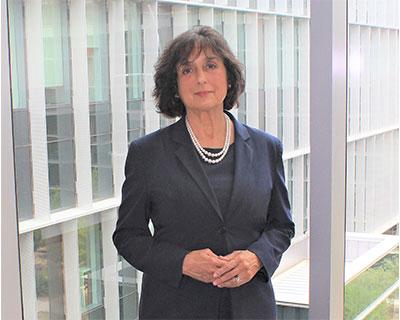
TUCSON, Ariz. – Roberta Diaz Brinton, PhD, an internationally recognized expert on Alzheimer’s disease and inaugural director of the Center for Innovation in Brain Science at the University of Arizona Health Sciences, has received a five-year, $1.8 million grant from the National Institutes of Health Institute on Aging.
With the funding, Dr. Brinton will develop a unique training program to cultivate a diverse pool of highly trained scientists from diverse fields who can effectively address the nation’s Alzheimer’s research needs.
“Curing Alzheimer’s disease requires a multidisciplinary approach. We have the team and the strategy to build an innovative, expertise-diverse team to address this challenge,” Dr. Brinton said. “Through this NIA training grant, we have the opportunity to innovate our national scientific and clinical workforce to develop therapeutics to address the epidemic of Alzheimer’s disease.”
To achieve that goal, Dr. Brinton and colleagues have designed an innovative, collaborative training program that is patient-inspired and data driven: the University of Arizona Translational Research on Alzheimer’s Disease and AD Related Dementias program, or AZ-TRADD.
“Our goal,” Dr. Brinton noted, “is to train the next generation of Alzheimer’s researchers in 21st century team science that spans translational, clinical and big data science. Our stellar team of University of Arizona translational faculty and community partners is uniquely qualified to support and foster AZ-TRADD. Importantly, the UA’s diverse, passionate and exceptional graduate and medical students are poised to be at the vanguard of innovators in developing cures for Alzheimer’s.”
“The innovative translational research at the University of Arizona into extending the cognitive health span to match our life spans is a strategic priority for the university and we are all thrilled by the incredible work that Dr. Brinton and her team are doing to understand Alzheimer’ disease,” said UA President Robert C. Robbins, MD. “I am confident that Dr. Brinton’s team of world-class translational Alzheimer’s researchers will develop the next generation of leaders in the field and, in turn, develop treatments and someday possible cures for this devastating disease that affects so many people across the globe.”
Based at the UAHS Center for Innovation in Brain Science and the UAHS Clinical Translational Sciences Program, led by Jorge Gomez, MD, PhD, the AZ-TRADD training program will recruit predoctoral PhD, MD and PhD/MD students from across multiple disciplines to serve as fellows.
“Our program is designed to develop innovative translational researchers who embrace the complexity of Alzheimer’s by providing them the best mentors and tools to cure this devastating disease,” Dr. Brinton said.
To achieve the program’s goal, Dr. Brinton has an “all brains on deck” approach. She is joined in this endeavor by UAHS Center for Innovation for Brain Science colleagues: Kathy Rodgers, PhD; Lalitha Madhaven, MD, PhD; Fei Yin, PhD; May Khanna, PhD; Kevin Gaffney, PhD; Rui Chang, PhD; Alex Thome, PhD; and 16 core faculty mentors across the University of Arizona, including UA McKnight Brain Institute members Carol Barnes, PhD, director and Regents’ Professor, Lee Ryan, PhD, and Meredith Hay, PhD; Anita Koshy, MD; and UA Data Science Institute Director Nirav Merchant.
Through a diverse team of UA faculty “accelerators,” AZ-TRADD fellows will receive in-depth training from UA experts in topics ranging from immunology to machine learning and therapeutic development. In addition, the program’s community partners — the Alzheimer’s Association Desert Southwest Chapter and the Critical Path Institute — will be key contributors.
In its inaugural year, the AZ-TRADD program will recruit six fellows.
The UA is one of three institutions in the United States and the first in the West to receive an NIA grant to develop training programs to advance translational research training for Alzheimer’s disease and related dementias.
###
The AZ-TRADD training program is supported by the National Institute on Aging of the National Institutes of Health under award No. T32AG061897. The content is solely the responsibility of the authors and does not necessarily represent the official views of the National Institutes of Health.
About the University of Arizona Health Sciences
The University of Arizona Health Sciences is the statewide leader in biomedical research and health professions training. The UA Health Sciences includes the UA Colleges of Medicine (Phoenix and Tucson), Nursing, Pharmacy and Mel and Enid Zuckerman College of Public Health, with main campus locations in Tucson and the growing Phoenix Biomedical Campus in downtown Phoenix. From these vantage points, the UA Health Sciences reaches across the state of Arizona and the greater Southwest to provide cutting-edge health education, research, patient care and community outreach services. A major economic engine, the UA Health Sciences employs approximately 4,000 people, has approximately 800 faculty members and garners more than $140 million in research grants and contracts annually. For more information: uahs.arizona.edu
Media Contact
UAHS Office of Public Affairs
[email protected]
Original Source
https:/