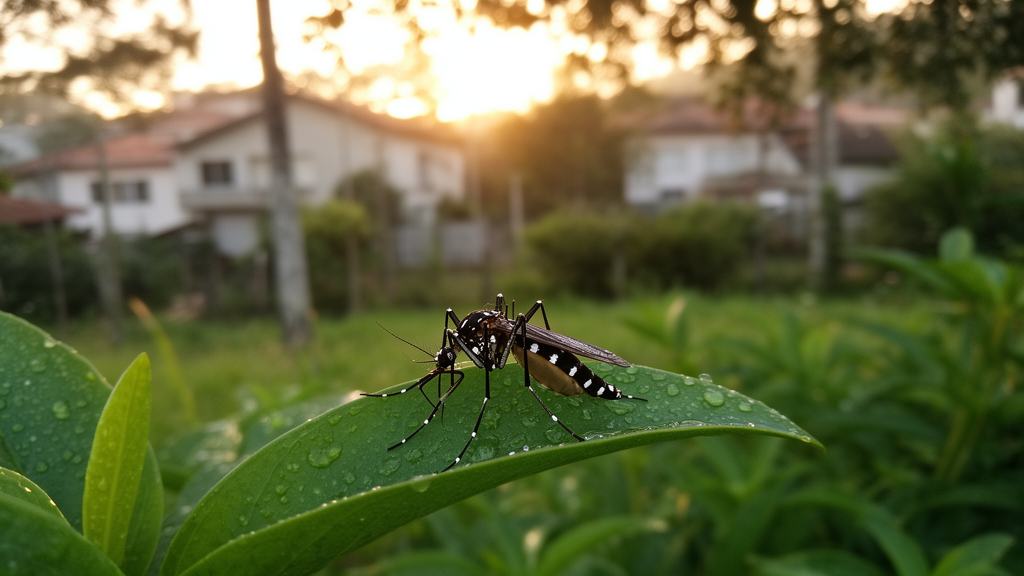
Dengue fever has become endemic in Rio Grande do Sul, Brazil's southernmost state, according to a new study that integrates entomological, epidemiological and environmental data with newly generated viral genomes. The research, published in Nature Communications, documents how the mosquito vector Aedes aegypti expanded across the state's municipalities between 2015 and 2023, coinciding with a marked rise in dengue cases from 2020 onward and the establishment of locally persisting viral lineages. The scale of Brazil's dengue burden provides the backdrop for the findings.
The study set out to trace how dengue virus, or DENV, gained a foothold in this southern frontier as its mosquito vector pushed into subtropical and temperate zones. To reconstruct the dynamics of the invasion, the researchers combined surveillance data on mosquito infestation with epidemiological records of dengue cases and environmental information spanning nearly a decade. They then sequenced and analyzed 665 new DENV genomes collected in the region, using the viral genetic data to infer how lineages moved and persisted across seasons and municipalities.
The entomological record shows a clear expansion. Over the study period, Aedes aegypti spread across an increasing number of Rio Grande do Sul municipalities, extending the vector's footprint deeper into the state. This infestation growth overlapped temporally with the surge in human cases, which accelerated sharply from 2020 onward after years of comparatively limited transmission.
By 2023, the epidemiological picture had shifted decisively. Nearly half of the state's municipalities surpassed the incidence threshold of at least 20 cases per 100,000 residents per year, a benchmark indicating endemic transmission rather than isolated imported outbreaks. The genomic analysis adds a crucial layer of interpretation.
Rather than each seasonal outbreak being seeded anew by viruses imported from elsewhere, the 665 genomes are consistent with local persistence of viral lineages across years, with the same lineages re-emerging to drive successive seasonal outbreaks. Genomics also identified the geography of spread. The Northwest and Metropolitan regions of Rio Grande do Sul emerged as key hubs for viral dissemination within the state, acting as sources from which lineages dispersed to other municipalities.
Rio Grande do Sul's transformation from sporadic-case state to endemic territory illustrates this north-to-south expansion of dengue risk in the Americas, and the study's authors frame it as evidence of an urgent need to intensify vector control and surveillance in newly endemic areas. The study's authors emphasize that mitigating the dengue burden in temperate Brazil will depend on intensified vector control and surveillance in the areas where the virus has now taken hold.
Subject of Research: Dengue virus emergence and Aedes aegypti invasion in temperate southern Brazil
Article Title: Increasing dengue outbreaks in temperate Brazil are associated with Aedes aegypti invasion and infestation levels
Article References: Bermann, T. D. L., Barbosa, D. A. M., Gregianini, T. S., Godinho, F. M., Baethgen, L. F., Martiny, F. L., Möllmann, E. B., Ruivo, A. P., dos Santos, F. M., Ferreira, C. D. N., de Lima, G. B., Dezordi, F. Z., Amancio, J. G. C., Bauermann, M., Selayaran, T. M., Loreto, E. L. D. S., Naveca, F. G., Oliveira, A. L. S. D., da Veiga, A. B. G., … da Luz Wallau, G. (2026). Increasing dengue outbreaks in temperate Brazil are associated with Aedes aegypti invasion and infestation levels. Nature Communications. https://doi.org/10.1038/s41467-026-78978-9
Image Credits: AI Generated
DOI: 10.1038/s41467-026-78978-9
Keywords: dengue, Aedes aegypti, Rio Grande do Sul, viral genomics, endemic transmission, vector control, Brazil, epidemiology, mosquito-borne disease, DENV lineages, temperate zones, public health surveillance
News Source: Phoebe Ingram. (October 27, 2026). Dengue Takes Root in Temperate Southern Brazil as Aedes aegypti Spreads. Scienmag.