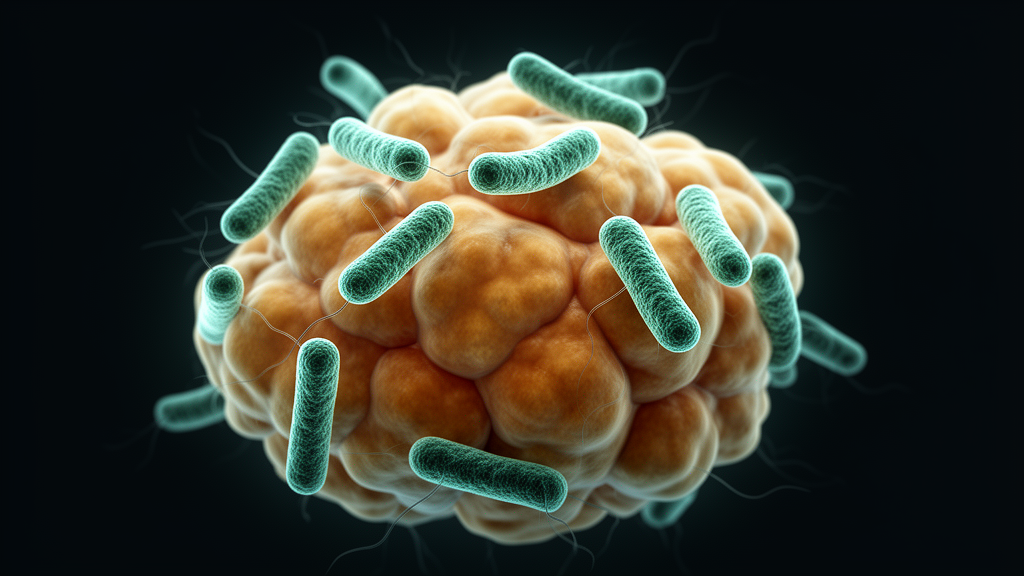
Scientists have mapped, gene by gene, what allows Escherichia coli to survive and multiply inside tumors, and then used that map to build an engineered strain that colonized mouse tumors more effectively than the wild-type laboratory strain it was compared against. In a study published in Nature Cancer, a team led by researchers at Columbia University screened all nonessential genes of E. coli for their effects on growth within living tumors, identified metabolic adaptations that sharpen the bacterium’s preference for the tumor environment, and combined several of those adaptations into a single strain that outperformed wild-type bacteria in both colonization and cancer therapy experiments in mice.
The screen relied on a barcoded library of 7,260 single-gene knockout strains, targeting every nonessential E. coli gene, with two independent knockout strains generated for nearly all genes. By sequencing the barcodes after tumors were harvested seven days after bacterial injection, they measured how the abundance of each mutant changed during its week inside the tumor. Strains lacking genes that were beneficial for intratumoral survival became depleted, while strains lacking genes that were detrimental became enriched, revealing which genes the bacterium needs, and which hold it back, in the tumor microenvironment.
After filtering out mutants that also showed fitness effects in a control experiment that replicated every step of the protocol except the seven days of growth inside the tumor, the analysis yielded 63 genes whose deletion impaired intratumoral fitness and 215 genes whose deletion enhanced it. A striking 40 percent of the fitness-impairing knockouts were lipoproteins of the outer membrane or genes involved in cell envelope integrity. The team focused on lipopolysaccharide biosynthesis genes, a common target for attenuating bacteria used in cancer therapy, and found that disrupting these genes strongly reduced tumor colonization. The penalty scaled with the degree of structural damage: strains lacking key inner core components of lipopolysaccharide could not colonize tumors at all. By contrast, almost all amino acid auxotrophic mutants, including auxotrophies previously used for biocontainment, had minimal impact on intratumoral fitness, likely because the tumor supplies the missing metabolites.
Among the mutations that improved tumor colonization, a clear pattern emerged: deletions in nonglucose catabolic pathways, particularly phosphotransferase systems, or PTSs, which import sugars other than glucose. The researchers proposed a mechanism based on competition for phosphoenolpyruvate, the phosphate donor that PTSs require to transport their substrates. When a nonglucose PTS is deleted, its phosphate supply is freed up for the glucose transporters. Consistent with this idea, knockout strains grew faster in minimal medium with glucose as the sole carbon source, showed higher phosphoenolpyruvate levels, and took up more of a fluorescent glucose analog than wild-type bacteria. Transcriptomic analysis supported the picture: genes activated by the catabolite repression regulator CRP were expressed at lower levels in the knockout strains, while CRP-repressed genes were higher, indicating that the mutants had become more strongly polarized toward glucose usage.
Several lines of evidence confirmed that the advantage depended on glucose transport. Double knockouts combining a nonglucose PTS deletion with a deletion in a glucose PTS gene erased the competitive advantage, and daily injections of glucose directly into tumors widened the knockout strains’ edge over wild type, suggesting the mutants exploit increased glucose availability more effectively. Complementing the gatC deletion with a plasmid restoring its expression returned the mutant to wild-type fitness, while introducing the same plasmid into wild-type bacteria impaired their tumor colonization. The authors note a limitation: glucose levels were not directly measured within the MC38 tumor microenvironment, and the knockout strains also grew better on lactate, so glucose may not be the sole contributor to the phenotype.
Building on these results, the researchers engineered a quadruple mutant, combining deletions in carbon utilization pathways for carbohydrates and fatty acids with deletions in nitrogen utilization pathways for carnitine and nicotinamide. They named the strain Ec-TA, for tumor-avid E. coli. Ec-TA colonized tumors significantly better than wild type after both intratumoral and intravenous injection, while showing reduced or equivalent colonization of normal organs. In noncompetitive experiments injecting only one strain, Ec-TA achieved roughly sixfold higher bacterial burden in tumors than wild type after either route of administration. No colonies were recovered from normal organs seven days after intravenous injection of the entire pooled knockout library, indicating that none of the knockout strains persisted in healthy tissue.
The team then tested whether Ec-TA could evict bacteria already established in tumors. In mouse experiments with bilateral tumors, one tumor was pre-colonized by intratumoral injection of wild-type bacteria two days before intravenous injection of luminescently labeled wild-type or Ec-TA strains. Wild-type bacteria failed to expand in pre-colonized tumors, but Ec-TA proliferated to levels comparable to those in uncolonized tumors, indicating competitive exclusion of the resident population. The authors caution that these experiments do not fully capture the complexity of multispecies microbial communities, but they suggest the trait could be relevant for tumors harboring endogenous bacteria.
To test whether the improved colonization translated into better therapy in mice, the researchers equipped both wild-type and Ec-TA bacteria with a quorum sensing-based lysis system and a plasmid encoding mouse interferon gamma. In mice bearing MC38 tumors, Ec-TA delivering the payload controlled tumor growth better than wild-type bacteria after both intratumoral and intravenous injection, with complete tumor regression observed in 2 of 19 tumors treated intratumorally and 4 of 14 tumors treated intravenously; no complete responses occurred in the other treatment groups. No substantial weight differences appeared across treatment groups. Immune profiling showed that Ec-TA-delivered interferon gamma increased the proportion of CD8-positive T cells and the frequency of interferon gamma-producing CD8-positive T cells within tumors, most likely reflecting the higher bacterial burden achieved by Ec-TA. The phenotype extended to a colorectal CT26 model in a different mouse strain and to an orthotopic MC38 model in which tumors were implanted in the colonic mucosa, although neither bacterial strain significantly inhibited CT26 tumor growth with the interferon gamma payload in that model.
The authors emphasize that the findings are limited to a single bacterial species and the colorectal tumor models tested, and that validation in metabolically distinct cancer types and other bacterial chassis remains outstanding. Even so, the study demonstrates a principle with broad implications for the growing field of bacterial cancer therapy: rather than relying on natural tumor tropism, bacteria can be deliberately retooled to match the metabolic environment of tumors, yielding a chassis that colonizes tumors more selectively, displaces established bacterial populations, and delivers immunostimulatory payloads more effectively.
Subject of Research: Genome-wide identification of E. coli genes governing intratumoral fitness and engineering of a tumor-avid bacterial cancer therapy chassis
Article Title: A genome‑wide screen in E. coli reveals metabolic adaptations that enhance intratumoral fitness and bacterial cancer therapy efficacy
Article References: Chen, N., Rouanne, M., Yang, Z., Mariuzza, D. L., Fabozzi, M., Shin, A. E., Nishiwaki, N., Rajbhandari, P., Ringham, O. R., Schwabe, A. D., Zhu, M., Stockwell, B. R., Mori, H., Danino, T., & Arpaia, N. (2026). A genome‑wide screen in E. coli reveals metabolic adaptations that enhance intratumoral fitness and bacterial cancer therapy efficacy. Nature Cancer. https://doi.org/10.1038/s43018-026-01263-7
Image Credits: AI Generated
DOI: 10.1038/s43018-026-01263-7
Keywords: E. coli, bacterial cancer therapy, tumor microenvironment, genome-wide screen, phosphotransferase system, glucose metabolism, lipopolysaccharide, tumor colonization, Ec-TA, interferon gamma, MC38, metabolic engineering
News Source: Nathaniel Bowman. (October 29, 2026). Deleting sugar-sensing genes turns E. coli into a sharper tumor colonizer. Scienmag.