• HOME
  • NEWS
  • EXPLORE
    • CAREER
      • Companies
      • Jobs
    • EVENTS
    • iGEM
      • News
      • Team
    • PHOTOS
    • VIDEO
    • WIKI
  • BLOG
  • COMMUNITY
    • FACEBOOK
    • INSTAGRAM
    • TWITTER
Tuesday, October 20, 2026
BIOENGINEER.ORG
No Result
View All Result
  • Login
  • HOME
  • NEWS
  • EXPLORE
    • CAREER
      • Companies
      • Jobs
        • Lecturer
        • PhD Studentship
        • Postdoc
        • Research Assistant
    • EVENTS
    • iGEM
      • News
      • Team
    • PHOTOS
    • VIDEO
    • WIKI
  • BLOG
  • COMMUNITY
    • FACEBOOK
    • INSTAGRAM
    • TWITTER
No Result
View All Result
Bioengineer.org
No Result
View All Result
Home NEWS Science News Biology

Defective HIV proviruses reprogram T cells at selected integration sites

by
October 20, 2026
in Biology, Health
Reading Time: 2 mins read
0
Defective HIV proviruses reprogram T cells at selected integration sites

Defective HIV proviruses reprogram T cells at selected integration sites

Share on FacebookShare on TwitterShare on LinkedinShare on RedditShare on Telegram

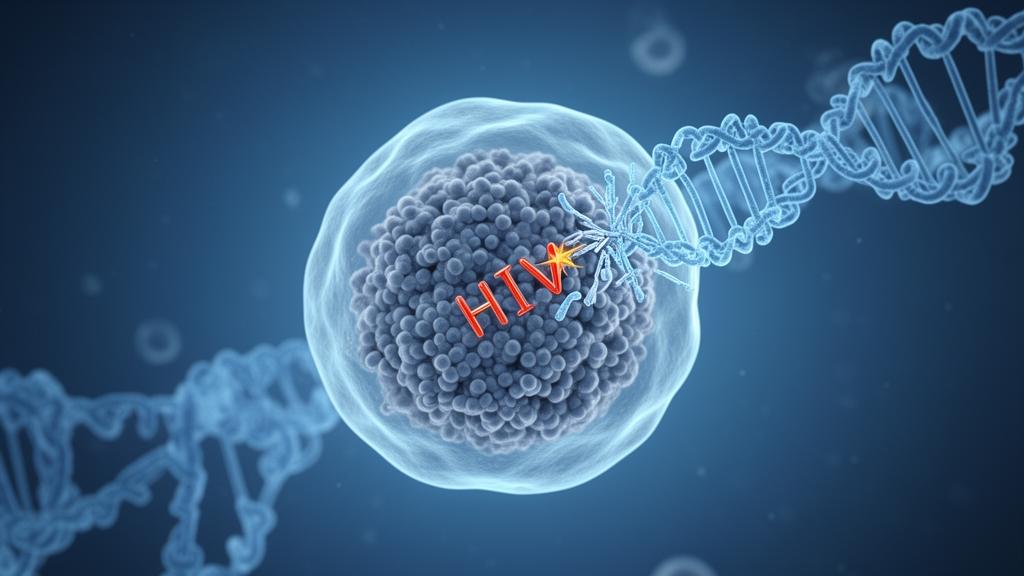
People living with HIV on antiretroviral therapy accumulate primarily defective proviral sequences in the genomes of often clonally expanded CD4 T cells, according to a cellular and molecular study. The researchers found that a substantial share of the HIV-derived DNA is transcriptionally active and preferentially located at distinct genomic loci, supporting a selective process in which integration-site-specific interactions between viral and host sequences influence the affected cells.

The study focused on BACH2, one of the most prominent selected integration genes, and used a cellular model containing BACH2-integrated proviruses. Proviral transcription drove abnormal BACH2 protein levels that escaped the gene’s autoregulatory feedback, producing BACH2-dependent changes in the cell’s transcriptomic program. The authors describe this process as exaptation: viral sequences use regulatory features associated with a host gene to alter cellular identity and behavior.

When the investigators mimicked the relevant changes in primary CD4 T lymphocytes, BACH2 shifted the cells toward a proliferative, precursor memory-like state. The reprogrammed cells had traits associated with persistent HIV reservoir cells in people living with HIV, including immune-evasion characteristics and enhanced cellular survival. These experiments provide a mechanistic model for how transcriptionally active, defective proviruses could influence long-lived HIV target cells; they do not directly demonstrate the same causal process in people receiving antiretroviral therapy.

Inhibition of proviral transcriptional activity mitigated exaptation in the experimental system, indicating that viral transcription can be a point of intervention for reducing the modeled effects. The result does not establish a clinical strategy or show that transcriptional inhibition would reduce HIV reservoirs in people. Effects also depended on the integration site: analysis of another prominently selected gene, STAT5B, suggested that proviral exaptation there drove a contrasting, effector-like T-cell fate. The findings therefore support a locus-dependent model in which structurally defective but transcriptionally active proviruses can alter CD4 T-cell differentiation, expansion and survival through insertional effects involving host genes.

Subject of Research: Mechanisms by which defective, transcriptionally active HIV-1 proviruses alter CD4 T-cell state during antiretroviral therapy

Article Title: Selective persistence of HIV-1-infected T cell clones can occur through immune reprogramming driven by defective, transcriptionally active proviruses

Article References: Hamann, M. V., Brauckmann, L., Schwarz, C., Spohn, M., Stoeck, R., Leddy, S. M., Frouard, J., Adiba, M., Winzer, R., Hausmann, F., Virdi, S., Grundhoff, A., Feschotte, C., Sauter, D., Muecksch, F., Roan, N. R., Tolosa, E., & Lange, U. C. (2026). Selective persistence of HIV-1-infected T cell clones can occur through immune reprogramming driven by defective, transcriptionally active proviruses. PLOS Pathogens, 22(10), e1014618. https://doi.org/10.1371/journal.ppat.1014618

Image Credits: AI Generated

DOI: 10.1371/journal.ppat.1014618

Keywords: HIV-1, proviruses, CD4 T cells, antiretroviral therapy, HIV reservoir, BACH2, STAT5B, integration sites, gene regulation, immune evasion, Selective, persistence

News Source: Juliet Wilcox. (October 20, 2026). Defective HIV proviruses reprogram T cells at selected integration sites. Scienmag.

Tags: antiretroviral therapyBACH2CD4+ T cellsGene regulationHIV reservoirHIV-1immune evasionintegration sitespersistenceprovirusesselectiveSTAT5B
Share12Tweet7Share2ShareShareShare1

Related Posts

Systematic review finds healthcare AI publication governance remains fragmented

Systematic review finds healthcare AI publication governance remains fragmented

October 20, 2026
Case report links compound heterozygous NDUFS1 variants to severe axonal polyneuropathy in an adolescent boy

Case report links compound heterozygous NDUFS1 variants to severe axonal polyneuropathy in an adolescent boy

October 20, 2026

Review outlines collateral-sensitivity strategies for antimicrobial resistance

October 20, 2026

Structured shift-huddle training linked with short-term gains in nurses’ knowledge and safety practice

October 20, 2026

POPULAR NEWS

  • Modeled structural resilience fell slightly despite adaptive-capacity gains in 10 dryland oasis units

    Modeled structural resilience fell slightly despite adaptive-capacity gains in 10 dryland oasis units

    29 shares
    Share 12 Tweet 7
  • Systematic review finds healthcare AI publication governance remains fragmented

    29 shares
    Share 12 Tweet 7
  • Nanocrystalline Ni-Cr-Y films reach 11.0 GPa hardness in doping study

    29 shares
    Share 12 Tweet 7
  • Comparative organellar genomics places two East Asian simple-leaved Sorbus species within the East Asian lineage

    29 shares
    Share 12 Tweet 7

About

We bring you the latest biotechnology news from best research centers and universities around the world. Check our website.

Follow us

Recent News

Modeled structural resilience fell slightly despite adaptive-capacity gains in 10 dryland oasis units

Systematic review finds healthcare AI publication governance remains fragmented

Nanocrystalline Ni-Cr-Y films reach 11.0 GPa hardness in doping study

Subscribe to Blog via Email

Enter your email address to subscribe to this blog and receive notifications of new posts by email.

Join 85 other subscribers
  • Contact Us

Bioengineer.org © Copyright 2023 All Rights Reserved.

Welcome Back!

Login to your account below

Forgotten Password?

Retrieve your password

Please enter your username or email address to reset your password.

Log In
No Result
View All Result
  • Homepages
    • Home Page 1
    • Home Page 2
  • News
  • National
  • Business
  • Health
  • Lifestyle
  • Science

Bioengineer.org © Copyright 2023 All Rights Reserved.