• HOME
  • NEWS
  • EXPLORE
    • CAREER
      • Companies
      • Jobs
    • EVENTS
    • iGEM
      • News
      • Team
    • PHOTOS
    • VIDEO
    • WIKI
  • BLOG
  • COMMUNITY
    • FACEBOOK
    • INSTAGRAM
    • TWITTER
Saturday, February 7, 2026
BIOENGINEER.ORG
No Result
View All Result
  • Login
  • HOME
  • NEWS
  • EXPLORE
    • CAREER
      • Companies
      • Jobs
        • Lecturer
        • PhD Studentship
        • Postdoc
        • Research Assistant
    • EVENTS
    • iGEM
      • News
      • Team
    • PHOTOS
    • VIDEO
    • WIKI
  • BLOG
  • COMMUNITY
    • FACEBOOK
    • INSTAGRAM
    • TWITTER
  • HOME
  • NEWS
  • EXPLORE
    • CAREER
      • Companies
      • Jobs
        • Lecturer
        • PhD Studentship
        • Postdoc
        • Research Assistant
    • EVENTS
    • iGEM
      • News
      • Team
    • PHOTOS
    • VIDEO
    • WIKI
  • BLOG
  • COMMUNITY
    • FACEBOOK
    • INSTAGRAM
    • TWITTER
No Result
View All Result
Bioengineer.org
No Result
View All Result
Home NEWS Science News Biology

Deep-sea coral gardens discovered in the submarine canyons off south Western Australia

Bioengineer by Bioengineer
February 28, 2020
in Biology
Reading Time: 2 mins read
0
IMAGE
Share on FacebookShare on TwitterShare on LinkedinShare on RedditShare on Telegram

IMAGE

Credit: Schmidt Ocean Institute


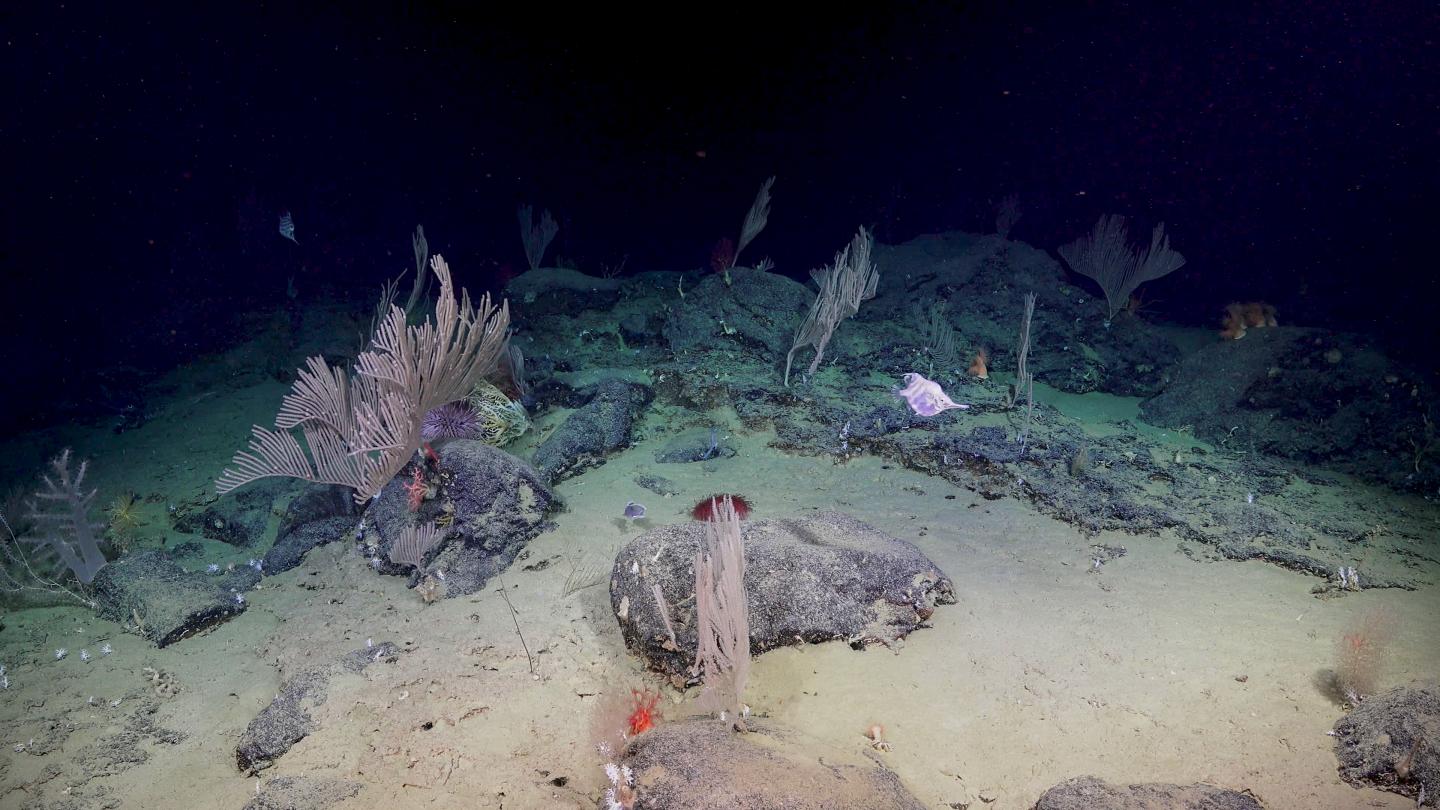
Bremer Canyon Marine Park is already known as a biodiversity hotspot for marine species such as whales and dolphins, however, a recent expedition focused on the deep sea has now revealed rich and diverse ecosystems inhabiting the cold waters deep within the canyon. Led by researchers from the University of Western Australia (UWA), these discoveries were only made possible by the philanthropic Schmidt Ocean Institute’s (SOI) deep-sea remotely operated vehicle, SuBastian, which is capable of sampling depths to 4,500 meters.

The team strategically collected deep-sea corals, associated fauna, seawater, and geological samples from the abyssal depths (~4,000 meters) to the continental shelf (~200 meters). “We have already made a number of remarkable discoveries from the Bremer Canyon” said Dr Julie Trotter, the Chief Scientist from UWA who led the expedition. “The vertical cliffs and ridges support a stunning array of deep-sea corals that often host a range of organisms and form numerous mini-ecosystems”.

These new discoveries are being integrated into a comprehensive package of biological, geological, and bathymetric data. Such rare records of these deep-sea habitats are a new and very important contribution to the Marine Parks, which will help managers as well as the broader community to better understand and protect these previously unknown ecosystems.

The deeper waters in the three oceans that surround Australia, including the world’s largest barrier reef and submarine canyons, are largely unexplored. The expedition explored the Bremer, Leeuwin and Perth canyons, all of which have extensive fossil coral deposits, with the Leeuwin especially notable for a massive pedestal-like coral graveyard.

“This has global implications given these waters originate from around Antarctica which feed all of the major oceans and regulate our climate system” said Professor Malcolm McCulloch from UWA.

Australia has only one oceanographic vessel available for scientific research and no supporting deep sea underwater robots, which makes this expedition so important and rare.

Facing the Southern Ocean, the Bremer Canyon provides important information on the recent and past histories of climate change and ocean conditions in this region, as well as global scale events. Because the Southern Ocean completely encircles Antarctica, it is the main driver of the global climate engine and regulates the supply of heat and nutrient-rich waters to the major oceans. “A particular species of solitary cup coral was found during the expedition. This is significant because we are working on the same coral in the Ross Sea on the Antarctic shelf, in much colder waters”, said collaborator and co-Chief Scientist Dr Paolo Montagna from the Institute of Polar Sciences in Italy. “This is an important connection between disparate sites across the Southern Ocean, which helps us trace changes in water masses forming around Antarctica and dispersing northward into the Indian and other oceans”.

You can view some of the amazing species discoveries in 4K here. Additional high resolution images and Broll can be found here. You can learn more at https://schmidtocean.org/cruise/coralandcanyonadventure/.

###

Media Contact
Carlie Wiener
[email protected]
808-628-8666

Original Source

https://schmidtocean.org/cruise/coralandcanyonadventure/

Tags: BiodiversityBiologyClimate ChangeEcology/EnvironmentGeneticsMarine/Freshwater BiologyZoology/Veterinary Science
Share12Tweet8Share2ShareShareShare2

Related Posts

New Study Uncovers Mechanism Behind Burn Pit Particulate Matter–Induced Lung Inflammation

New Study Uncovers Mechanism Behind Burn Pit Particulate Matter–Induced Lung Inflammation

February 6, 2026

DeepBlastoid: Advancing Automated and Efficient Evaluation of Human Blastoids with Deep Learning

February 6, 2026

Navigating the Gut: The Role of Formic Acid in the Microbiome

February 6, 2026

AI-Enhanced Optical Coherence Photoacoustic Microscopy Revolutionizes 3D Cancer Model Imaging

February 6, 2026
Please login to join discussion

POPULAR NEWS

  • Robotic Ureteral Reconstruction: A Novel Approach

    Robotic Ureteral Reconstruction: A Novel Approach

    82 shares
    Share 33 Tweet 21
  • Digital Privacy: Health Data Control in Incarceration

    63 shares
    Share 25 Tweet 16
  • Study Reveals Lipid Accumulation in ME/CFS Cells

    57 shares
    Share 23 Tweet 14
  • Breakthrough in RNA Research Accelerates Medical Innovations Timeline

    53 shares
    Share 21 Tweet 13

About

We bring you the latest biotechnology news from best research centers and universities around the world. Check our website.

Follow us

Recent News

Exploring Decision-Making in Dementia Caregivers’ Mobility

Succinate Receptor 1 Limits Blood Cell Formation, Leukemia

Palmitoylation of Tfr1 Drives Platelet Ferroptosis and Exacerbates Liver Damage in Heat Stroke

Subscribe to Blog via Email

Enter your email address to subscribe to this blog and receive notifications of new posts by email.

Join 73 other subscribers
  • Contact Us

Bioengineer.org © Copyright 2023 All Rights Reserved.

Welcome Back!

Login to your account below

Forgotten Password?

Retrieve your password

Please enter your username or email address to reset your password.

Log In
No Result
View All Result
  • Homepages
    • Home Page 1
    • Home Page 2
  • News
  • National
  • Business
  • Health
  • Lifestyle
  • Science

Bioengineer.org © Copyright 2023 All Rights Reserved.