• HOME
  • NEWS
  • EXPLORE
    • CAREER
      • Companies
      • Jobs
    • EVENTS
    • iGEM
      • News
      • Team
    • PHOTOS
    • VIDEO
    • WIKI
  • BLOG
  • COMMUNITY
    • FACEBOOK
    • INSTAGRAM
    • TWITTER
Sunday, May 10, 2026
BIOENGINEER.ORG
No Result
View All Result
  • Login
  • HOME
  • NEWS
  • EXPLORE
    • CAREER
      • Companies
      • Jobs
        • Lecturer
        • PhD Studentship
        • Postdoc
        • Research Assistant
    • EVENTS
    • iGEM
      • News
      • Team
    • PHOTOS
    • VIDEO
    • WIKI
  • BLOG
  • COMMUNITY
    • FACEBOOK
    • INSTAGRAM
    • TWITTER
  • HOME
  • NEWS
  • EXPLORE
    • CAREER
      • Companies
      • Jobs
        • Lecturer
        • PhD Studentship
        • Postdoc
        • Research Assistant
    • EVENTS
    • iGEM
      • News
      • Team
    • PHOTOS
    • VIDEO
    • WIKI
  • BLOG
  • COMMUNITY
    • FACEBOOK
    • INSTAGRAM
    • TWITTER
No Result
View All Result
Bioengineer.org
No Result
View All Result
Home NEWS Science News

Dartmouth engineering study shows renewable energy will enhance power grid’s resilience

Bioengineer by Bioengineer
May 11, 2021
in Science News
Reading Time: 2 mins read
0
IMAGE
Share on FacebookShare on TwitterShare on LinkedinShare on RedditShare on Telegram

IMAGE

Credit: Dakota Thompson/Dartmouth

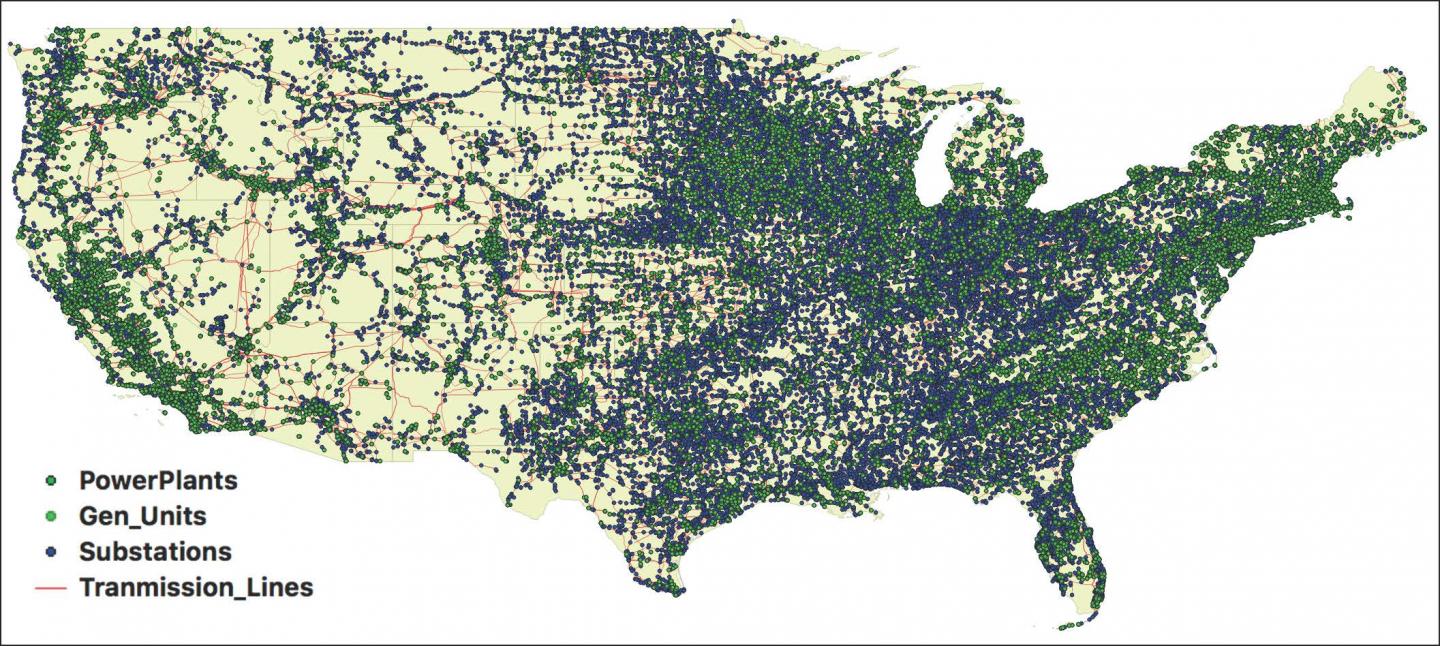
A new Dartmouth Engineering study shows that integrating renewable energy into the American Electric Power System (AEPS) would enhance the grid’s resilience, meaning a highly resilient and decarbonized energy system is possible. The researchers’ analysis is based upon the incremental incorporation of architectural changes that would be required to integrate renewable energy into AEPS.

The paper, “A Hetero-functional Graph Resilience Analysis of the Future American Electric Power System,” was recently published by IEEE Access.

“We concluded that there are no structural trade-offs between grid sustainability and resilience enhancements, meaning these strategic goals can be pursued simultaneously,” said Principal Investigator Amro Farid, a professor at Thayer School of Engineering at Dartmouth and research affiliate at the Massachusetts Institute of Technology (MIT).

“Whether you are of one political inclination or another, value resilience or sustainability, the efforts are entirely aligned and should serve as the basis for a bipartisan consensus on the transformation of the electric power grid,” said Farid.

The results of the structural analysis are the first to take into account the hetero-functionality of the grid’s resources, including renewable energy, using a new method that uniquely captures the true connectedness and capabilities of the grid. Using the novel hetero-functional graph theory, which Farid has been developing for over a decade, the researchers analyzed more than 175,000 energy resources throughout the United States such as power plants, substations, and transmission lines.

“Through the hetero-functional graph theory analysis of the American Electric Power Systems, we were better able to track the systems capabilities and structural resilience as the AEPS underwent both attacks and developments,” said first author Dakota Thompson, a Dartmouth Engineering PhD candidate. Dartmouth Engineering alumnus Wester Schoonenberg also contributed to the study.

The authors received funding from the National Science Foundation (NSF) as part of the American Multi-Modal Energy System (AMES) project, which supported this work.

The researchers are already working on their next project: developing a synthetic model of the AMES, including electric power, oil, natural gas, and coal infrastructure, so that the research community can study how the model can evolve to meet current and future needs.

###

Media Contact
Julie Bonette
[email protected]

Original Source

https://engineering.dartmouth.edu/news/dartmouth-engineering-study-shows-renewable-energy-will-enhance-power-grids-resilience

Related Journal Article

http://dx.doi.org/10.1109/ACCESS.2021.3077856

Tags: Climate ChangeClimate ScienceEarth ScienceEcology/EnvironmentEnergy SourcesEnergy/Fuel (non-petroleum)Industrial Engineering/Chemistry
Share12Tweet8Share2ShareShareShare2

Related Posts

Evaluating Digoxin Use in Patients with Symptomatic Rheumatic Heart Disease

May 10, 2026

Evaluating the Effectiveness and Safety of Digitalis Glycosides in Treating Heart Failure

May 10, 2026

Urdu Fall Risk Questionnaire Adapted for Elderly

May 10, 2026

Key Pharmacological Markers for HIV Prevention in MSM

May 10, 2026
Please login to join discussion

POPULAR NEWS

  • Research Indicates Potential Connection Between Prenatal Medication Exposure and Elevated Autism Risk

    840 shares
    Share 336 Tweet 210
  • New Study Reveals Plants Can Detect the Sound of Rain

    727 shares
    Share 290 Tweet 181
  • Scientists Investigate Possible Connection Between COVID-19 and Increased Lung Cancer Risk

    68 shares
    Share 27 Tweet 17
  • Salmonella Haem Blocks Macrophages, Boosts Infection

    61 shares
    Share 24 Tweet 15

About

We bring you the latest biotechnology news from best research centers and universities around the world. Check our website.

Follow us

Recent News

Evaluating Digoxin Use in Patients with Symptomatic Rheumatic Heart Disease

Evaluating the Effectiveness and Safety of Digitalis Glycosides in Treating Heart Failure

Urdu Fall Risk Questionnaire Adapted for Elderly

Subscribe to Blog via Email

Enter your email address to subscribe to this blog and receive notifications of new posts by email.

Join 82 other subscribers
  • Contact Us

Bioengineer.org © Copyright 2023 All Rights Reserved.

Welcome Back!

Login to your account below

Forgotten Password?

Retrieve your password

Please enter your username or email address to reset your password.

Log In
No Result
View All Result
  • Homepages
    • Home Page 1
    • Home Page 2
  • News
  • National
  • Business
  • Health
  • Lifestyle
  • Science

Bioengineer.org © Copyright 2023 All Rights Reserved.