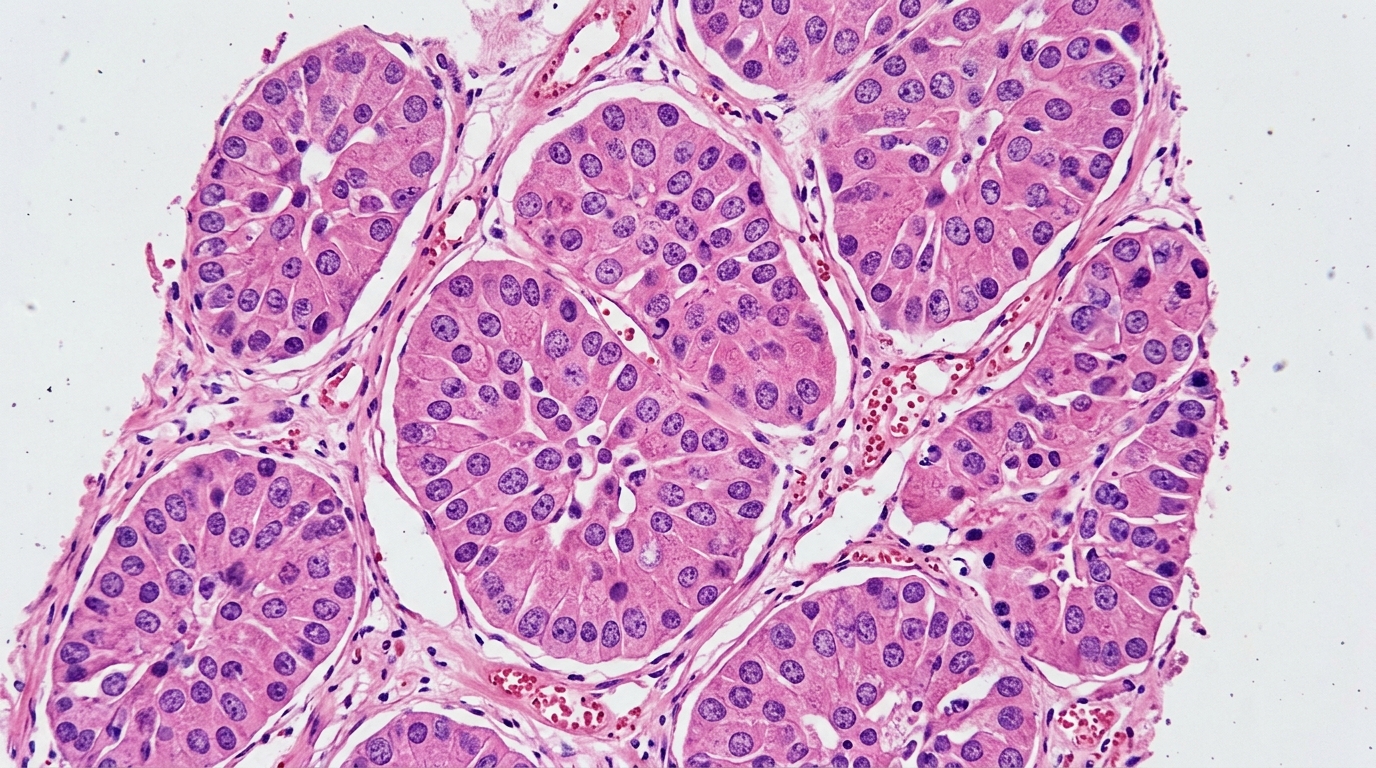
A multi-omic investigation integrating tumor gene expression and DNA methylation data from 194 patients has identified three distinct, site-independent molecular subtypes of neuroendocrine tumors that carry independent prognostic significance. Analyzing tumors across five anatomical locations—including the lung, stomach, pancreas, small intestine, and colorectum—researchers utilized multi-omic factor analysis and eight unsupervised clustering algorithms to define these biologically convergent groups, designated NS1, NS2, and NS3.
The three subtypes exhibited sharply contrasting biological features and clinical outcomes. The NS1 subtype demonstrated a strong immune phenotype enriched in metabolic and nutrient-digestion pathways, while NS2 showed pronounced neuroendocrine differentiation enriched in neuronal and secretory programs. Conversely, NS3 was characterized by global DNA hypermethylation and enrichment in DNA-replication pathways, resulting in significantly poorer outcomes, with a 10-year overall survival rate of 51.9% compared to 83.2% to 83.9% for NS1 and NS2 (p = 3 × 10⁻⁴).
Multivariable Cox proportional hazards models adjusting for patient age, sex, TNM stage, and primary tumor site established that these molecular classifications maintain prognostic value independent of primary tumor location. Furthermore, external validation in independent cohorts of lung, small intestine, and pancreatic tumors with publicly available multi-omic datasets confirmed the robustness of the consensus clustering. These findings provide a cross-site framework revealing convergent biological traits and shared vulnerabilities for future biomarker development and therapeutic design.
Subject of Research: Cross-site multiomic classification of neuroendocrine tumors
Article Title: Decoding neuroendocrine tumors: a cross-site multiomic approach unveils clinically relevant molecular subtypes
Article References: Carretero-Puche, C., Anton-Pascual, B., Lens-Pardo, A., Gomez-Lopez, G., Rubio-Fernandez, M., Rubio-Cuesta, B., Benavent, M., Gomez-Izquierdo, L., Jimenez-Fonseca, P., Teijo, A., Rodriguez-Gil, Y., Perna, C., Caminoa, A., Espinosa-Olarte, P., Salvia, A. L., Gomez-Sanchez, D., Jimenez-Santos, M. J., Garcia-Martin, S., Gibert, B., … Garcia-Carbonero, R. (2026). Decoding neuroendocrine tumors: a cross-site multiomic approach unveils clinically relevant molecular subtypes. Genome Medicine. https://doi.org/10.1186/s13073-026-01826-4
Image Credits: AI Generated
DOI: 10.1186/s13073-026-01826-4
Keywords: neuroendocrine tumors, multiomics, DNA methylation, gene expression, molecular subtypes, prognostic biomarkers, cancer genomics, Decoding, neuroendocrine, tumors, cross-site, multiomic
News Source: Nathaniel Bowman. (November 5, 2026). Cross-Site Multiomic Analysis Identifies Three Clinically Distinct Neuroendocrine Tumor Subtypes. Scienmag.