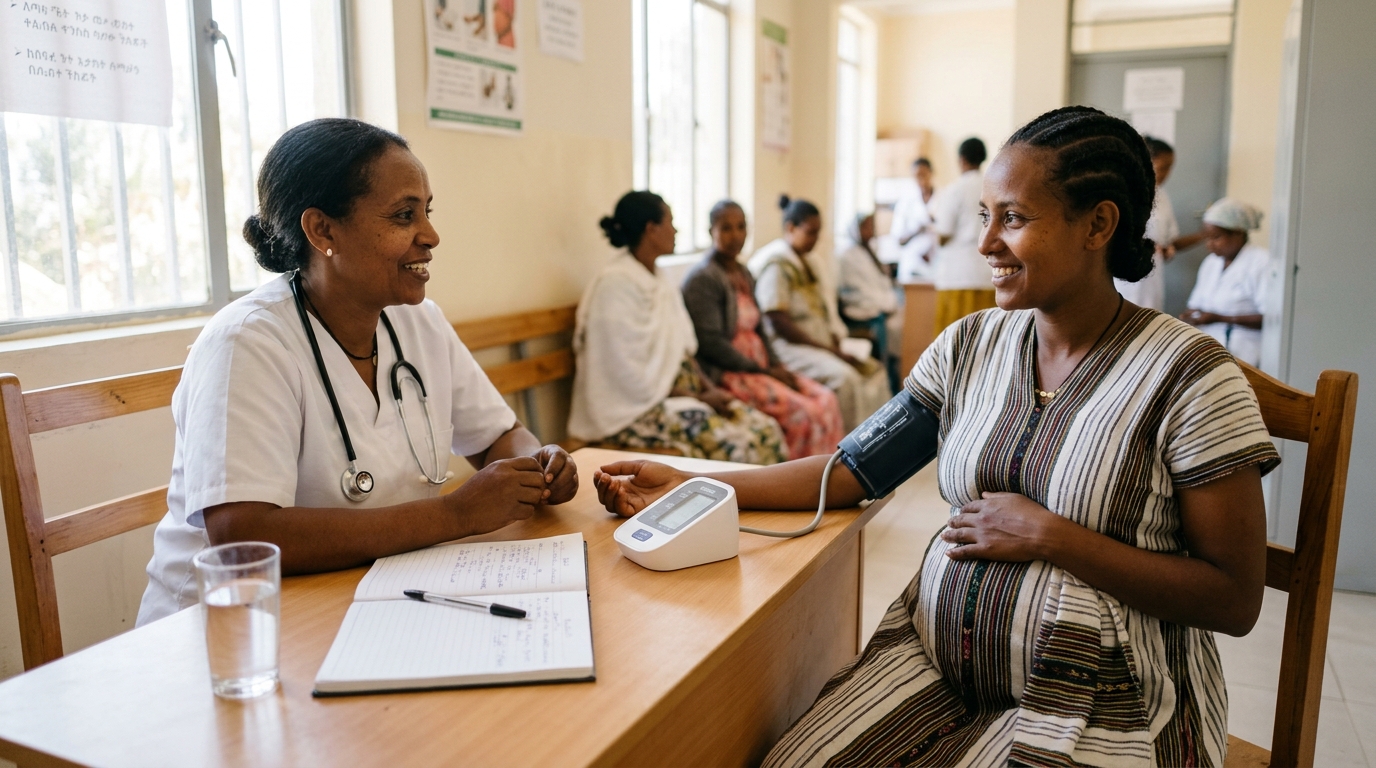
In a community-based cross-sectional study conducted in Muhir Aklil Woreda of Central Ethiopia, researchers found that approximately 79.1 percent of pregnant mothers (329 out of 416 analyzed participants) exhibited good health-promoting lifestyle practices. The investigation, published in BMC Public Health, evaluated health-promoting behaviors across six specific dimensions: health responsibility, physical activity, nutrition, spiritual growth, interpersonal relations, and stress management. The authors noted that this observed level of practice was high compared to previous study findings in the region, addressing an area where research within Ethiopia had previously been limited.
The study took place between September 8 and October 8, 2025, enrolling an initial sample of 422 pregnant mothers selected through a multistage sampling technique, with 416 ultimately included in the final statistical analysis. Data collection was carried out by five data collectors overseen by one supervisor using a semi-structured questionnaire. The research team analyzed the survey data using SPSS version 25, applying a binary logistic regression model to identify factors associated with lifestyle practices, with statistical significance established at a p-value of less than 0.05 within a 95% confidence interval.
Multivariable binary logistic regression revealed four factors significantly associated with health-promoting lifestyle practices among the surveyed pregnant women. Having two or more prior births (parity ≥ 2) was positively associated with good practice (adjusted odds ratio [AOR] = 3.72; 95% CI: 2.32–8.16; p = 0.001), as was joint economic decision-making where both the mother and her husband decide on economic expenses (AOR = 3.41; 95% CI: 1.23–14.91; p = 0.000). Social support was also identified as a significant positive factor (AOR = 1.21; 95% CI: 1.03–8.85; p = 0.04). Conversely, living in a household with five or more family members (family member ≥ 5) was associated with lower odds of good health-promoting lifestyle practices (AOR = 0.21; 95% CI: 0.08–0.8; p = 0.02).
Based on these cross-sectional findings, the authors concluded that responsible bodies should focus on enhancing social support systems, fostering joint household decision-making regarding economic expenses, and addressing barriers linked to family responsibilities. Because the study utilized a cross-sectional design within a single woreda in Central Ethiopia, the findings reflect observed statistical associations during the one-month study period rather than causal effects over time.
Subject of Research: Health-promoting lifestyle practices among pregnant women in Central Ethiopia
Article Title: Health-Promoting lifestyle practices and associated factors among pregnant mothers in Muhir Aklil Woreda of Central Ethiopia: a community-based cross-sectional study
Article References: Tilahun, N., Tadesse, S., Negese, S., Tola, G., Asfaw, A., & Gebru, T. (2026). Health-Promoting lifestyle practices and associated factors among pregnant mothers in Muhir Aklil Woreda of Central Ethiopia: a community-based cross-sectional study. BMC Public Health. https://doi.org/10.1186/s12889-026-30240-z
Image Credits: AI Generated
DOI: 10.1186/s12889-026-30240-z
Keywords: maternal health, pregnancy, health-promoting lifestyle, cross-sectional study, Ethiopia, Muhir Aklil Woreda, public health, social support, Health-Promoting, lifestyle, practices, associated
News Source: Harold Sullivan. (November 5, 2026). Cross-Sectional Study Assesses Health-Promoting Practices Among Pregnant Women in Central Ethiopia. Scienmag.