• HOME
  • NEWS
  • EXPLORE
    • CAREER
      • Companies
      • Jobs
    • EVENTS
    • iGEM
      • News
      • Team
    • PHOTOS
    • VIDEO
    • WIKI
  • BLOG
  • COMMUNITY
    • FACEBOOK
    • INSTAGRAM
    • TWITTER
Sunday, May 10, 2026
BIOENGINEER.ORG
No Result
View All Result
  • Login
  • HOME
  • NEWS
  • EXPLORE
    • CAREER
      • Companies
      • Jobs
        • Lecturer
        • PhD Studentship
        • Postdoc
        • Research Assistant
    • EVENTS
    • iGEM
      • News
      • Team
    • PHOTOS
    • VIDEO
    • WIKI
  • BLOG
  • COMMUNITY
    • FACEBOOK
    • INSTAGRAM
    • TWITTER
  • HOME
  • NEWS
  • EXPLORE
    • CAREER
      • Companies
      • Jobs
        • Lecturer
        • PhD Studentship
        • Postdoc
        • Research Assistant
    • EVENTS
    • iGEM
      • News
      • Team
    • PHOTOS
    • VIDEO
    • WIKI
  • BLOG
  • COMMUNITY
    • FACEBOOK
    • INSTAGRAM
    • TWITTER
No Result
View All Result
Bioengineer.org
No Result
View All Result
Home NEWS Science News Chemistry

Corals carefully organize proteins to form rock-hard skeletons

Bioengineer by Bioengineer
April 8, 2021
in Chemistry
Reading Time: 3 mins read
0
IMAGE
Share on FacebookShare on TwitterShare on LinkedinShare on RedditShare on Telegram

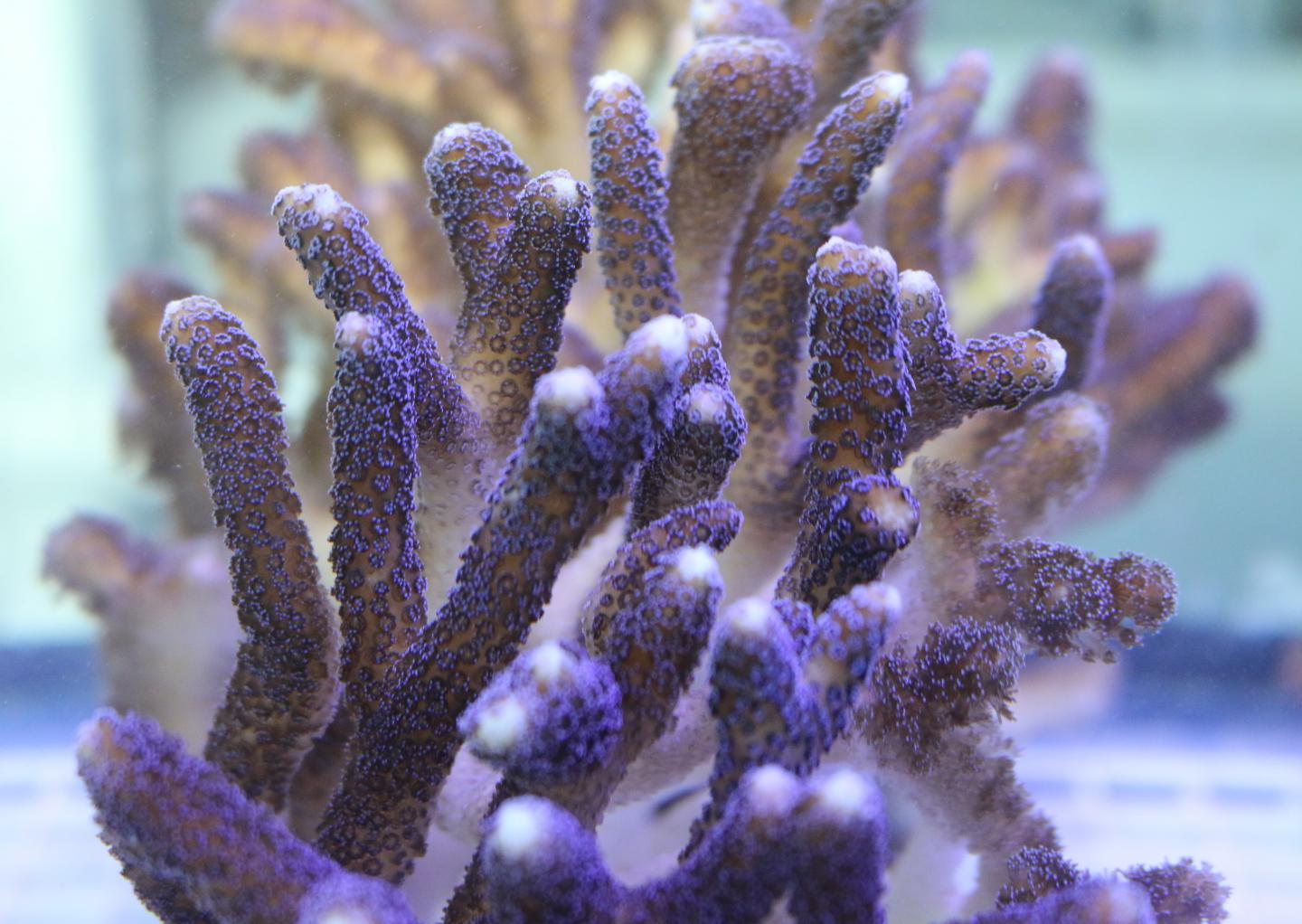
Scientists’ findings suggest corals will withstand climate change
IMAGE

Credit: Kevin Wyman/Rutgers University

Charles Darwin, the British naturalist who championed the theory of evolution, noted that corals form far-reaching structures, largely made of limestone, that surround tropical islands. He didn’t know how they performed this feat.

Now, Rutgers scientists have shown that coral structures consist of a biomineral containing a highly organized organic mix of proteins that resembles what is in our bones. Their study, published in the Journal of the Royal Society Interface, shows for the first time that several proteins are organized spatially – a process that’s critical to forming a rock-hard coral skeleton.

“Our research revealed an intricate network of skeletal proteins that interact spatially, which likely applies to all stony corals,” said Manjula P. Mummadisetti, who led the research while she was a postdoctoral associate in the Rutgers Environmental Biophysics and Molecular Ecology Laboratory led by senior author Paul G. Falkowski. She is now a senior scientist at AVMBioMed in Pottstown, Pennsylvania. “It’s important to understand the mechanisms of coral biomineralization and how these invaluable animals persist during the era of anthropogenic climate change.”

“Our findings suggest that corals will withstand climate change caused by human activities, based on the precision, robustness and resilience of their impressive process for forming rock-hard skeletons,” said Falkowski, a Distinguished Professor in the School of Arts and Sciences and School of Environmental and Biological Sciences at Rutgers University-New Brunswick.

Coral reefs protect shorelines threatened by erosion and storms, and provide fish habitat, nursery and spawning grounds. Indeed, coral reefs provide food for about a half-billion people, who also depend on them to make a living. However, warming ocean waters from climate change put corals at risk from deadly bleaching and disease. More acidic ocean waters, sea-level rise, unsustainable fishing, vessels that damage reefs, invasive species, marine debris and tropical cyclones pose additional threats, according to the National Oceanic and Atmospheric Administration.

Rutgers scientists studied the spatial interactions of the proteins embedded within the skeleton of Stylophora pistillata, a common stony coral in the Indo-Pacific. Stony corals have evolved over more than 400 million years, forming enormous reefs in shallow subtropical and tropical seas. They’ve been called the “rainforests of the sea.”

Predicting the survival of corals based on how they adapted to global climate change over millions of years requires understanding, among other things, how they build reefs by secreting calcium carbonate. That process is called biomineralization.

The scientists showed that several proteins work together to create optimal conditions for biomineralization. These proteins are not located randomly but are well-organized spatially, which the scientists detailed for the first time. The scientists revealed the spatial patterns as new mineral is formed between the living tissue of the animal and its base or an older skeleton.

###

Jeana Drake, who earned a doctorate at Rutgers and coauthored the study, is now at the University of California, Los Angeles, and the University of Haifa.

Media Contact
Todd Bates
[email protected]

Original Source

https://www.rutgers.edu/news/corals-carefully-organize-proteins-form-rock-hard-skeletons

Related Journal Article

http://dx.doi.org/10.1098/rsif.2020.0859

Tags: BiochemistryBiologyBiomechanics/BiophysicsClimate ChangeEcology/EnvironmentEvolutionMarine/Freshwater BiologyMaterialsMolecular BiologyOceanography
Share12Tweet8Share2ShareShareShare2

Related Posts

Miniature Sensor Uses Light to Detect Touch — Chemistry

Miniature Sensor Uses Light to Detect Touch

May 8, 2026
Iron Minerals Determine Whether Dissolved Organic Matter Fuels Microbes or Becomes Long-Term Carbon Storage — Chemistry

Iron Minerals Determine Whether Dissolved Organic Matter Fuels Microbes or Becomes Long-Term Carbon Storage

May 8, 2026

Kate Evans Appointed Associate Lab Director for Biological and Environmental Systems Science at ORNL

May 8, 2026

Advancing Multiscale Modeling and Overcoming Operational Challenges in Autothermal COâ‚‚-to-Methanol Reactors

May 8, 2026
Please login to join discussion

POPULAR NEWS

  • Research Indicates Potential Connection Between Prenatal Medication Exposure and Elevated Autism Risk

    840 shares
    Share 336 Tweet 210
  • New Study Reveals Plants Can Detect the Sound of Rain

    727 shares
    Share 290 Tweet 181
  • Scientists Investigate Possible Connection Between COVID-19 and Increased Lung Cancer Risk

    68 shares
    Share 27 Tweet 17
  • Salmonella Haem Blocks Macrophages, Boosts Infection

    61 shares
    Share 24 Tweet 15

About

We bring you the latest biotechnology news from best research centers and universities around the world. Check our website.

Follow us

Recent News

Evaluating Digoxin Use in Patients with Symptomatic Rheumatic Heart Disease

Evaluating the Effectiveness and Safety of Digitalis Glycosides in Treating Heart Failure

Urdu Fall Risk Questionnaire Adapted for Elderly

Subscribe to Blog via Email

Enter your email address to subscribe to this blog and receive notifications of new posts by email.

Join 82 other subscribers
  • Contact Us

Bioengineer.org © Copyright 2023 All Rights Reserved.

Welcome Back!

Login to your account below

Forgotten Password?

Retrieve your password

Please enter your username or email address to reset your password.

Log In
No Result
View All Result
  • Homepages
    • Home Page 1
    • Home Page 2
  • News
  • National
  • Business
  • Health
  • Lifestyle
  • Science

Bioengineer.org © Copyright 2023 All Rights Reserved.