• HOME
  • NEWS
  • EXPLORE
    • CAREER
      • Companies
      • Jobs
    • EVENTS
    • iGEM
      • News
      • Team
    • PHOTOS
    • VIDEO
    • WIKI
  • BLOG
  • COMMUNITY
    • FACEBOOK
    • INSTAGRAM
    • TWITTER
Sunday, May 10, 2026
BIOENGINEER.ORG
No Result
View All Result
  • Login
  • HOME
  • NEWS
  • EXPLORE
    • CAREER
      • Companies
      • Jobs
        • Lecturer
        • PhD Studentship
        • Postdoc
        • Research Assistant
    • EVENTS
    • iGEM
      • News
      • Team
    • PHOTOS
    • VIDEO
    • WIKI
  • BLOG
  • COMMUNITY
    • FACEBOOK
    • INSTAGRAM
    • TWITTER
  • HOME
  • NEWS
  • EXPLORE
    • CAREER
      • Companies
      • Jobs
        • Lecturer
        • PhD Studentship
        • Postdoc
        • Research Assistant
    • EVENTS
    • iGEM
      • News
      • Team
    • PHOTOS
    • VIDEO
    • WIKI
  • BLOG
  • COMMUNITY
    • FACEBOOK
    • INSTAGRAM
    • TWITTER
No Result
View All Result
Bioengineer.org
No Result
View All Result
Home NEWS Science News Chemistry

Combining Eastern medicine with Western to improve cancer therapy

Bioengineer by Bioengineer
November 4, 2020
in Chemistry
Reading Time: 2 mins read
0
IMAGE
Share on FacebookShare on TwitterShare on LinkedinShare on RedditShare on Telegram

Can ancient Chinese herbs cure chemotherapy-related diarrhea?
IMAGE

Credit: University of Houston

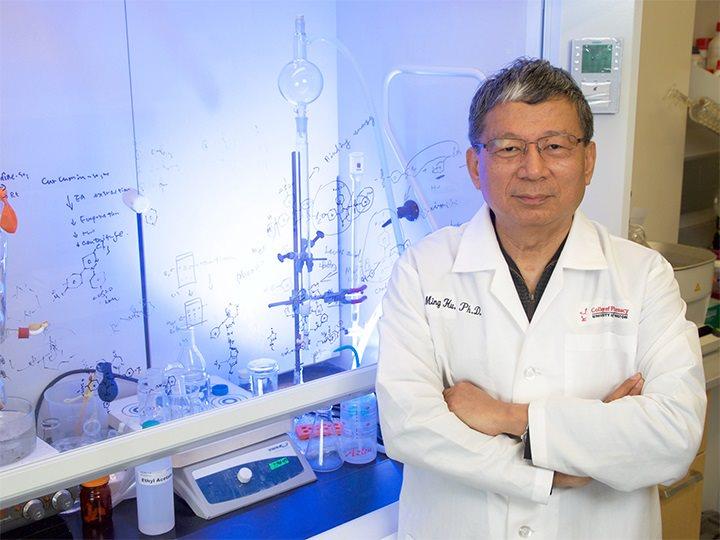
University of Houston professor of pharmaceutics Ming Hu is developing and testing an ancient Chinese herbal medicine formula, first described in 280 A.D., to improve cancer therapy. Hu believes Xiao-Chai-Hu Tang (XCHT) can protect people on the chemotherapy drug Irinotecan from a deadly side effect: Severe-delayed-onset diarrhea (SDOD).

“The clinical use of Irinotecan is severely limited by the severe diarrhea that results in poor quality of life, hospitalization and even death,” said Hu, who is also the Diana S-L. Chow Endowed Professor of Drug Discovery and Development at UH.

“Our goal with XCHT is to allow more people to benefit from the treatment by Irinotecan, which is often the drug of last resort for late stage or metastatic cancer patients.”

Hu and colleagues Romi Ghose, associate professor of pharmaceutics at UH and Song Gao of Texas Southern University, have been awarded $996,162 from the National Cancer Institute to investigate the effectiveness of the ancient formula. They will also work with Lijun Zhu of Guangzhou University of Chinese Medicine in China to determine the agent’s effectiveness in a clinical trial.

To be sure, Irinotecan is a powerful weapon against cancer, but many of those who take it develop SDOD, likely caused by SN-38, the active metabolite of the drug. In the intestine, SN-38 can damage intestinal cells and affect their renewal.

“Intestinal cells have UGT enzymes that detoxify SN-38, but we found that SN-38 can also inactivate and reduce UGT enzymes in the intestine. This creates a vicious cycle. Approximately 1-in-5 patients will fall into this vicious cycle, leading to discontinuation of therapy, decreased efficacy or even death,” said Hu. He has shown that XCHT protects the UGT enzymes and reduces severe diarrhea, and with the new grant he will develop it further, for testing and approvals.

XCHT is actively used in China, Japan and Korea for liver protection. This is the first instance where it has been shown to protect the intestine from SN-38, making the UGT enzymes more resistant to the impact of SN-38.

“Our long-term goal is to develop experimental therapeutics and/or nutritional supplemental approaches to reduce SDOD, so patients can sustain their chemotherapy,” said Hu.

###

Media Contact
Laurie Fickman
[email protected]

Original Source

https://www.uh.edu/news-events/stories/2020/november-2020/11042020-ming-hu-ancient-chinese-herb-chemotherapy-side-effect.php

Tags: Alternative MedicineBreast CancercancerCarcinogensGastroenterologyInternal MedicineMedicine/HealthPharmaceutical ChemistryPharmaceutical ScienceProstate Cancer
Share12Tweet8Share2ShareShareShare2

Related Posts

Miniature Sensor Uses Light to Detect Touch — Chemistry

Miniature Sensor Uses Light to Detect Touch

May 8, 2026
Iron Minerals Determine Whether Dissolved Organic Matter Fuels Microbes or Becomes Long-Term Carbon Storage — Chemistry

Iron Minerals Determine Whether Dissolved Organic Matter Fuels Microbes or Becomes Long-Term Carbon Storage

May 8, 2026

Kate Evans Appointed Associate Lab Director for Biological and Environmental Systems Science at ORNL

May 8, 2026

Advancing Multiscale Modeling and Overcoming Operational Challenges in Autothermal COâ‚‚-to-Methanol Reactors

May 8, 2026
Please login to join discussion

POPULAR NEWS

  • Research Indicates Potential Connection Between Prenatal Medication Exposure and Elevated Autism Risk

    840 shares
    Share 336 Tweet 210
  • New Study Reveals Plants Can Detect the Sound of Rain

    727 shares
    Share 290 Tweet 181
  • Scientists Investigate Possible Connection Between COVID-19 and Increased Lung Cancer Risk

    68 shares
    Share 27 Tweet 17
  • Salmonella Haem Blocks Macrophages, Boosts Infection

    61 shares
    Share 24 Tweet 15

About

We bring you the latest biotechnology news from best research centers and universities around the world. Check our website.

Follow us

Recent News

Evaluating Digoxin Use in Patients with Symptomatic Rheumatic Heart Disease

Evaluating the Effectiveness and Safety of Digitalis Glycosides in Treating Heart Failure

Urdu Fall Risk Questionnaire Adapted for Elderly

Subscribe to Blog via Email

Enter your email address to subscribe to this blog and receive notifications of new posts by email.

Join 82 other subscribers
  • Contact Us

Bioengineer.org © Copyright 2023 All Rights Reserved.

Welcome Back!

Login to your account below

Forgotten Password?

Retrieve your password

Please enter your username or email address to reset your password.

Log In
No Result
View All Result
  • Homepages
    • Home Page 1
    • Home Page 2
  • News
  • National
  • Business
  • Health
  • Lifestyle
  • Science

Bioengineer.org © Copyright 2023 All Rights Reserved.