Researchers to identify microbes that relate to the health of ecosystems
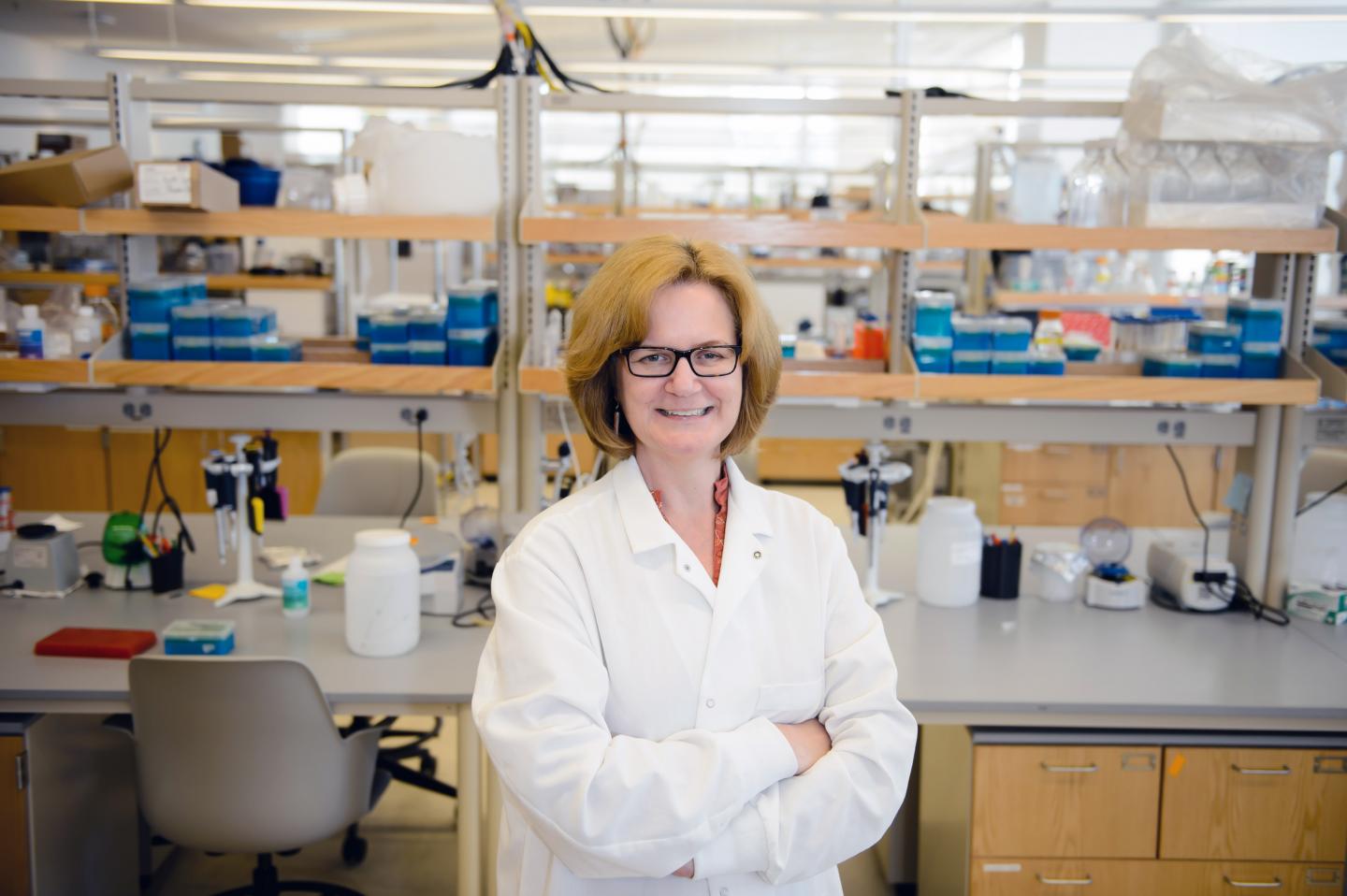
Credit: College of Science
CLEMSON, South Carolina – Clemson University researcher Barbara Campbell and her collaborators have received a five-year, $2.5 million grant from the National Science Foundation to identify the functional mechanisms of microbes that relate to the health of ecosystems.
The grant was awarded by NSF’s 10 Big Ideas program, which explores interdisciplinary science integral to understanding the rules of life. The award is designed to pave the way for students to be on the leading edge of scientific research that touches every aspect of how humans prepare for the future in a changing world.
In addition to Campbell, who is an associate professor in the College of Science’s department of biological sciences, her collaborators include biological sciences faculty Sharon Bewick and Anna Seekatz; Feng Luo of the College of Engineering, Computing and Applied Science’s school of computing; and Vidya Suseela of the College of Agriculture, Forestry and Life Science’s department of plant and environmental sciences.
Humans have a knack for making an impact on ecosystems that can be good or bad. Often, humans simplify ecosystems, such as when an antibiotic reduces the bacterial diversity in a person’s gut microbiome, possibly reducing the redundancy in functions that are critical components of that environment. Loss of functional redundancy is thought to equate to instability or poor ecosystem health.
“We are interested in ecosystem health,” said Campbell, who is lead P.I. of the grant. “We know that humans are modifying a lot of ecosystems, from your gut microbiome to agricultural soils to estuarine and coastal environments. We know that the diversity of microbial species in many different ecosystems has decreased due to stressors, such as human impacts or climate change. We are investigating if this decreased diversity results in decreased functional redundancy – that is, the duplicity of function that microbes perform in ecosystems. We think that microbes need redundancy in functions – or ecosystem services – to maintain a healthy ecosystem or to bounce back after a disturbance.”
These functions vary from making vitamins or helping digest food in your gut to producing oxygen in the oceans. A full 50 percent of the oxygen we breathe comes from microbes, so the health of ecosystems is directly related to the most basic and critical necessities of life.
“We’re looking at the functional redundancy of these microbes in environments with different substrate complexities” Campbell said. “Just like us, the diversity of food that we eat is good for our gut microbiomes. The same is true with different types of complexity in the ocean or in soils. We believe this complexity contributes to functional redundancy.”
Through this long-term study, researchers will compare the substrate complexity to the types of functions microbes do, with a focus on whether functional redundancy – the number of different microbial species that can perform any given function – is related to the variation of substrates in the environment. They will look at estuarine and ocean environments, agricultural soils, and yes, guts, with the goal of answering questions about environmental complexity, such as whether increasing the diversity of cover crops increases the functional redundancy of microbes and increases soil health.
Students and postdoctoral scientists will learn and discover as they engage in the interdisciplinary research that is at the core of this work, which will include “sequencing everything” to look not only at the function of what is being expressed but also the functional potential, identifying these rules across a wide variety of ecosystems.
“All of it is student-involved research,” Campbell said. “We will all have graduate students and undergraduates doing discovery-based research. We want undergraduates to be learning about wet lab work and be involved in bioinformatics.”
This material is based upon work supported by the National Science Foundation under Grant Number EF-2025541. Any opinions, findings and conclusions or recommendations expressed in this material are those of the authors and do not necessarily reflect the views of NSF.
###
Media Contact
Jim Melvin
[email protected]
Original Source
https:/