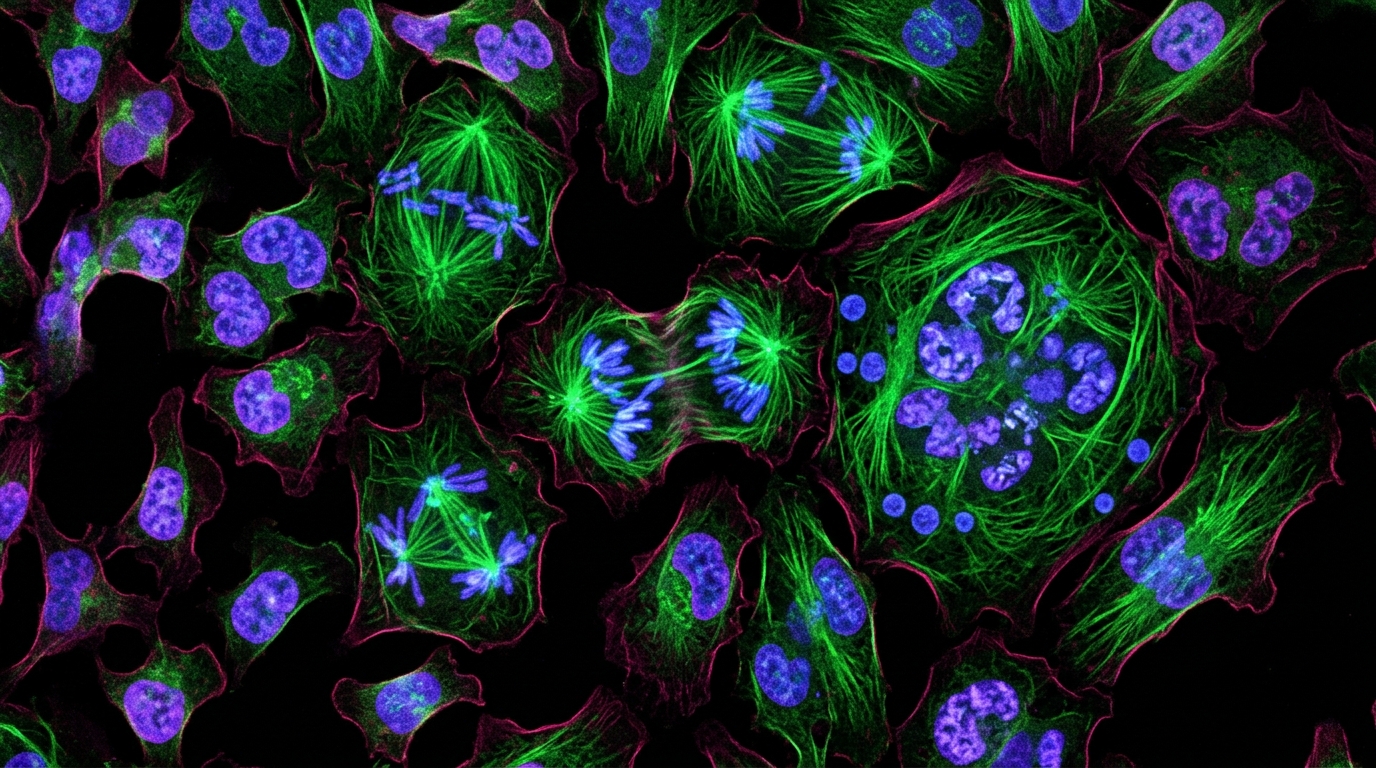
Commonly used parameters of chromosomal instability and epithelial to mesenchymal transition do not correlate with the metastatic potential of human cancer cell lines, according to a study published in the Journal of Cancer Research and Clinical Oncology. The findings challenge recent indications that chromosomal instability directly corresponds with the ability of tumor cells to disseminate and form metastases.
Chromosomal instability is widely recognized as a hallmark of cancer that drives tumor evolution. While previous scientific studies have suggested that chromosomal instability contributes to cancer cell dissemination and the subsequent formation of metastatic lesions, the researchers established an experimental investigation to directly evaluate this relationship in established human cell models.
To systematically assess the role of genomic instability in metastasis, the investigators established a panel of 24 cancer cell lines across four distinct tumor entities. The panel incorporated cell lines originating from colorectal, lung, pancreatic, and prostate cancers, purposefully selected to represent a wide spectrum of metastatic potential.
The research team employed single nucleotide polymorphism-based allele-specific copy number analysis to evaluate genomic alterations across the cell line panel. This genetic analysis was used to determine the weighted genome instability index as a standardized measurement of chromosomal instability in all 24 cancer cell lines.
In addition to genomic assessments, the investigators performed immunofluorescence microscopy to examine specific cellular mechanisms and signaling responses. Through microscopic evaluation, the team assessed micronucleus formation, cGAS activity, RelB activity, and rates of mitotic chromosome missegregation, while Western blotting was employed to evaluate markers of epithelial to mesenchymal transition.
The experimental results revealed that chromosomal instability and whole-genome doubling were highly prevalent across the 24 human cancer cell lines. However, the weighted genome instability index did not correlate with mitotic chromosome missegregation rates, micronucleus formation, cGAS–STING signaling, or the metastatic potential score of the analyzed cell line panel.
Furthermore, the investigation showed that neither the activation of non-canonical NF-κB signaling nor the score based on epithelial to mesenchymal transition markers was associated with increased metastatic potential. These observations demonstrated that neither cellular transition markers nor non-canonical signaling pathways served as reliable predictors of metastatic capability in the tested models.
Based on these findings, the study concluded that standard parameters used to evaluate genomic instability and epithelial to mesenchymal transition do not correspond with metastatic potential in well-established human cancer cell lines. The authors noted that future investigations analyzing the impact of chromosomal instability on tumor invasion and metastasis might utilize three-dimensional cell culture models alongside improved methods designed for the reliable assessment of ongoing chromosomal instability.
Subject of Research: Chromosomal instability and metastatic potential in human cancer cell lines
Article Title: Chromosomal instability does not correlate with metastatic potential in human cancer cell lines
Article References: Mühlmeier, G., Feldmann, C., Wohlfromm, T., Kraft, B. N., & Krämer, A. (2026). Chromosomal instability does not correlate with metastatic potential in human cancer cell lines. Journal of Cancer Research and Clinical Oncology, 152(11), Article 236. https://doi.org/10.1007/s00432-026-06669-5
Image Credits: AI Generated
DOI: 10.1007/s00432-026-06669-5
Keywords: chromosomal instability, metastatic potential, human cancer cell lines, whole-genome doubling, weighted genome instability index, micronucleus formation, cGAS-STING signaling, RelB activity, mitotic chromosome missegregation, epithelial to mesenchymal transition, colorectal cancer, lung cancer, pancreatic cancer, prostate cancer, non-canonical NF-κB signaling, single nucleotide polymorphism analysis, tumor evolution, allele-specific copy number analysis
News Source: Nathaniel Bowman. (November 18, 2026). Chromosomal Instability Does Not Predict Metastatic Potential in Cancer Cell Lines. Scienmag.