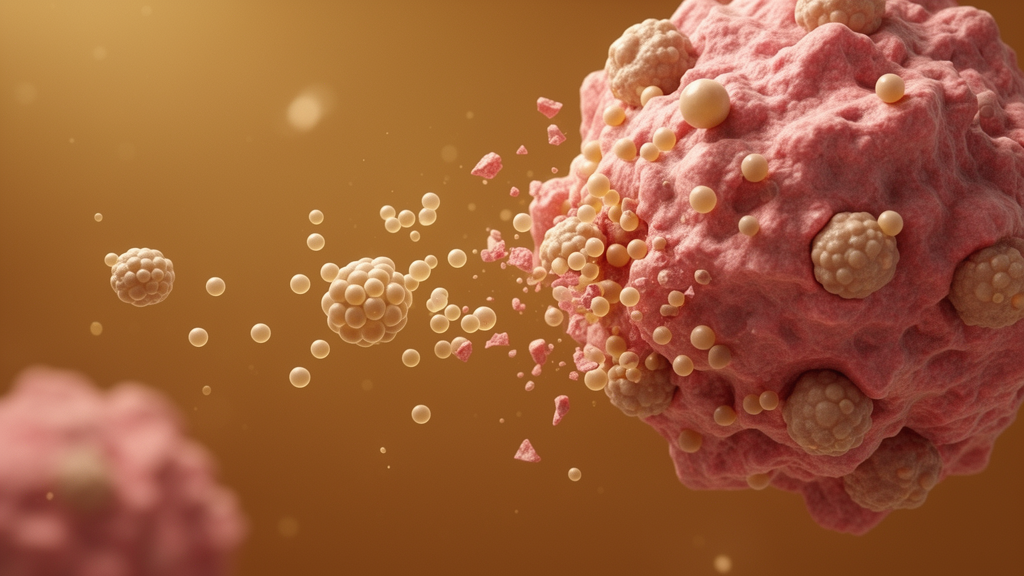
A new review published in the Journal of Ovarian Research suggests that humble chitosan, a sugar-derived material obtained from the shells of crustaceans, could become the backbone of a new generation of cancer treatments for ovarian and cervical malignancies. The analysis, compiled by Jianfei Sun, Huiying Yu, and Ting Li, draws together evidence from laboratory studies showing that chitosan-based nanoparticles can deliver drugs with remarkable precision, trigger cancer cell death, and even help the immune system recognize tumors that would otherwise slip past the body’s defenses.
Chitosan has long attracted attention in biomedical research because of its unusual combination of properties. It is biocompatible, meaning the body tolerates it well, and it is biodegradable, breaking down into harmless byproducts over time. Its positively charged surface allows it to interact readily with cell membranes, and its chemical structure can be modified with relative ease. These characteristics make it an ideal scaffold for building nanoparticles that can carry therapeutic payloads, and the new review argues that this versatility is now being exploited in ways that directly address some of the most stubborn problems in gynecological oncology.
One of the central challenges in treating ovarian and cervical cancers is the toxicity of conventional chemotherapy. Standard drugs such as paclitaxel and cisplatin circulate throughout the body, damaging healthy tissue alongside tumors and producing side effects that often force treatment interruptions. Chitosan-based nanoplatforms offer a way around this problem by encapsulating the drugs and releasing them only when specific conditions are met. The review describes redox-responsive carriers, for example, that remain stable in the bloodstream but fall apart inside tumor cells, where the chemical environment differs sharply from that of healthy tissue. This triggered release concentrates the toxic payload where it is needed and spares the rest of the body.
Getting the drug into the cancer cell is only half the battle, however. The review highlights formulations that improve cellular uptake through targeted modifications, most notably the conjugation of folic acid to the nanoparticle surface. Many ovarian cancer cells overexpress folate receptors on their surfaces, effectively displaying a molecular handle that folate-decorated nanoparticles can grab. In studies involving ovarian cancer cell lines such as A2780 and SKOV-3, as well as the cervical cancer line HeLa, these targeted systems demonstrated enhanced cytotoxicity, greater pro-apoptotic activity, and reduced metastatic behavior compared with untargeted counterparts. Lipid-chitosan hybrid nanoparticles, which combine the membrane-fusing properties of lipids with the structural stability of chitosan, have also shown strong performance in these models.
Perhaps the most forward-looking section of the review concerns combination therapies that go beyond chemotherapy. Multifunctional platforms merging photothermal and photodynamic strategies with immunotherapy have produced improved antitumor effects in laboratory settings. In photothermal therapy, nanoparticles accumulate in the tumor and convert near-infrared light into localized heat, essentially cooking the cancer cells from within. Photodynamic therapy relies on light-activated compounds that generate reactive oxygen species, highly reactive molecules that destroy cellular structures and can also stimulate the immune system. When these approaches are combined with agents that activate immune responses, the dying tumor cells release antigens that can train immune cells to hunt down remaining cancer throughout the body, an effect researchers describe as turning the tumor itself into a vaccine.
The review also addresses chemoresistance, one of the most frustrating obstacles in ovarian cancer treatment. Patients frequently respond well to initial chemotherapy only to relapse with tumors that no longer respond to the same drugs. Chitosan nanocarriers can modulate this resistance by altering how drugs enter and accumulate within cancer cells, and by co-delivering agents that interfere with the molecular pumps and survival pathways that tumors use to shrug off treatment. By packaging multiple drugs together and controlling their release kinetics, these systems can attack resistance mechanisms from several directions at once.
Diagnosis and monitoring represent another dimension of the chitosan story. The review describes biosensing platforms built on chitosan scaffolds that can detect cancer biomarkers with high precision, enabling earlier diagnosis and continuous tracking of disease. Because chitosan films and nanoparticles provide a favorable environment for immobilizing recognition molecules such as antibodies and nucleic acid probes, they serve as sensitive transducer surfaces in electrochemical and optical biosensors. The authors suggest that such tools could eventually allow clinicians to catch recurrences before they become clinically apparent, when intervention is most likely to succeed.
Local and sustained drug delivery is a further area of active exploration. Advanced fabrication methods, including three-dimensional printed scaffolds, allow therapeutic materials to be implanted directly at the tumor site, where they release their payload over extended periods. This approach is particularly relevant to ovarian cancer, which tends to remain confined to the peritoneal cavity for much of its progression. Localized delivery reduces systemic exposure, minimizes side effects, and maintains high drug concentrations precisely where tumor cells reside, a combination that systemic intravenous chemotherapy struggles to achieve.
The translational path from laboratory bench to clinic remains demanding, and the authors are careful to frame their conclusions as promising rather than definitive. Most of the evidence reviewed comes from cell culture studies, and the journey through animal models, safety testing, and clinical trials has claimed many promising nanomedicines over the years. Questions about large-scale manufacturing consistency, long-term biocompatibility, and the behavior of nanoparticles in the complex environment of the human body will need answers before chitosan platforms reach routine clinical use. Nevertheless, the convergence of targeted chemistry, stimuli-responsive design, and combination therapy in a single biocompatible material gives the field an unusually coherent platform to build on.
What makes this review notable is its synthesis of an entire toolbox within one material system. A single chitosan nanoparticle can, in principle, be engineered to home in on tumor cells, release its cargo in response to the tumor’s internal chemistry, generate destructive heat or reactive oxygen species when illuminated, recruit the immune system to the fight, and report on its own progress through biosensing. For patients with ovarian and cervical cancers, diseases that together affect hundreds of thousands of women worldwide each year, such multifunctional platforms could eventually mean treatments that are simultaneously more effective and far gentler than today’s standards. The research community will be watching closely as these systems move from petri dish toward patient.
Subject of Research: Chitosan-based stimuli-responsive nanoplatforms for therapy and diagnosis of gynecological cancers
Article Title: Stimuli-responsive and multifunctional chitosan-based nanoplatforms in gynecological cancers therapy: mechanistic insights, immuno-phototherapeutic strategies, chemoresistance modulation, and translational perspectives
Article References: Stimuli-responsive and multifunctional chitosan-based nanoplatforms in gynecological cancers therapy: mechanistic insights, immuno-phototherapeutic strategies, chemoresistance modulation, and translational perspectives. (n.d.). https://doi.org/10.1186/s13048-026-02274-9
Image Credits: AI Generated
DOI: 10.1186/s13048-026-02274-9
Keywords: chitosan, nanoparticles, ovarian cancer, cervical cancer, drug delivery, photothermal therapy, photodynamic therapy, immunotherapy, chemoresistance, biosensors, targeted therapy, nanomedicine
News Source: Nathaniel Bowman. (October 15, 2026). Chitosan Nanoparticles Show Promise Against Ovarian and Cervical Cancers. Scienmag.