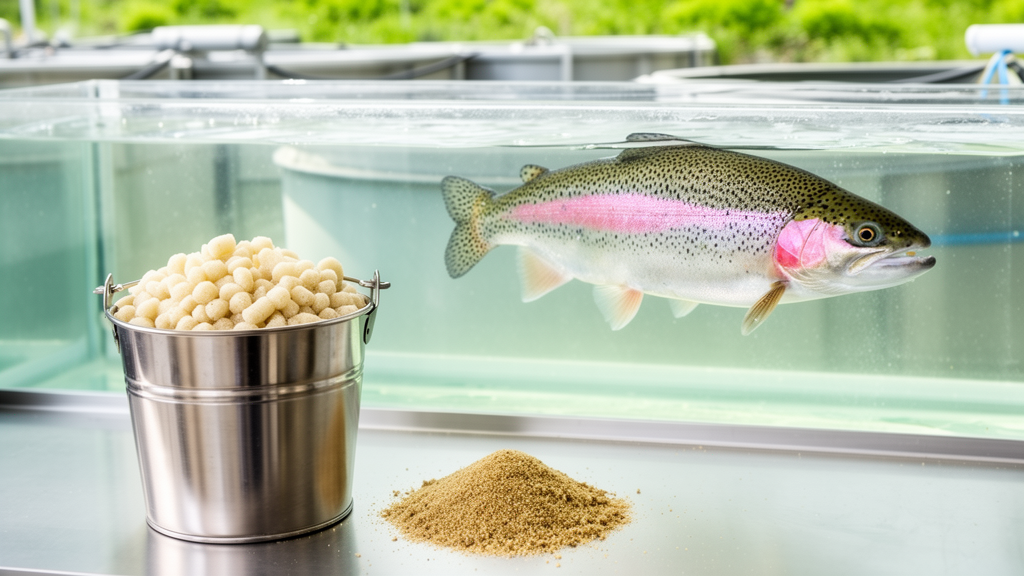
Aquaculture’s hunger for fishmeal has long been one of the industry’s most stubborn sustainability problems. Farming carnivorous fish such as rainbow trout traditionally depends on marine-sourced protein, a resource under pressure from rising costs, shrinking supply and growing concern about the impact of capture fisheries on ocean ecosystems. A new ninety-day feeding trial from Sher-e-Kashmir University of Agricultural Sciences and Technology of Kashmir now offers a strikingly circular answer: chicken intestines, a slaughterhouse by-product usually treated as waste, fermented with formic acid into a protein-rich silage and folded directly into trout feed. The study, published as open access original research in the journal Green Technology, Resilience, and Sustainability on 7 May 2026, reports that this acid-fermented chicken intestinal waste silage, or CIWS, can replace up to twenty percent of the fishmeal in rainbow trout fingerling diets without harming growth, feed efficiency or survival.
The experiment was conducted at the university’s hatchery unit in the Division of Aquaculture at Rangil, Ganderbal, running from 15 April 2023 to 14 July 2023. The researchers procured 205 uniformly sized rainbow trout fingerlings from a commercial trout farm in Khag, Budgam, and allowed them seven days of acclimatization on a basal diet. From this pool, 160 fingerlings were randomly assigned to sixteen fibre tanks of 100 litres each, ten fish per tank, following a completely randomized design. Four iso-nitrogenous diets, each formulated to contain 42 percent crude protein, replaced fishmeal with CIWS at 0, 10, 20 and 30 percent inclusion. These were designated control T0 and treatments T1, T2 and T3, with four replicate tanks per treatment. Fish were fed twice daily, at 9 a.m. and 5 p.m., at a ration of five percent of body weight, with uneaten feed siphoned out and roughly half the tank water exchanged each day.
The silage itself is a chemically simple but nutritionally potent product. Chicken intestines collected from a nearby market immediately after slaughter were cleaned, chopped and treated with three percent formic acid by weight, with the mixture held at pH 4. Under these acidic conditions, endogenous enzymes hydrolyse the tissue into a liquid product that the authors describe as highly nutritious, with fermentation conserving nutrients, improving digestibility and extending shelf life. The silage was dried in a hot air oven at 30 degrees Celsius to constant weight, and its proximate composition was determined by standard AOAC methods, including Kjeldahl crude protein estimation with a 6.25 nitrogen conversion factor, Soxhlet lipid extraction and ash determination by incineration at 650 degrees Celsius. Experimental diets were prepared by autoclaving dough balls of the base ingredients at 121 degrees Celsius for fifteen minutes, then mixing in oil, a vitamin-mineral premix and the silage before pelleting and air-drying.
Over the ninety-day trial, dietary treatment produced statistically significant effects on nearly every growth measure recorded. The standout was T2, the twenty percent replacement diet, which delivered the highest final weight at 797.68 plus or minus 5.19 grams, the greatest body weight gain at 576.25 plus or minus 5.03 grams, the highest specific growth rate at 1.15 plus or minus 0.01 percent per day, and the largest weight gain percentage at 260.25 plus or minus 2.2 percent, all significantly better than the other treatments at p below 0.05. Feed conversion ratio, a key measure of how efficiently feed becomes flesh, was lowest in the T2 group at 1.73 plus or minus 0.01, indicating improved feed utilization, and protein efficiency ratio and feed efficiency ratio were also significantly elevated in this group. By contrast, the T3 group, receiving thirty percent silage, showed significantly lower values across these growth parameters, marking thirty percent as the point where the fish’s capacity to digest and metabolize the poultry-derived protein appears to be exceeded.
The blood work told a consistent story. Haematological parameters varied significantly among treatments, with haemoglobin, red blood cell counts and haematocrit all climbing as silage inclusion rose to twenty percent. The T2 group recorded the highest haemoglobin at 9.18 plus or minus 0.45 grams per decilitre, the highest red blood cell count at 1.45 plus or minus 0.06 million per cubic millimetre, and the highest haematocrit at 37.32 plus or minus 0.18 percent, before all three declined at the thirty percent inclusion level. White blood cell counts moved in the opposite direction, falling with increasing inclusion. The authors urge caution in interpreting that decline, noting that leukocyte levels in fish are dynamic and influenced by physiological and environmental conditions, and may reflect adaptive responses rather than direct immune suppression. They suggest the erythropoietic boost could be linked to the silage’s nutritional composition, potentially enriched with iron and other micronutrients needed for red blood cell formation.
Serum biochemistry added further nuance. Total protein and glucose levels rose with inclusion up to twenty percent, which the researchers interpret as enhanced protein and carbohydrate metabolism, before declining at higher levels. Alanine aminotransferase and aspartate aminotransferase, liver enzymes commonly used as indicators of hepatic stress, showed a declining pattern across treatments and were lowest in T2, suggesting improved liver health and a potential hepatoprotective effect of the moderately included silage. The clearest warning sign appeared in the lipid fractions: cholesterol and triglycerides were highest at thirty percent inclusion, reaching 42.19 plus or minus 3.17 milligrams per decilitre and 39.15 plus or minus 2.68 milligrams per decilitre respectively in T3, likely attributable to the higher lipid content of chicken intestinal waste silage. The authors note that although these elevations did not adversely affect survival or growth during the trial, the long-term implications of raised serum lipids for fish health require further investigation.
Survival was a clean result across the board: one hundred percent in every treatment group, with no significant effect of diet on survival rate. Water quality parameters, measured weekly, remained within acceptable ranges for rainbow trout culture throughout the experiment, and the authors report no adverse effects of silage inclusion on the aquatic environment, indicating that properly processed silage does not compromise tank conditions. They attribute the high survival partly to the fermentation and preservation steps in silage preparation, which likely reduced potential pathogen loads in the ingredient. The discussion places the optimal twenty percent finding in a broader context of poultry by-product research, citing consistent growth benefits at moderate inclusion levels in pikeperch fed twenty percent poultry protein and in Pangasius hypophthalmus fed twenty-five percent chicken feather silage, and suggesting that favourable amino acid profiles and high digestibility explain the pattern.
The decline beyond twenty percent is instructive rather than merely negative. The authors suggest that higher inclusion levels may exceed the fish’s digestive and metabolic capacity for poultry-derived proteins, and point to palatability issues or reduced feed intake, phenomena documented in diets carrying excessive levels of alternative protein sources, as plausible contributors. Framing thirty percent as the upper tolerance level, the study positions twenty percent as the practical optimum for rainbow trout fingerlings under these culture conditions.
The broader appeal of the work lies in its circular economy logic. Chicken intestinal waste is generated in substantial quantities by poultry farming and poses a genuine disposal problem; converting it through acid fermentation into a functional aquafeed ingredient addresses waste management and feed sustainability simultaneously. The authors argue that this approach provides a cost-effective alternative for aquaculture by recycling low-value animal waste into a high-value feed ingredient, reducing dependence on wild-caught fish for fishmeal. With global seafood demand rising and conventional marine ingredients becoming scarcer and more expensive, by-product fermentation pipelines of this kind represent one of several routes being explored, alongside plant, microbial and insect proteins, to decouple farmed fish production from marine resource extraction.
The researchers are careful about scope. Their conclusions rest on a single ninety-day trial in fingerlings under hatchery conditions in Kashmir, and they explicitly call for further research on long-term effects on fish physiology, flesh and product quality, nutritional profiling and economic feasibility before large-scale adoption. The elevated cholesterol and triglyceride levels seen at thirty percent inclusion, in particular, mark a question that a longer study would need to answer. Within those limits, however, the message is clear and quantitatively grounded: acid-fermented chicken intestinal waste silage can effectively replace fishmeal at up to twenty percent in rainbow trout fingerling diets, with the best growth, feed conversion, blood profiles and liver enzyme indicators recorded at that level, and full survival maintained across every treatment from zero to thirty percent replacement.
Subject of Research: Partial replacement of fishmeal with acid-fermented chicken intestinal waste silage in rainbow trout fingerling diets
Article Title: Partial replacement of fishmeal with acid-fermented chicken intestinal waste silage in the diet of rainbow trout, Oncorhynchus mykiss fingerlings to ascertain growth, survival and haemato-biochemical parameters
Article References: Wani, U. S., Rashid, F., Asimi, O. A., Rather, M. A., Iqbal, G., Hossain, K. Z., Behere, G., & Saba, K. (2026). Partial replacement of fishmeal with acid-fermented chicken intestinal waste silage in the diet of rainbow trout, Oncorhynchus mykiss fingerlings to ascertain growth, survival and haemato-biochemical parameters. Green Technology, Resilience, and Sustainability, 6(1), Article 8. https://doi.org/10.1007/s44173-026-00034-y
Image Credits: AI Generated
DOI: 10.1007/s44173-026-00034-y
Keywords: aquaculture, rainbow trout, fishmeal replacement, chicken intestinal waste silage, acid fermentation, feed conversion ratio, haematology, serum biochemistry, sustainable aquafeeds, circular economy, fish nutrition, poultry by-products
News Source: Sloane Callahan. (October 29, 2026). Chicken Waste Silage Replaces Fishmeal in Rainbow Trout Diets Up to 20 Percent. Scienmag.