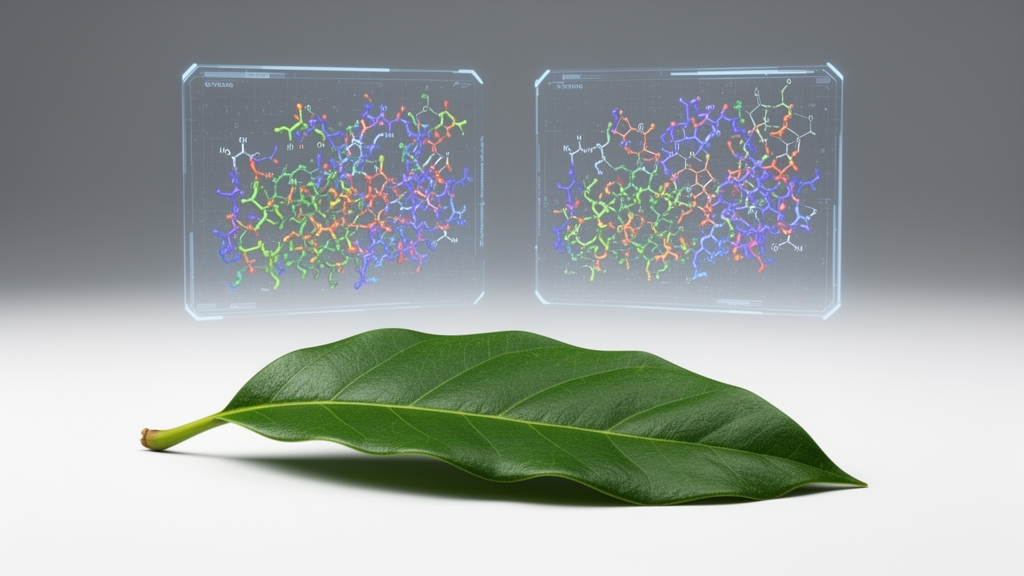
Two yews that are nearly impossible to tell apart by eye during most of the year can now be separated by their chemistry, according to a comparative study published in BMC Plant Biology. Researchers systematically compared the bioactive constituents and antioxidant activities of Taxus cuspidata and Taxus × media. Because the two species are difficult to distinguish reliably from branch and leaf morphology outside the fruiting period, the confusion creates real problems for germplasm resource management and for the targeted utilization of Taxus raw materials. The new analysis, based on physicochemical properties, major bioactive components, and in vitro antioxidant assays across three tissue types, points to a practical chemical solution.
The team examined arils, branches, and fresh leaves from both species, measuring total flavonoid content, total phenolic content, total polysaccharides, total acids, and antioxidant activity in each tissue. A clear spatial pattern emerged: total flavonoids and total phenolics generally followed the order of fresh leaves, then branches, then arils, meaning the photosynthetic tissues accumulated the highest levels of these secondary metabolites. Across all tissues, Taxus × media showed significantly higher levels of both flavonoids and phenolics than the corresponding tissues of T. cuspidata. Total polysaccharides told a different story, being particularly enriched in the arils of the hybrid species.
Antioxidant performance tracked the phytochemical profile closely. The study’s antioxidant indices showed strong positive correlations with both total phenolic and total flavonoid content, and the fresh leaves and branches of Taxus × media exhibited relatively higher antioxidant activities than those of T. cuspidata. The authors are careful to frame these as in vitro measurements, so the results describe chemical scavenging behavior in laboratory assays rather than demonstrated health effects in humans or animals. Even so, the correlation structure suggests that phenolic and flavonoid compounds are the principal drivers of the measured antioxidant differences between the two species and among their tissues.
To test whether the overall chemical fingerprints could serve as an identification tool, the researchers applied a sequence of multivariate statistical methods. Principal component analysis and hierarchical cluster analysis both effectively discriminated the two species and the different tissue types based on their combined chemical characteristics, without any morphological input. That separation is significant for germplasm management, because it means a chemically defined boundary exists even when the plants look identical in the field or nursery. The more targeted question was which individual indicators carry the discrimination. Orthogonal partial least squares discriminant analysis, combined with variable importance in projection analysis and permutation testing, preliminarily identified total phenolics and total acids as candidate indicators. Univariate analysis then confirmed that these two parameters differ significantly between the two species, supporting their status as candidate composite chemical markers for interspecific discrimination. The word candidate is important: the authors position TPC and TA as preliminary markers that provide baseline data for subsequent germplasm identification based on multiple indicators and specific compounds, rather than as a finished diagnostic kit.
The practical implications reach beyond taxonomy. Taxus species are valued for their bioactive constituents, and being able to route material from the correct species and tissue to the correct use could improve the efficiency of resource utilization. The finding that fresh leaves and branches of the hybrid carry higher phenolic and flavonoid loads, while its arils concentrate polysaccharides, gives a tissue-level map of where different compound classes accumulate. At the same time, the study’s conclusions remain at the level of comparative chemistry; the authors explicitly describe the work as revealing differences in the distribution of bioactive components and antioxidant activities among tissues, and as providing baseline data, not as establishing pharmacological superiority. For plant science readers, the study also illustrates a methodological template: pairing broad phytochemical screening with PCA, HCA, and OPLS-DA, then validating candidate markers through VIP analysis, permutation testing, and univariate confirmation. Whether total phenolics and total acids hold up as robust markers across more populations, growing conditions, and seasons will determine whether the chemical fingerprint becomes a routine tool for telling these two yews apart when their branches and leaves offer no visual clues.
Subject of Research: Comparative phytochemical analysis and interspecific marker screening between Taxus cuspidata and Taxus × media
Article Title: Comparative analysis of bioactive constituents, antioxidant activities, and interspecific marker screening between Taxus cuspidata and Taxus × media
Article References: Chen, Y., Xing, J., Liu, Q., Jin, J., Liu, J., Meng, F., Piao, H., & Jin, X. (2026). Comparative analysis of bioactive constituents, antioxidant activities, and interspecific marker screening between Taxus cuspidata and Taxus × media. BMC Plant Biology. https://doi.org/10.1186/s12870-026-10257-7
Image Credits: AI Generated
DOI: 10.1186/s12870-026-10257-7
Keywords: Taxus cuspidata, Taxus × media, total phenolics, total flavonoids, antioxidant activity, chemical markers, OPLS-DA, principal component analysis, germplasm identification, BMC Plant Biology, comparative analysis, Comparative
News Source: Alan Morgan. (October 24, 2026). Chemical Fingerprint Offers a Way to Tell Two Look-Alike Yew Species Apart. Scienmag.