• HOME
  • NEWS
  • EXPLORE
    • CAREER
      • Companies
      • Jobs
    • EVENTS
    • iGEM
      • News
      • Team
    • PHOTOS
    • VIDEO
    • WIKI
  • BLOG
  • COMMUNITY
    • FACEBOOK
    • INSTAGRAM
    • TWITTER
Sunday, August 16, 2026
BIOENGINEER.ORG
No Result
View All Result
  • Login
  • HOME
  • NEWS
  • EXPLORE
    • CAREER
      • Companies
      • Jobs
        • Lecturer
        • PhD Studentship
        • Postdoc
        • Research Assistant
    • EVENTS
    • iGEM
      • News
      • Team
    • PHOTOS
    • VIDEO
    • WIKI
  • BLOG
  • COMMUNITY
    • FACEBOOK
    • INSTAGRAM
    • TWITTER
  • HOME
  • NEWS
  • EXPLORE
    • CAREER
      • Companies
      • Jobs
        • Lecturer
        • PhD Studentship
        • Postdoc
        • Research Assistant
    • EVENTS
    • iGEM
      • News
      • Team
    • PHOTOS
    • VIDEO
    • WIKI
  • BLOG
  • COMMUNITY
    • FACEBOOK
    • INSTAGRAM
    • TWITTER
No Result
View All Result
Bioengineer.org
No Result
View All Result
Home NEWS Science News Chemistry

Cement as a climate killer: Using industrial waste to produce carbon neutral alternatives

Bioengineer by Bioengineer
May 20, 2019
in Chemistry
Reading Time: 2 mins read
0
IMAGE
Share on FacebookShare on TwitterShare on LinkedinShare on RedditShare on Telegram

IMAGE

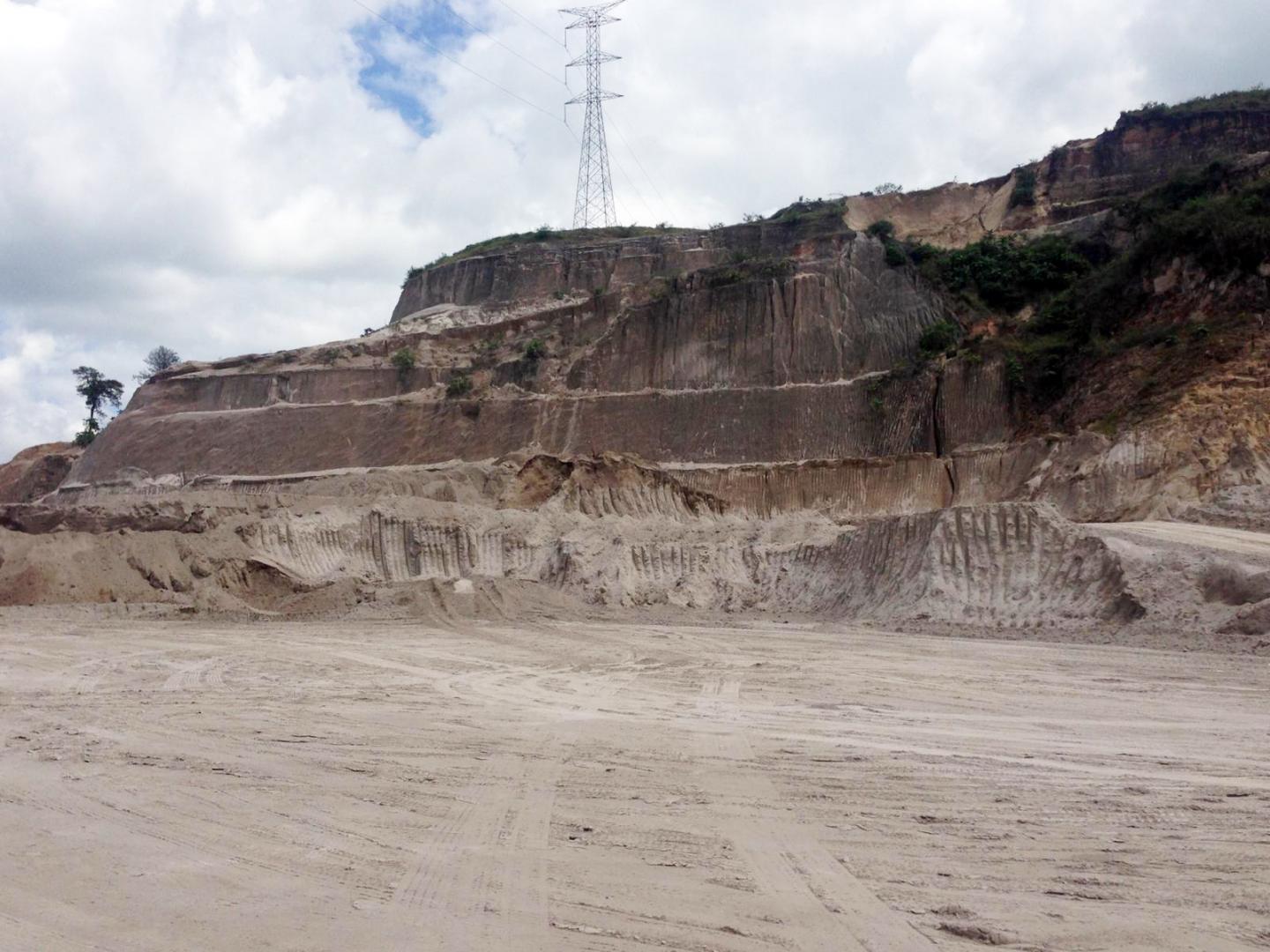
Credit: Herbert Pöllmann / MLU

Producing cement takes a big toll on our climate: Around eight per cent of annual global carbon dioxide emissions can be attributed to this process. However, the demand for cement continues to rise. A team of geoscientists from Martin Luther University Halle-Wittenberg (MLU) has found a way to produce more environmentally friendly and sustainable alternatives. In the journal Construction and Building Materials they describe how industrial residues can be used to produce high-quality, climate-friendly materials.

The basic raw material for cement is limestone, which is converted to cement clinker in large furnaces. The environmental impact of this process is disastrous: “Around one tonne of carbon dioxide is released during cement production for every tonne of limestone. The majority of this is emitted by the limestone itself,” says Professor Herbert Pöllmann, a geoscientist at MLU. Replacing the limestone in cement production would result in an enormous savings potential, adds the researcher. However, the material produced would need to have the same beneficial properties as traditional cement.

In their search for alternative raw materials, the researchers from Halle came across two types of industrial waste: Residual materials from the production of kaolin and aluminium. “I don’t really like the term industrial waste. It is actually industrial residues that can still be used very effectively, for example to produce alternative forms of cement,” says Pöllmann. For the new study, his team tested different mixing ratios and analysed the physical properties of the newly produced cements. The study showed that the two industrial residual can be used to produce cements that have the same properties as conventional mixtures.

The advantage of the two residual materials that the mineralogists at MLU investigated is that they contain no carbon dioxide which could be released during further processing. “And you can use them to produce large quantities of cement that has great properties,” explains Pöllmann. In the new study, he and his team also describe in detail the mixing ratios and production steps of the more environmentally friendly cements. According to the researcher, producers could either switch completely to the more climate-friendly materials or produce cement mixtures that use a lower ratio of limestone and are therefore also more climate-friendly.

However, the process does have its limits: “There aren’t enough industrial residues to cover the global demand for cement,” says Pöllmann. Therefore, his team is also looking for suitable natural products such as volcanic ash or various mineral resources that have not yet been used industrially and that do not release carbon dioxide as well, for example various types of clay.

###

Media Contact
Tom Leonhardt
[email protected]

Original Source

https://pressemitteilungen.pr.uni-halle.de/index.php?modus=pmanzeige&pm_id=3083

Related Journal Article

http://dx.doi.org/10.1016/j.conbuildmat.2019.02.148

Tags: Chemistry/Physics/Materials SciencesGeology/SoilIndustrial Engineering/ChemistryMaterials
Share12Tweet8Share2ShareShareShare2

Related Posts

Butterfly-Inspired Technology Could Transform Air Quality Monitoring

August 15, 2026
Artesunate Targets GBA, Triggering Apoptosis in Liver Cancer Cells

Artesunate Targets GBA, Triggering Apoptosis in Liver Cancer Cells

August 15, 2026

New molecule may enable cleaner, more efficient metal recovery

August 15, 2026

Controlled sulfidation enhances supercapacitor electrode performance

August 15, 2026
Please login to join discussion

POPULAR NEWS

  • KAIST develops semiconductor neuron that harnesses noise to selectively process signals

    29 shares
    Share 12 Tweet 7
  • Imagining natural and extra robotic thumbs together strengthens kinesthetic sensorimotor networks

    29 shares
    Share 12 Tweet 7
  • PARP1 Drives Neuropathic Pain Through GPX4-Dependent Ferroptosis in Injured Mice’s Sensory Neurons

    29 shares
    Share 12 Tweet 7
  • Strubbelig–NHL3 Receptor Complex Helps Arabidopsis Respond to Cellulose Deficiency

    29 shares
    Share 12 Tweet 7

About

We bring you the latest biotechnology news from best research centers and universities around the world. Check our website.

Follow us

Recent News

KAIST develops semiconductor neuron that harnesses noise to selectively process signals

Imagining natural and extra robotic thumbs together strengthens kinesthetic sensorimotor networks

PARP1 Drives Neuropathic Pain Through GPX4-Dependent Ferroptosis in Injured Mice’s Sensory Neurons

Subscribe to Blog via Email

Success! An email was just sent to confirm your subscription. Please find the email now and click 'Confirm' to start subscribing.

Join 85 other subscribers
  • Contact Us

Bioengineer.org © Copyright 2023 All Rights Reserved.

Welcome Back!

Login to your account below

Forgotten Password?

Retrieve your password

Please enter your username or email address to reset your password.

Log In
No Result
View All Result
  • Homepages
    • Home Page 1
    • Home Page 2
  • News
  • National
  • Business
  • Health
  • Lifestyle
  • Science

Bioengineer.org © Copyright 2023 All Rights Reserved.