• HOME
  • NEWS
  • EXPLORE
    • CAREER
      • Companies
      • Jobs
    • EVENTS
    • iGEM
      • News
      • Team
    • PHOTOS
    • VIDEO
    • WIKI
  • BLOG
  • COMMUNITY
    • FACEBOOK
    • INSTAGRAM
    • TWITTER
Tuesday, October 20, 2026
BIOENGINEER.ORG
No Result
View All Result
  • Login
  • HOME
  • NEWS
  • EXPLORE
    • CAREER
      • Companies
      • Jobs
        • Lecturer
        • PhD Studentship
        • Postdoc
        • Research Assistant
    • EVENTS
    • iGEM
      • News
      • Team
    • PHOTOS
    • VIDEO
    • WIKI
  • BLOG
  • COMMUNITY
    • FACEBOOK
    • INSTAGRAM
    • TWITTER
No Result
View All Result
Bioengineer.org
No Result
View All Result
Home NEWS Science News Technology

Cell assays and molecular modeling assess 1,2,3-thiadiazole derivatives against cancer cell lines

by
October 20, 2026
in Technology
Reading Time: 2 mins read
0
Cell assays and molecular modeling assess 1,2,3-thiadiazole derivatives against cancer cell lines

Thiadiazole Molecules Modeled on a Natural Compound Show Potent Anticancer Activity

Share on FacebookShare on TwitterShare on LinkedinShare on RedditShare on Telegram

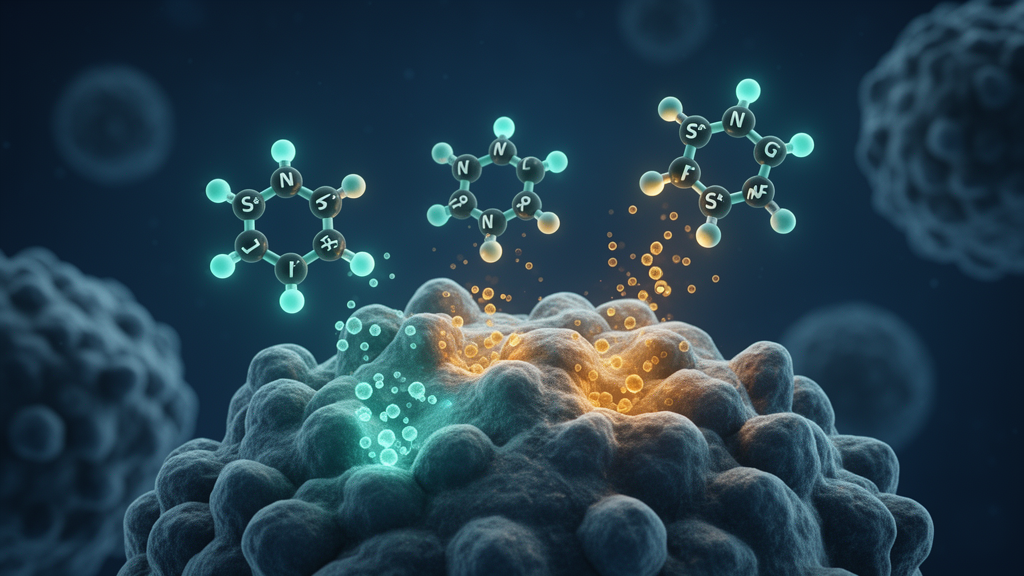
A laboratory study of newly synthesized 4,5-diaryl-1,2,3-thiadiazole derivatives found that compound 5g had the highest measured cytotoxic activity in most of the cancer cell lines tested, according to the study abstract. The compounds were designed as analogues based on the structure–activity relationships of combretastatin A-4 and evaluated using MTT assays in human gastric adenocarcinoma AGS cells, human colorectal adenocarcinoma HT-29 cells, human breast adenocarcinoma MCF-7 cells and mouse embryo fibroblast NIH3T3 cells.

Compound 5g produced stronger cytotoxic effects than paclitaxel against AGS and HT-29 cells in the reported assays. Doxorubicin, included as a reference drug, remained the most potent treatment across all four cell lines. Compounds 5d, 5f and 5h each had an IC₅₀ above 600 µM in NIH3T3 cells and showed selective activity against some of the cancer cell lines. The abstract does not provide the complete numerical results for each compound and cell-line comparison, nor does it establish whether the observed differences were statistically significant.

The investigators also conducted molecular docking and molecular dynamics analyses to examine the modeled interaction of the synthesized compounds with tubulin. Docking predicted that all compounds would bind within tubulin’s colchicine-binding site with more favorable scores than combretastatin A-4. These are computational predictions rather than experimental confirmation of binding. The molecular dynamics analysis indicated that the modeled complex containing compound 5i was more stable than the compound 5d complex.

Together, the cell-based measurements and computational models identified compound 5g as a potential tubulin inhibitor for further study, but the findings remain preclinical. The research was limited to four cultured cell lines and computer modeling; no animal or human clinical evaluation was reported in the abstract. The authors stated that additional experimental and in vivo validation would be required, and the results do not demonstrate anticancer benefit in patients.

Subject of Research: Preclinical evaluation of 1,2,3-thiadiazole derivatives in cancer cell assays and molecular modeling

Article Title: Design, synthesis, and biological evaluation of novel 4,5-diaryl-1,2,3-thiadiazole derivatives: anticancer activity and molecular docking studies

Article References: Ghasemi, M., Ghadbeigi, S., Ostad, S. N., Kalhor, H., & Amini, M. (2026). Design, synthesis, and biological evaluation of novel 4,5-diaryl-1,2,3-thiadiazole derivatives: anticancer activity and molecular docking studies. Scientific Reports. https://doi.org/10.1038/s41598-026-72795-2

Image Credits: AI Generated

DOI: 10.1038/s41598-026-72795-2

Keywords: 1,2,3-thiadiazoles, anticancer screening, cell cultures, cytotoxicity, MTT assay, molecular docking, molecular dynamics, tubulin, compound 5g, preclinical research, Design, synthesis

News Source: Nathaniel Bowman. (October 20, 2026). Cell assays and molecular modeling assess 1,2,3-thiadiazole derivatives against cancer cell lines. Scienmag.


Tags: 1,2,3-thiadiazolesanticancer screeningcell culturescompound 5gcytotoxicitydesignmolecular dockingmolecular dynamicsMTT assaypreclinical researchsynthesistubulin
Share12Tweet7Share2ShareShareShare1

Related Posts

Patch-wise 3D U-Net segments six-month-old infant brain MRI in benchmark study

Patch-wise 3D U-Net segments six-month-old infant brain MRI in benchmark study

October 20, 2026
Pain and depressive symptoms linked with cardiovascular risk in Chinese adults

Pain and depressive symptoms linked with cardiovascular risk in Chinese adults

October 20, 2026

Systematic review maps poisoning threats and layered defenses in federated learning for medical IoT

October 20, 2026

Laboratory prototype tests single-switch quadratic DC–DC converter with high voltage gain

October 20, 2026

POPULAR NEWS

  • Spanish cross-sectional study finds distinct food-soothing patterns among mothers and fathers

    Spanish cross-sectional study finds distinct food-soothing patterns among mothers and fathers

    29 shares
    Share 12 Tweet 7
  • Comparative chloroplast genomics of Gnaphalieae (Asteraceae)

    29 shares
    Share 12 Tweet 7
  • LPA₃ signaling and biological functions: from physiological regulation to disease-targeted therapy

    29 shares
    Share 12 Tweet 7
  • Patch-wise 3D U-Net segments six-month-old infant brain MRI in benchmark study

    29 shares
    Share 12 Tweet 7

About

We bring you the latest biotechnology news from best research centers and universities around the world. Check our website.

Follow us

Recent News

Spanish cross-sectional study finds distinct food-soothing patterns among mothers and fathers

Comparative chloroplast genomics of Gnaphalieae (Asteraceae)

LPA₃ signaling and biological functions: from physiological regulation to disease-targeted therapy

Subscribe to Blog via Email

Enter your email address to subscribe to this blog and receive notifications of new posts by email.

Join 85 other subscribers
  • Contact Us

Bioengineer.org © Copyright 2023 All Rights Reserved.

Welcome Back!

Login to your account below

Forgotten Password?

Retrieve your password

Please enter your username or email address to reset your password.

Log In
No Result
View All Result
  • Homepages
    • Home Page 1
    • Home Page 2
  • News
  • National
  • Business
  • Health
  • Lifestyle
  • Science

Bioengineer.org © Copyright 2023 All Rights Reserved.