• HOME
  • NEWS
  • EXPLORE
    • CAREER
      • Companies
      • Jobs
    • EVENTS
    • iGEM
      • News
      • Team
    • PHOTOS
    • VIDEO
    • WIKI
  • BLOG
  • COMMUNITY
    • FACEBOOK
    • INSTAGRAM
    • TWITTER
Monday, May 11, 2026
BIOENGINEER.ORG
No Result
View All Result
  • Login
  • HOME
  • NEWS
  • EXPLORE
    • CAREER
      • Companies
      • Jobs
        • Lecturer
        • PhD Studentship
        • Postdoc
        • Research Assistant
    • EVENTS
    • iGEM
      • News
      • Team
    • PHOTOS
    • VIDEO
    • WIKI
  • BLOG
  • COMMUNITY
    • FACEBOOK
    • INSTAGRAM
    • TWITTER
  • HOME
  • NEWS
  • EXPLORE
    • CAREER
      • Companies
      • Jobs
        • Lecturer
        • PhD Studentship
        • Postdoc
        • Research Assistant
    • EVENTS
    • iGEM
      • News
      • Team
    • PHOTOS
    • VIDEO
    • WIKI
  • BLOG
  • COMMUNITY
    • FACEBOOK
    • INSTAGRAM
    • TWITTER
No Result
View All Result
Bioengineer.org
No Result
View All Result
Home NEWS Science News Chemistry

Caves tell us that Australia’s mountains are still growing

Bioengineer by Bioengineer
May 20, 2020
in Chemistry
Reading Time: 3 mins read
0
IMAGE
Share on FacebookShare on TwitterShare on LinkedinShare on RedditShare on Telegram

Buchan Caves unlock technique for measuring uplift of mountains
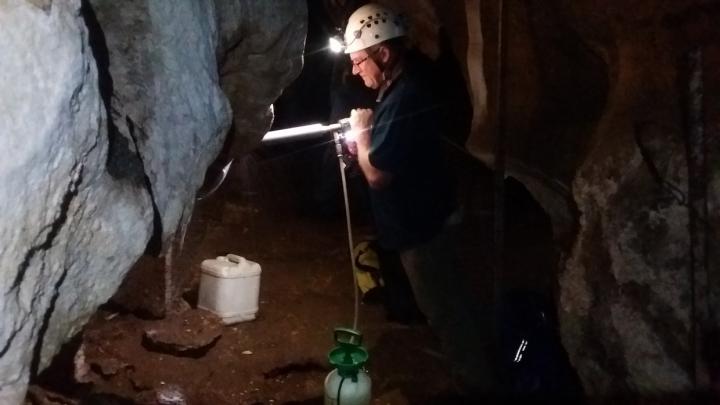
IMAGE

Credit: John Engel

Australia has often been unfairly portrayed as an old and idle continent with little geological activity, but new research suggests that we remain geologically active and that some of our mountains are still growing.

The University of Melbourne study reveals that parts of the Eastern Highlands of Victoria, including popular skiing destinations such as Mt Baw Baw and Mt Buller, may be as young as five million years, not 90 million years as originally thought.

John Engel is one of four scientists from the Isotope Geochemistry Group in the School of Earth Sciences who studied the stalagmites, stalactites, and flowstones – technically called ‘speleothems’ – in the nearby Buchan Caves to produce the findings.

“At least 250 meters of additional height in the East Victorian Highlands appears to have been gained in the last few million years,” Mr Engel said.

With the help of Parks Victoria Rangers, the team visited 10 caves, climbing down through the passages and crawling through tight squeezes to collect small fragments of speleothem ‘rubble’ to take back to the lab to determine their age, using radiometric U-Pb dating.

“Our research shows a clear trend between oldest speleothem (cave age) and height in the landscape,” Mr Engel said. “The data suggests that the Buchan region has been steadily uplifting at a rate of 76 meters every million years, beginning at least 3.5 million years ago and continuing today. This means that some speleothems have been sitting in dark caves undisturbed for 3.5 million years.”

Evidence suggests the Highlands originally rose up about 90 million years ago when the Tasman Sea between Australia and New Zealand opened up.

Researchers say the cause of the more recent uplift is debated but a leading theory points to the friendly rivalry with New Zealand.

“The Australian and Pacific plates share a common boundary and many of the forces involved at this boundary may be propagated into the Australian plate as tectonic stress. Some of this tectonically-induced stress is then released as uplift of the mountains in South East Australia,” Mr Engel said.

“This is why East Gippsland may still feel effects related to these tectonic forces. This subtle modification of classical plate tectonic theory can help explain the frequent, small earthquakes observed along South East Australia.”

Mr Engel said while mountains like the Himalaya and the Swiss Alps are admired for their aesthetic appeal, uncovering the secret stories surrounding when and how mountains form provides a layer of appreciation as well as an active field of research for geologists.

“Our research showcases a new – and rather unique – method for measuring the uplift of mountains. This technique of using speleothem is likely to also work in other caves across the world for regions with ‘recent’ tectonic activity, offering geologists great opportunities to share more stories about these impressive and unchanging features of our landscape.”

###

Media Contact
Lito Vilisoni Wilson
[email protected]

Original Source

https://about.unimelb.edu.au/newsroom/news/2020/may/caves-tell-us-that-australias-mountains-are-still-growing

Tags: Earth ScienceGeographyGeology/SoilGeophysics/GravityPlate Tectonics
Share12Tweet8Share2ShareShareShare2

Related Posts

Miniature Sensor Uses Light to Detect Touch — Chemistry

Miniature Sensor Uses Light to Detect Touch

May 8, 2026
Iron Minerals Determine Whether Dissolved Organic Matter Fuels Microbes or Becomes Long-Term Carbon Storage — Chemistry

Iron Minerals Determine Whether Dissolved Organic Matter Fuels Microbes or Becomes Long-Term Carbon Storage

May 8, 2026

Kate Evans Appointed Associate Lab Director for Biological and Environmental Systems Science at ORNL

May 8, 2026

Advancing Multiscale Modeling and Overcoming Operational Challenges in Autothermal COâ‚‚-to-Methanol Reactors

May 8, 2026
Please login to join discussion

POPULAR NEWS

  • Research Indicates Potential Connection Between Prenatal Medication Exposure and Elevated Autism Risk

    840 shares
    Share 336 Tweet 210
  • New Study Reveals Plants Can Detect the Sound of Rain

    727 shares
    Share 290 Tweet 181
  • Salmonella Haem Blocks Macrophages, Boosts Infection

    61 shares
    Share 24 Tweet 15
  • Breastmilk Balances E. coli and Beneficial Bacteria in Infant Gut Microbiomes

    57 shares
    Share 23 Tweet 14

About

We bring you the latest biotechnology news from best research centers and universities around the world. Check our website.

Follow us

Recent News

New Post-Hoc Analysis Explores Daily Oral Orforglipron Use in Adults Over 65 with Obesity, Regardless of Diabetes Status

Evaluating Digoxin Use in Patients with Symptomatic Rheumatic Heart Disease

Evaluating the Effectiveness and Safety of Digitalis Glycosides in Treating Heart Failure

Subscribe to Blog via Email

Enter your email address to subscribe to this blog and receive notifications of new posts by email.

Join 82 other subscribers
  • Contact Us

Bioengineer.org © Copyright 2023 All Rights Reserved.

Welcome Back!

Login to your account below

Forgotten Password?

Retrieve your password

Please enter your username or email address to reset your password.

Log In
No Result
View All Result
  • Homepages
    • Home Page 1
    • Home Page 2
  • News
  • National
  • Business
  • Health
  • Lifestyle
  • Science

Bioengineer.org © Copyright 2023 All Rights Reserved.