• HOME
  • NEWS
  • EXPLORE
    • CAREER
      • Companies
      • Jobs
    • EVENTS
    • iGEM
      • News
      • Team
    • PHOTOS
    • VIDEO
    • WIKI
  • BLOG
  • COMMUNITY
    • FACEBOOK
    • INSTAGRAM
    • TWITTER
Wednesday, October 28, 2026
BIOENGINEER.ORG
No Result
View All Result
  • Login
  • HOME
  • NEWS
  • EXPLORE
    • CAREER
      • Companies
      • Jobs
        • Lecturer
        • PhD Studentship
        • Postdoc
        • Research Assistant
    • EVENTS
    • iGEM
      • News
      • Team
    • PHOTOS
    • VIDEO
    • WIKI
  • BLOG
  • COMMUNITY
    • FACEBOOK
    • INSTAGRAM
    • TWITTER
No Result
View All Result
Bioengineer.org
No Result
View All Result
Home NEWS Science News Biology

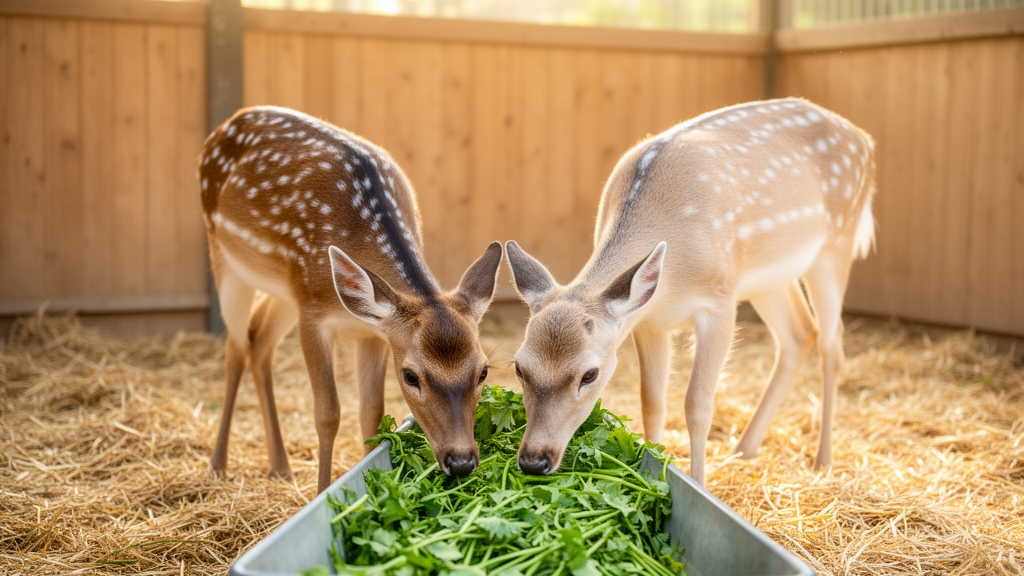
Captive sika deer and fallow deer share a largely conserved gut microbiome

by
October 28, 2026
in Biology
Reading Time: 2 mins read
0
Captive sika deer and fallow deer share a largely conserved gut microbiome

Captive sika deer and fallow deer share a largely conserved gut microbiome

Share on FacebookShare on TwitterShare on LinkedinShare on RedditShare on Telegram

Captive sika deer (Cervus nippon) and fallow deer (Dama dama) living under the same zoo conditions carry strikingly similar gut microbiota, according to a comparative metagenomic study published in AMB Express. The research, led by Xiaoyang Wu, Xibao Wang and colleagues with senior author Honghai Zhang, examined fecal samples from 22 adult deer housed at Yinchuan City Zoo using shotgun metagenomic sequencing, a technique that reads the genetic material of entire microbial communities rather than targeting single marker genes.

The study was designed to exploit a natural experiment: because both species are cervids kept in comparable captive environments and share diets, environmental variation is minimized. Any differences that remain between the two groups may therefore reflect species-associated patterns under the studied captive conditions, while the shared setting may itself constrain how much the gut microbial communities of the two hosts can diverge.

The sequencing results showed that Firmicutes and Bacteroidetes dominated the fecal microbiota of both deer groups, pointing to a shared dominant phylum-level core. Fallow deer did show higher Shannon diversity, a common measure combining species richness and evenness, but the study’s other diversity indices revealed no significant differences between the species. Overall community structure overlapped substantially between the two groups, and complementary statistical analyses detected no significant separation at the community level.

Beneath that broad similarity, however, the researchers found that specific bacterial and archaeal taxa did differ between the two deer species. Functional profiling also revealed differential enrichment in metabolic pathways related to allantoin, amino acid, glycosaminoglycan and bioactive amine metabolism, suggesting that the two hosts may draw on subtly different microbial functional repertoires even when their overall communities look alike.

The authors are careful about the strength of these functional findings. Several of the pathway differences were significant only before multiple-testing correction, meaning they did not survive the statistical safeguards used to guard against false positives when many tests are run at once. The paper therefore frames these signals as exploratory candidate functional differences that require further validation rather than established biological distinctions.

Taken together, the results indicate that sika deer and fallow deer maintained under the same captive conditions share a conserved fecal microbiome and a basic functional framework, with between-group differences concentrated in particular microbial taxa and candidate metabolic pathways. Because the work was conducted on a single captive population of 22 adult animals at one zoo, the findings apply to the studied captive conditions and do not by themselves establish how the species’ gut communities differ in the wild or under other management regimes.

Subject of Research: Comparative gut microbiota and metabolic potential of captive sika deer and fallow deer

Article Title: Comparative metagenomic analysis reveals shared dominant microbiota and differential metabolic potential in captive sika deer and fallow deer

Article References: Wu, X., Wang, X., Chen, Y., Shang, Y., Zhi, G., Xia, T., Lai, T., Sha, W., & Zhang, H. (2026). Comparative metagenomic analysis reveals shared dominant microbiota and differential metabolic potential in captive sika deer and fallow deer. AMB Express. https://doi.org/10.1186/s13568-026-02128-z

Image Credits: AI Generated

DOI: 10.1186/s13568-026-02128-z

Keywords: sika deer, fallow deer, gut microbiota, metagenomics, captive animals, Firmicutes, Bacteroidetes, Shannon diversity, metabolic pathways, zoo, cervids, microbiome

News Source: Morgan Morrow. (October 28, 2026). Captive sika deer and fallow deer share a largely conserved gut microbiome. Scienmag.


Tags: Bacteroidetescaptive animalscervidsfallow deerFirmicutesgut microbiotametabolic pathwaysmetagenomicsMicrobiomeShannon diversitysika deerzoo
Share12Tweet7Share2ShareShareShare1

Related Posts

TRPM7 Channel Drives Heart Damage After Ischemia-Reperfusion Through a Newly Traced Molecular Pathway

TRPM7 Channel Drives Heart Damage After Ischemia-Reperfusion Through a Newly Traced Molecular Pathway

October 28, 2026
Fire knows no fence lines: study maps what blocks and what enables Tribal-Federal fire collaboration in Colorado

Fire knows no fence lines: study maps what blocks and what enables Tribal-Federal fire collaboration in Colorado

October 28, 2026

Female X chromosomes show lower methylation than male X in human brain

October 28, 2026

Camera traps reveal invasive axis deer outpacing native brocket deer in Argentine forests

October 28, 2026

POPULAR NEWS

  • Fear and pressure can tip a plankton-fish model into collapse

    Fear and pressure can tip a plankton-fish model into collapse

    29 shares
    Share 12 Tweet 7
  • Military zones may shelter sensitive mammals in South Korean national park

    29 shares
    Share 12 Tweet 7
  • CRISPR Screen Reveals How Ovarian Cancer Cells Resist Niraparib

    29 shares
    Share 12 Tweet 7
  • Indonesia’s production network is organized around multiple Java-centered rich cores

    29 shares
    Share 12 Tweet 7

About

We bring you the latest biotechnology news from best research centers and universities around the world. Check our website.

Follow us

Recent News

TRPM7 Channel Drives Heart Damage After Ischemia-Reperfusion Through a Newly Traced Molecular Pathway

Fire knows no fence lines: study maps what blocks and what enables Tribal-Federal fire collaboration in Colorado

Research report: Which sociodemographic and behavioural factors are associated with transport-related digital purchases? Application to the case of Spain

Subscribe to Blog via Email

Enter your email address to subscribe to this blog and receive notifications of new posts by email.

Join 85 other subscribers
  • Contact Us

Bioengineer.org © Copyright 2023 All Rights Reserved.

Welcome Back!

Login to your account below

Forgotten Password?

Retrieve your password

Please enter your username or email address to reset your password.

Log In
No Result
View All Result
  • Homepages
    • Home Page 1
    • Home Page 2
  • News
  • National
  • Business
  • Health
  • Lifestyle
  • Science

Bioengineer.org © Copyright 2023 All Rights Reserved.