A randomized, age-matched study in 24 dogs found that adipose tissue-derived stromal vascular fraction (SVF) and xanthosine (Xs) each promoted surgical wound healing when evaluated separately, according to the study’s published abstract. The researchers also reported that combining the two treatments modulated wound healing, although the abstract does not provide the full protocol or a complete assessment of the underlying study.
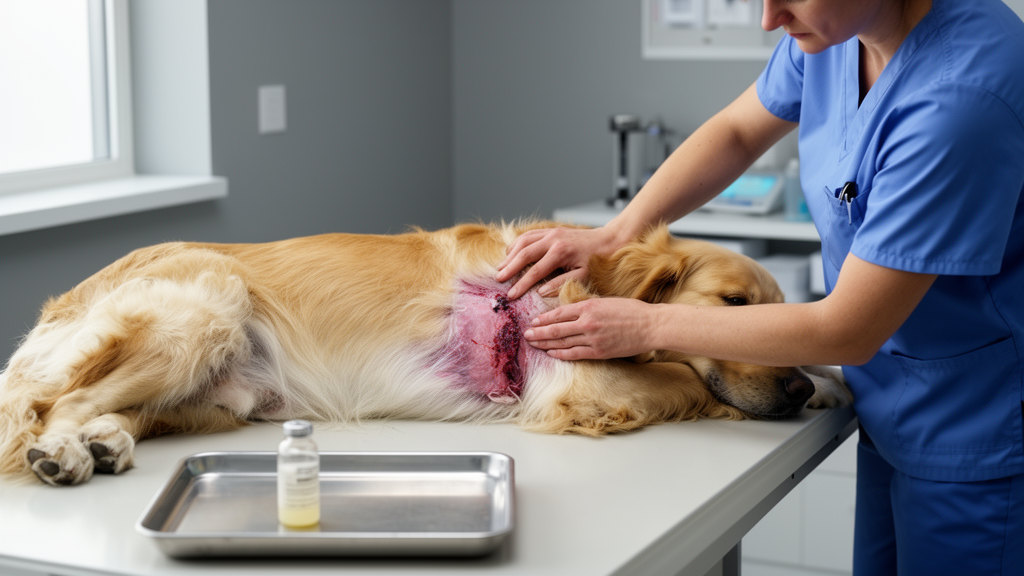
The investigators allocated the dogs into four groups: a control group, an SVF group, an Xs group, and a group receiving both SVF and Xs. Wound-healing outcomes were assessed on days 7 and 14 using gross observation, photographs, and measurements of vascular endothelial growth factor (VEGF), an angiogenic marker, and transforming growth factor beta 1 (TGFB1), an inflammatory marker. The study therefore evaluated treatments in a canine surgical-wound model rather than in people.
SVF enhanced hair regrowth by day 7 and maintained that effect through day 14, with reported p-values of 0.05 or lower. Wound redness was visibly lower than in the control group on day 7 in the Xs, SVF, and combination groups, and was further reduced on day 14 in the Xs group; the abstract reports statistical significance for the Xs group at day 14. VEGF expression peaked on day 7 in the SVF group (p ≤ 0.001), while the Xs group showed a delayed elevation on day 14 (p ≤ 0.01).
TGFB1 was mildly upregulated in the SVF group on day 14 (p ≤ 0.001) and strongly upregulated in the Xs group (p < 0.001). The authors reported that the SVF-plus-Xs combination improved wound healing and maintained TGFB1 within a controlled range that they associated with enhanced tissue regeneration. Overall, the abstract supports independent wound-healing effects for SVF and Xs, but its limited description of sample characteristics, treatment procedures, and outcome measures prevents broader conclusions, and the findings do not establish clinical benefits in humans.
Subject of Research: Effects of adipose-derived stromal vascular fraction and xanthosine on surgical wound healing in dogs
Article Title: Adipose tissue-derived stromal vascular fraction and xanthosine independently promote canine surgical wound healing
Article References: Grewal, N. K., Sharma, V., Sharma, P., Sethi, R. S., Kumar, A., Nameirakpam, U., Sherley, J. L., & Choudhary, R. K. (2026). Adipose tissue-derived stromal vascular fraction and xanthosine independently promote canine surgical wound healing. Scientific Reports. https://doi.org/10.1038/s41598-026-75815-3
Image Credits: AI Generated
DOI: 10.1038/s41598-026-75815-3
Keywords: canine wound healing, stromal vascular fraction, xanthosine, adipose tissue, VEGF, TGFB1, randomized animal study, tissue regeneration, Adipose, tissue-derived, stromal, vascular
News Source: William Thompson. (October 20, 2026). Canine study finds stromal vascular fraction and xanthosine independently improve surgical wound healing. Scienmag.