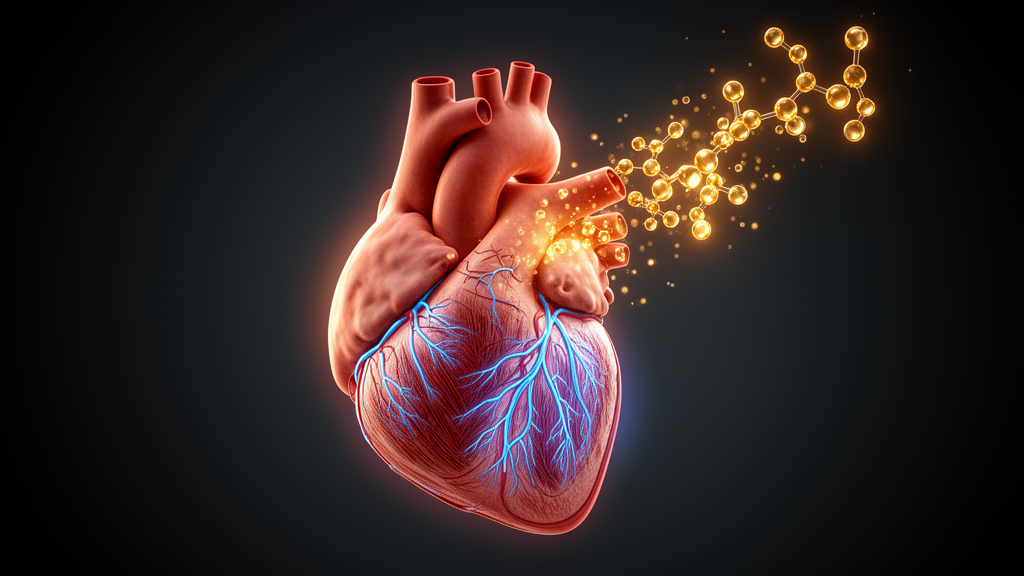
Restoring blood flow to a starving heart is the single most important goal of emergency cardiac care, yet the act of reperfusion itself inflicts a second wave of damage. When the coronary artery is reopened after a blockage, the sudden rush of oxygenated blood triggers sterile inflammation, cell death, and, over the following weeks, the accumulation of stiff collagen scar tissue that undermines the heart’s pumping ability. A new study in mice, published in the journal Chinese Medicine, reports that caffeic acid—a modest phenolic compound found in apples, blueberries, and cider—can blunt this fibrotic remodeling after myocardial ischemia–reperfusion injury, and that it appears to do so by directly engaging p38 MAPK and suppressing the downstream MAPKs/CREB inflammatory signaling axis.
The research team, led by investigators working with mouse models of reperfusion injury, induced ischemia–reperfusion by transiently tying off the left anterior descending coronary artery for thirty minutes before releasing the ligation. Starting ten minutes before the procedure, mice received daily oral doses of caffeic acid at 12.5, 25, or 50 milligrams per kilogram of body weight for fourteen days, with a comparison group receiving the established anti-fibrotic drug pirfenidone at 300 milligrams per kilogram. Two weeks after the injury, echocardiography revealed that reperfusion had markedly reduced left ventricular ejection fraction and fractional shortening, and the highest dose of caffeic acid improved both measures of pumping performance.
The structural consequences of the injury were equally striking. Wheat germ agglutinin staining showed that cardiomyocytes enlarged after reperfusion—a hypertrophic response—and this change was attenuated by the medium and high doses of the compound as well as by pirfenidone. Gross examination confirmed cardiac enlargement, supported by a reduced heart weight-to-tibial length ratio in treated animals. Masson’s trichrome staining, which renders collagen blue against red-stained muscle fibers, revealed prominent collagen deposition in the infarct border zone of untreated injured mice; caffeic acid substantially shrank this fibrotic area. Western blotting matched the histology: the fibrotic marker proteins alpha-smooth muscle actin and collagen III, both elevated after injury, fell back toward baseline with treatment, reaching reductions comparable to those achieved with pirfenidone.
Inflammation sat at the center of this pathology. Hematoxylin and eosin staining of injured myocardium showed necrosis, structural disarray, and dense infiltration of inflammatory cells, all of which eased with treatment in a dose-dependent manner. Cardiac messenger RNA levels of the pro-inflammatory cytokines tumor necrosis factor-alpha and interleukin-1 beta dropped in treated animals. Flow cytometry of dispersed heart tissue showed that reperfusion increased the frequency of infiltrating F4/80-positive macrophages and shifted the population toward a pro-inflammatory, Ly6C-positive phenotype; caffeic acid counteracted both the infiltration and the polarization shift. Co-immunostaining for the M1 marker CD86 and the M2 marker CD206 confirmed that the compound lowered the ratio of pro-inflammatory to anti-inflammatory macrophages within the injured myocardium.
Because macrophages and fibroblasts are known to drive fibrosis through chemical crosstalk, the researchers built a laboratory system to isolate that conversation. They collected conditioned medium from RAW 264.7 macrophage cells stimulated with lipopolysaccharide, with or without caffeic acid, and applied it to mouse cardiac fibroblasts. Medium from inflamed macrophages pushed the fibroblasts into overdrive: levels of the cell-cycle proteins PCNA and CCND1 rose, the fraction of EdU-positive proliferating cells climbed, and transwell and wound-healing assays showed accelerated migration. When the macrophages had been co-treated with caffeic acid, all of these fibroblast responses were suppressed. In a complementary in vivo test, adoptive transfer of polarized pro-inflammatory bone marrow-derived macrophages directly into the heart wall increased fibrotic protein expression in injured mice, an effect that caffeic acid administration significantly inhibited.
Notably, the compound did not act on fibroblasts directly. When cardiac fibroblasts were activated with transforming growth factor-beta 1 in the absence of inflammatory cells, caffeic acid neither reduced alpha-smooth muscle actin or collagen III nor inhibited MAPKs/CREB activation under the tested conditions. The anti-fibrotic effect therefore appears to operate upstream, through the inflammatory cells that provoke fibroblast activation rather than through the fibroblasts themselves—a distinction the authors highlight as central to interpreting their mechanism.
To identify the signaling pathway involved, the team performed RNA sequencing on heart tissue harvested three days after injury. Genes that were upregulated by reperfusion and pushed back down by caffeic acid were enriched, in KEGG pathway analysis, for adaptive immune responses, extracellular matrix organization, and MAPK cascade regulation. The authors themselves flag the caution here: with only three animals per group and one heterogeneous untreated sample driving much of the principal-component separation, the transcriptomic findings should be regarded as exploratory and in need of validation in larger cohorts. Western blotting provided more direct support, showing that reperfusion increased phosphorylation of p38 MAPK, JNK, and ERK in cardiac tissue, and that caffeic acid attenuated this phosphorylation, most prominently for p38 MAPK and JNK.
The mechanistic case for a direct target rests on three converging lines of evidence. Molecular docking predicted that caffeic acid fits into the MAPK protein with hydrogen-bonding interactions at residues SER-293 and SER-251. Surface plasmon resonance, a biophysical technique that measures real-time binding, demonstrated dose-dependent binding of the compound to human p38 alpha/MAPK14 protein, with a dissociation constant of 7.37 micromolar and a fast-on, fast-off kinetic profile typical of small molecules. A cellular thermal shift assay then showed that caffeic acid stabilized p38 MAPK14 against heat-induced degradation in macrophage lysates. Functionally, the MAPK agonist anisomycin reversed the compound’s suppression of interleukin-6, tumor necrosis factor-alpha, and interleukin-1 beta secretion from stimulated macrophages, and it restored fibroblast migration that caffeic acid had blocked—consistent with the compound acting through, rather than around, this pathway.
The downstream effector CREB, a transcription factor whose phosphorylation at serine 133 marks its active state, was elevated after reperfusion and reduced by caffeic acid treatment in both heart tissue and stimulated macrophages. When the researchers activated CREB with forskolin, the compound’s anti-inflammatory effects on cytokine and iNOS expression weakened, and fibroblast proliferation and migration in the conditioned-medium system rebounded—yet forskolin did not reverse the suppression of phospho-p38 MAPK itself. Conversely, anisomycin blunted the suppression of both phospho-p38 and phospho-CREB. This asymmetry supports a cascade in which MAPKs sit upstream of CREB. In vivo, co-administration of either anisomycin or forskolin with caffeic acid eroded the treatment’s benefits: ejection fraction and fractional shortening fell, serum cytokines rose, and Masson staining showed worsened fibrotic remodeling compared with caffeic acid alone. The compound also produced cardioprotection comparable to that seen in cardiomyocyte-specific MAPK14 knockout mice subjected to the same injury protocol.
The authors are candid about the limits of the work. The in vivo pathway validation relied on pharmacological activators without tissue- or cell-type-specific targeting, so the relative contributions of macrophages and fibroblasts to the observed effects remain unresolved. The cell culture experiments used immortalized cell lines rather than primary cells, which may not fully reproduce the injured heart’s microenvironment, and additional mechanisms beyond MAPKs/CREB likely contribute. The findings are also confined to a mouse model; no human data exist yet, and the doses used—up to 50 milligrams per kilogram daily by gavage—cannot be translated directly to dietary intake or supplementation. Still, by tying a common dietary polyphenol to a specific molecular target, direct binding to p38 MAPK, and a defined inflammatory cascade linking macrophage activation to fibroblast-driven scarring, the study offers a concrete mechanistic scaffold for developing optimized caffeic acid derivatives aimed at limiting adverse remodeling after reperfusion injury.
Subject of Research: Preclinical evaluation of caffeic acid as an anti-inflammatory, anti-fibrotic intervention in murine myocardial ischemia–reperfusion injury
Article Title: Caffeic acid mitigates myocardial fibrosis via suppressing MAPKs/CREB-mediated inflammation in myocardial ischemia–reperfusion injury mice
Article References: Xiang, M., Ouyang, X., Song, S., Yang, M., Sarapultsev, A., Luo, S., Dong, Y., & Hu, D. (2026). Caffeic acid mitigates myocardial fibrosis via suppressing MAPKs/CREB-mediated inflammation in myocardial ischemia–reperfusion injury mice. Chinese Medicine, 21(1), Article 233. https://doi.org/10.1186/s13020-026-01562-2
Image Credits: AI Generated
DOI: 10.1186/s13020-026-01562-2
Keywords: caffeic acid, myocardial ischemia-reperfusion injury, myocardial fibrosis, p38 MAPK, CREB, macrophages, cardiac fibroblasts, inflammation, mouse model, echocardiography, surface plasmon resonance, cardiac remodeling
News Source: Ophelia Keating. (October 29, 2026). Caffeic Acid Curbs Heart Scarring After Reperfusion Injury in Mice by Damping Inflammatory MAPK–CREB Signaling. Scienmag.