A 60-day laboratory experiment with young silver carp has found that three common waterborne metals — arsenic, cadmium and cobalt — each disrupted the fish’s blood chemistry at the same low concentration, but cadmium did the most damage. Fish exposed to cadmium showed the steepest drops in haemoglobin, red blood cells and serum protein, along with the sharpest rises in white blood cells, glucose and the stress hormone cortisol.
The research team, based at Govind Ballabh Pant University of Agriculture and Technology in Pantnagar, Uttarakhand, acquired 240 silver carp (Hypophthalmichthys molitrix) roughly one month old, each weighing about 8 grams and measuring around 10 centimetres, from a hatchery near the College of Fisheries. After 15 days of acclimatisation in aerated tanks with water renewed every other day, the fish were divided into four groups of 60, each split across three replicate circular tanks holding 600 litres. One group served as an untreated control; the others were exposed continuously for 60 days to arsenic, cadmium or cobalt, each dosed at 0.06 milligrams per litre. The metals were supplied as sodium arsenite, cadmium nitrate and cobalt nitrate, and at every water renewal a portion of the tank water was replaced with freshly prepared metal solution to hold the nominal concentration steady.
The choice of 0.06 milligrams per litre was not arbitrary. The authors note that this represents an elevated exposure level more typical of contaminated waters than pristine ones, and they point to field measurements from the Jia Bharali River basin, where surface-water concentrations of arsenic, cadmium and cobalt have been reported at up to 0.008, 0.041 and 0.106 milligrams per litre respectively. That suggests the experimental dose sits within the range that polluted freshwater systems can actually reach, although the researchers caution that its direct relevance to routine aquaculture conditions should be interpreted carefully. Throughout the trial, water quality was held at a temperature of 20.5 degrees Celsius, pH 7.3, hardness of 300 milligrams per litre and dissolved oxygen of 5.2 milligrams per litre, and the fish were fed a formulated diet starting at 5 percent of body weight, stepped down to 3 percent and then 2 percent as the experiment progressed.
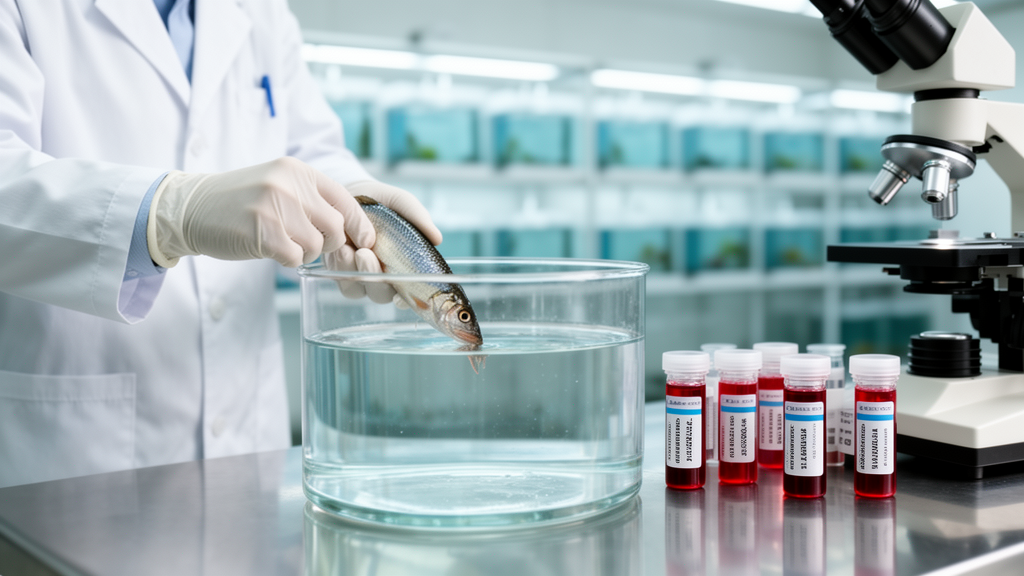
At the end of the exposure period, 15 fish from each group were randomly selected and blood was drawn from the caudal vein using heparinised syringes. Samples destined for haematology went into EDTA tubes; those for serum biochemistry were centrifuged at 4 degrees Celsius and the supernatant frozen at minus 20 degrees. The team measured red and white blood cell counts, haemoglobin, haematocrit and the derived red cell indices, then analysed total protein, albumin, globulin, glucose and cortisol with commercial diagnostic kits. Differences among groups were tested with one-way analysis of variance followed by Tukey’s post hoc comparisons, using SPSS version 27 and a significance threshold of 0.05.
The haematological results painted a consistent picture of anaemia and stress. Haemoglobin in control fish averaged 11.68 grams per decilitre, but fell to 10.18 under arsenic, 9.18 under cobalt and just 8.14 under cadmium. Red blood cell counts followed the same ranking: from 2.50 million cells per cubic millimetre in controls down to 1.91 million with arsenic, 1.37 million with cobalt and 1.17 million with cadmium. Haematocrit dropped from 38.85 percent in controls to 35.57, 33.53 and 30.40 percent in the arsenic, cobalt and cadmium groups respectively, and mean corpuscular haemoglobin concentration declined in every treated group, lowest again in the cadmium fish at 26.79 grams per decilitre against a control value of 30.06.
Not every index moved downward. White blood cell counts rose significantly in the cadmium group, reaching 5.90 cells per cubic millimetre against a control value of 4.06, with cobalt at 4.73; the arsenic group, at 4.13, was statistically comparable to the control. Mean corpuscular volume climbed sharply, from 157.98 cubic micrometres in controls to 186.64 with arsenic, 247.50 with cobalt and 260.97 with cadmium, and mean corpuscular haemoglobin rose in parallel. Taken together, the falling red cell count and haemoglobin concentration alongside enlarged, relatively haemoglobin-poor red cells point to what the authors describe as a macrocytic and hypochromic tendency — a pattern suggesting altered red cell production and maturation rather than simple cell loss.
The serum biochemistry told a complementary story. Total protein fell from 6.64 in controls to 6.12 with arsenic, 5.97 with cobalt and 4.93 with cadmium, and albumin dropped from 4.41 to 4.14, 3.90 and 2.93 respectively, making cadmium clearly the most disruptive to protein metabolism. Globulin was significantly higher in controls at 2.23 than in any metal group, with no significant differences among the three treatments — a reduction the authors link to weakened humoral immune defence, since globulins carry out much of the blood’s immune-related work. Glucose rose in all treated groups, peaking at 130.39 in cadmium-exposed fish versus 123.87 in controls, and cortisol climbed from 233.53 in controls to 242.00 under cadmium, with arsenic and cobalt in between.
In their discussion, the authors interpret these shifts through established mechanisms. Reduced haemoglobin and haematocrit are consistent with metal-impaired haematopoiesis; cadmium is thought to induce anaemia either by destroying mature erythrocytes or by inhibiting red cell production, and it accumulates in the liver, kidney and spleen, where it can impair blood-forming tissue. Elevated white cell counts plausibly reflect immune activation in response to metal-induced stress and tissue damage, while hyperglycaemia and raised cortisol fit the classic stress response mediated by the hypothalamic–pituitary–interrenal axis, which the authors describe as a reliable biomarker of chronic stress in teleost fish. Falling protein and albumin may stem from impaired feeding, the energy cost of detoxification, and heavy-metal interference with hepatic protein synthesis.
The authors are careful about the limits of their comparison. Cadmium produced the largest effects at the same nominal concentration, possibly because of differences in uptake, retention and interaction with cellular processes — cadmium is known to disturb calcium regulation and promote oxidative stress — but because metal uptake and tissue accumulation were not measured in this study, the greater cadmium response should be read as an experimental outcome rather than definitive proof of higher intrinsic toxicity. They also note that the single tested concentration, while environmentally relevant to polluted waters, constrains how far the findings can be generalised to routine aquaculture settings.
The broader context gives the findings weight. Aquaculture has become the world’s fastest-growing food production sector, and in 2023 it accounted for 51 percent of global aquatic animal production of 130.9 million tonnes, contributing 94.4 million tonnes of the 223.2 million tonnes produced from capture fisheries and farming combined. Silver carp is a mainstay of freshwater aquaculture, so blood and serum parameters that reliably flag metal stress — as this study argues its measured indices do — could give farmers and monitors an early, physiological warning of contamination before visible symptoms appear. What this experiment establishes is a comparative snapshot under controlled conditions: at 0.06 milligrams per litre over two months, all three metals disturbed the blood of silver carp, and cadmium disturbed it most.
Subject of Research: Comparative effects of sublethal arsenic, cadmium and cobalt exposure on the haematology and serum biochemistry of silver carp
Article Title: Comparative assessment of haematological and serum biochemical alterations in silver carp (Hypophthalmichthys molitrix) exposed to sublethal concentrations of arsenic, cadmium and cobalt
Article References: Upadhyay, D. K., Rani, P., Kumari, A., Mishra, A., Kumar, A., Shah, T. K., & Sharma, M. (2026). Comparative assessment of haematological and serum biochemical alterations in silver carp (Hypophthalmichthys molitrix) exposed to sublethal concentrations of arsenic, cadmium and cobalt. Aquaculture Science and Management, 3(1), Article 19. https://doi.org/10.1186/s44365-026-00049-3
Image Credits: AI Generated
DOI: 10.1186/s44365-026-00049-3
Keywords: silver carp, heavy metals, cadmium, arsenic, cobalt, haematology, serum biochemistry, fish stress, aquaculture, water contamination, anaemia, cortisol
News Source: Alan Morgan. (October 28, 2026). Cadmium hits fish blood hardest as arsenic and cobalt follow in 60-day tank trial. Scienmag.