• HOME
  • NEWS
  • EXPLORE
    • CAREER
      • Companies
      • Jobs
    • EVENTS
    • iGEM
      • News
      • Team
    • PHOTOS
    • VIDEO
    • WIKI
  • BLOG
  • COMMUNITY
    • FACEBOOK
    • INSTAGRAM
    • TWITTER
Sunday, August 16, 2026
BIOENGINEER.ORG
No Result
View All Result
  • Login
  • HOME
  • NEWS
  • EXPLORE
    • CAREER
      • Companies
      • Jobs
        • Lecturer
        • PhD Studentship
        • Postdoc
        • Research Assistant
    • EVENTS
    • iGEM
      • News
      • Team
    • PHOTOS
    • VIDEO
    • WIKI
  • BLOG
  • COMMUNITY
    • FACEBOOK
    • INSTAGRAM
    • TWITTER
  • HOME
  • NEWS
  • EXPLORE
    • CAREER
      • Companies
      • Jobs
        • Lecturer
        • PhD Studentship
        • Postdoc
        • Research Assistant
    • EVENTS
    • iGEM
      • News
      • Team
    • PHOTOS
    • VIDEO
    • WIKI
  • BLOG
  • COMMUNITY
    • FACEBOOK
    • INSTAGRAM
    • TWITTER
No Result
View All Result
Bioengineer.org
No Result
View All Result
Home NEWS Science News Health

Building a stronger 'brain' for brain data research

Bioengineer by Bioengineer
December 20, 2018
in Health
Reading Time: 2 mins read
0
IMAGE
Share on FacebookShare on TwitterShare on LinkedinShare on RedditShare on Telegram

Pitt computer engineer receives $1.2 million NSF award to make big brain data collaborations more secure
IMAGE

Credit: Swanson School of Engineering


PITTSBURGH (December 20, 2018) … The National Science Foundation BIGDATA program awarded $1,200,000 to a research team led by the University of Pittsburgh Swanson School of Engineering to study the big brain data for complex brain disorders and design new algorithms that address computational challenges in multi-site collaborative data mining.

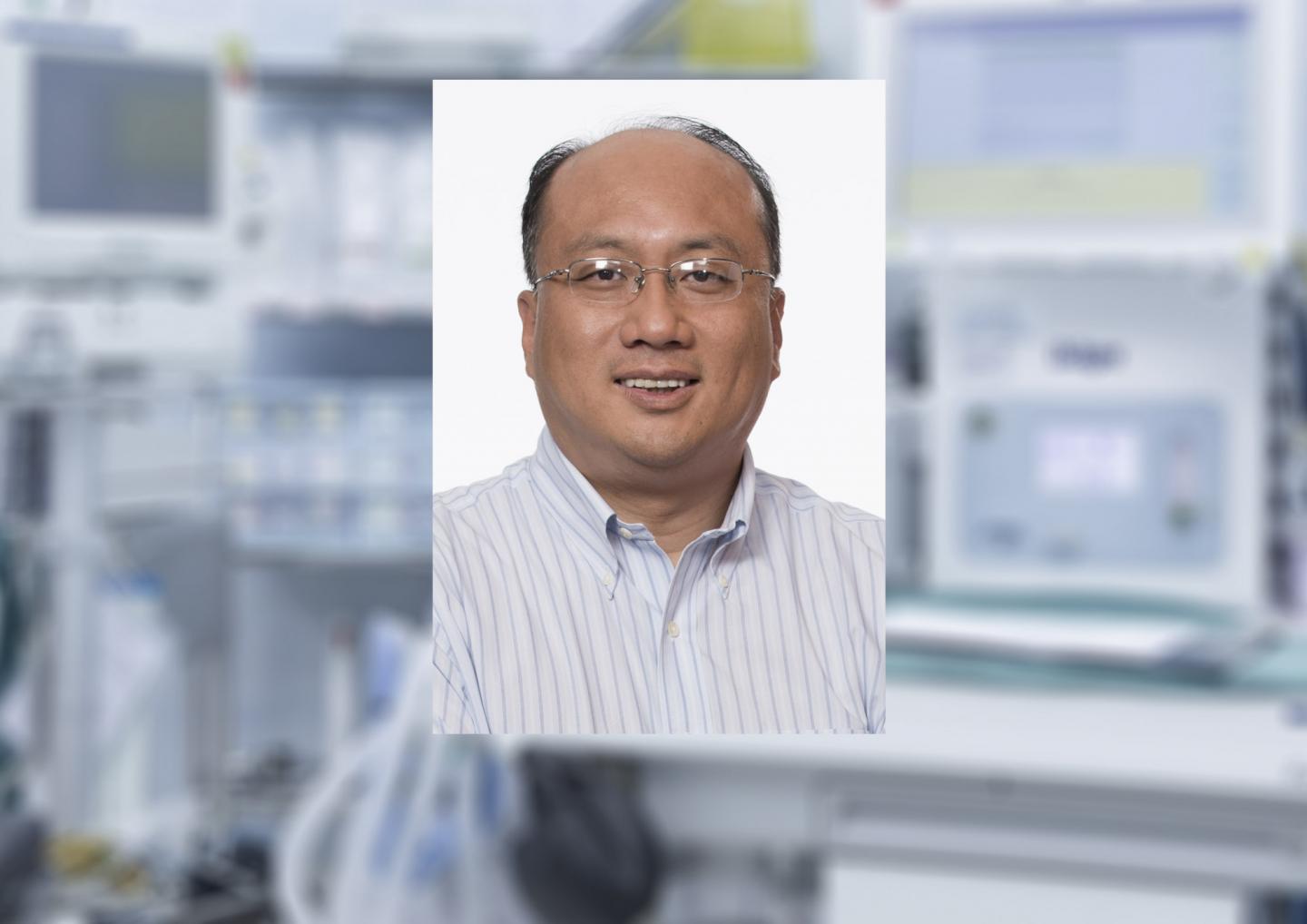
Heng Huang, the Swanson School’s John A. Jurenko Professor of Computer Engineering, is principal investigator of the study, “Asynchronous Distributed Machine Learning Framework for Multi-Site Collaborative Brain Big Data Mining.” Huang currently leads seven NSF projects and an NIH R01 project on machine learning, big data mining, computational neuroscience, health informatics, and precision medicine.

“Research in emerging fields, such as brain imaging genomics and human connectomics, holds great promise for a systems biology study of the brain,” said Huang. “This research can help us better understand complex neurobiological systems, from genetic determinants to the interplay between brain structure, connectivity, function, and cognition.”

While researchers currently have access to brain data collected from a series of funded projects, they have failed to attain additional data collected by different local institutes due to data privacy and security issues preventing cross-institutional distribution. In this project, Huang will create a framework to address these issues and facilitate data and computing resource sharing.

“In collaborative data analysis, the participating institutes keep their own data, which are analyzed and computed locally, and only share the computed results via communicating with the server,” explained Huang. “The server communicates with all institutes and updates the computational model such that the trained machine learning models indirectly use all data and are shared to all institutes.”

According to Huang, most machine learning algorithms were not designed for such distributed architecture due to difficulties in designing efficient algorithms and providing theoretical foundations. This is the first project to create these type of algorithms for the study of brain imaging genomics and human connectomics. The goal of this project is to alleviate these computational challenges and enable investigators in neuroimaging, genomics, neuroscience, and other brain-related disciplines to securely and more efficiently further their research.

“The result of our project will be new distributed machine learning algorithms with theoretical foundations that can be used for multi-site collaborative big brain data mining, creating large-scale computational strategies and effective software tools,” said Huang. “We hope that this work will help researchers harness the full potential of big brain data, potentially leading to the next major brain science discoveries.”

###

Media Contact
Leah Russell
[email protected]

Original Source

https://www.engineering.pitt.edu/News/2018/Heng-Huang-BIGDATA/

Tags: Algorithms/ModelsComputer ScienceneurobiologyTechnology/Engineering/Computer ScienceTheory/Design
Share12Tweet8Share2ShareShareShare2

Related Posts

PARP1 Drives Neuropathic Pain Through GPX4-Dependent Ferroptosis in Injured Mice’s Sensory Neurons

August 15, 2026

Genome-wide skin pQTL map reveals genetic regulators and mechanisms underlying skin disorders

August 15, 2026

Levistilide A Drives Ferroptosis via RNF40-HSP90α Axis, Suppressing Colorectal Cancer Lung Metastasis

August 15, 2026

Sintilimab, IBI305, and Chemotherapy Show Promise in First-Line Advanced Gastric and GEJ Adenocarcinoma

August 15, 2026
Please login to join discussion

POPULAR NEWS

  • KAIST develops semiconductor neuron that harnesses noise to selectively process signals

    29 shares
    Share 12 Tweet 7
  • Imagining natural and extra robotic thumbs together strengthens kinesthetic sensorimotor networks

    29 shares
    Share 12 Tweet 7
  • PARP1 Drives Neuropathic Pain Through GPX4-Dependent Ferroptosis in Injured Mice’s Sensory Neurons

    29 shares
    Share 12 Tweet 7
  • Strubbelig–NHL3 Receptor Complex Helps Arabidopsis Respond to Cellulose Deficiency

    29 shares
    Share 12 Tweet 7

About

We bring you the latest biotechnology news from best research centers and universities around the world. Check our website.

Follow us

Recent News

KAIST develops semiconductor neuron that harnesses noise to selectively process signals

Imagining natural and extra robotic thumbs together strengthens kinesthetic sensorimotor networks

PARP1 Drives Neuropathic Pain Through GPX4-Dependent Ferroptosis in Injured Mice’s Sensory Neurons

Subscribe to Blog via Email

Success! An email was just sent to confirm your subscription. Please find the email now and click 'Confirm' to start subscribing.

Join 85 other subscribers
  • Contact Us

Bioengineer.org © Copyright 2023 All Rights Reserved.

Welcome Back!

Login to your account below

Forgotten Password?

Retrieve your password

Please enter your username or email address to reset your password.

Log In
No Result
View All Result
  • Homepages
    • Home Page 1
    • Home Page 2
  • News
  • National
  • Business
  • Health
  • Lifestyle
  • Science

Bioengineer.org © Copyright 2023 All Rights Reserved.