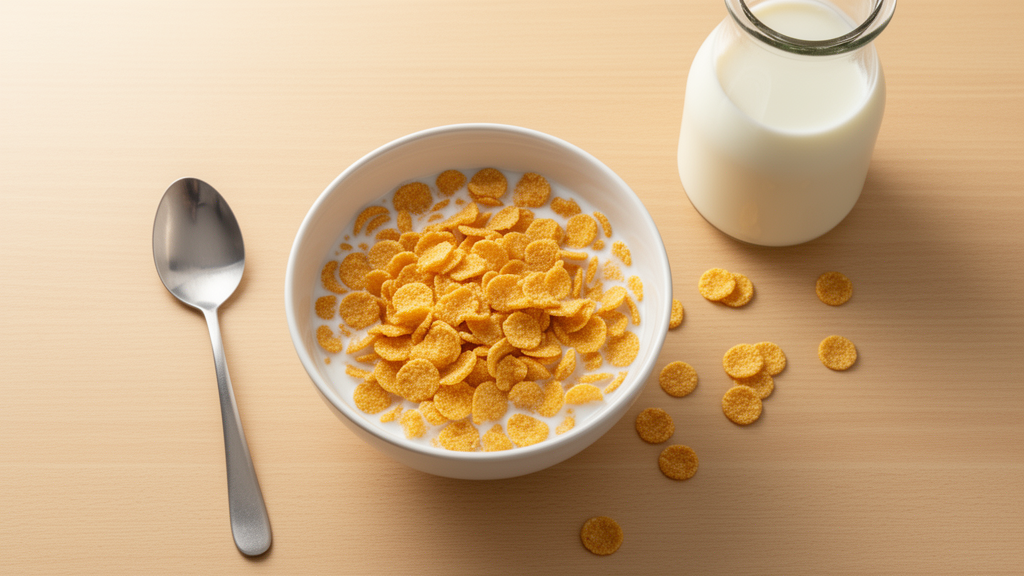
Ready-to-eat cereal, whether eaten alone or with milk, ranks among the most cost-efficient breakfast foods for delivering protein, whole grains and underconsumed nutrients to American children, according to an analysis of national dietary survey data published in the journal Food, Nutrition and Health. The study, led by Yanni Papanikolaou and Ava Papanikolaou with nutrition scientist Joanne Slavin, drew on three cycles of the National Health and Nutrition Examination Survey, known as NHANES, covering the years 2013 through 2018, and compared sixteen commonly consumed breakfast foods on how much nutrition they provide per dollar spent.
The researchers used twenty-four-hour dietary recall data from 7,929 children aged 2 to 18 years, combining the 2013-2014, 2015-2016 and 2017-2018 NHANES cycles into a single nationally representative sample. Dietary intake was captured on Day 1 of the survey using the Automated Multiple-Pass Method, a standardized, interviewer-administered five-step procedure designed to improve recall and reduce omissions, conducted in person at the survey’s Mobile Examination Centers. Nutrient values came from the US Department of Agriculture’s Food and Nutrient Database for Dietary Studies, which underpins the What We Eat in America dietary component of NHANES.
To attach prices to the foods children reported eating, the team linked NHANES food codes to the Purchase to Plate National Average Prices database, which provides unit price estimates for foods Americans consume and is updated every two years to match the corresponding survey cycles. All statistical procedures were carried out in SAS version 9.4, with survey weights applied to produce nationally representative estimates and to account for the complex sample design of NHANES. The analysis calculated mean daily nutrient intakes, the percentage of total daily nutrients contributed by each breakfast food, and nutrient units delivered per dollar spent on the daily total diet.
The sixteen breakfast foods examined were cereal, cereal eaten together with milk, eggs, bread, fruit, pancakes, bacon, sausage, fruit juice, yogurt, breakfast potatoes, bakery items, milk alone, oatmeal, bars, and coffee or tea. Breakfast food consumers were defined as individuals who ate one of these predefined foods during the morning breakfast period, with intake identified through specific What We Eat in America food categories. Ready-to-eat cereal was defined by WWEIA subgroup 46, while milk consumed with cereal came from the cow’s milk subgroups 10 and 12. The category of cereal plus milk was reserved for occasions when cereal and milk were consumed at the same time.
The headline result concerns nutrients of public health concern, a group the Dietary Guidelines identify as chronically underconsumed: dietary fiber, calcium, potassium and vitamin D. Among the sixteen breakfast foods, cereal and cereal plus milk ranked second and fifth, respectively, for cost-efficiency in delivering dietary fiber, with every dollar spent on cereal providing 8.9 grams of dietary fiber per day; oatmeal itself was the single most cost-efficient fiber source. For calcium, cereal plus milk ranked second in cost-efficiency, delivering 622 milligrams of calcium per day for every dollar spent, while milk alone was the most cost-efficient calcium source of all. Cereal plus milk ranked fourth for potassium cost-efficiency, providing 800 milligrams of potassium per day per dollar, with milk again leading at 1,370 milligrams of potassium per dollar spent.
Vitamin D showed a similar pattern. Milk was the highest source of vitamin D among the breakfast foods, contributing 37.2 percent of children’s daily vitamin D intake, while cereal and cereal plus milk contributed 9.8 percent and 23.0 percent of total daily vitamin D, respectively. Per dollar spent, cereal and cereal plus milk ranked third and second for cost-efficiency in vitamin D delivery, with cereal plus milk providing 8.0 micrograms of vitamin D per day for every dollar spent, and milk the most cost-efficient source at 10.9 micrograms per dollar. For protein, milk was the top breakfast source at roughly 8 percent of daily protein, cereal plus milk contributed 4.2 percent of total daily protein and ranked fifth for cost-efficiency, providing 19.1 grams of protein per day per dollar, while milk delivered 30.4 grams of protein per dollar spent.
Where cereal alone truly dominated was in the shortfall vitamins and minerals. Of the sixteen breakfast foods, cereal ranked first for cost-efficiency in delivering ten nutrients: dietary folate in Dietary Folate Equivalents, iron, zinc, niacin, riboflavin, thiamin, vitamin A, vitamin B12, vitamin B6 and vitamin E. Cereal was the single highest source of iron in children’s total diets among the foods examined, contributing 21 percent, and delivered approximately 31 milligrams of iron per dollar spent. Cereal and cereal plus milk were the two highest sources of dietary folate, at 24.7 percent and 25.1 percent of total daily intake respectively, and per dollar spent cereal provided 1,334 micrograms of folate DFE per day. Per-dollar figures for other nutrients included 29 milligrams of niacin, 2.2 milligrams of riboflavin, 2.2 milligrams of thiamin, 8.3 micrograms of vitamin B12, 3.2 milligrams of vitamin B6 and 13.4 milligrams of zinc from cereal alone.
The analysis did not ignore the less flattering numbers. Bakery products such as doughnuts, pastries and cookies were the highest source of added sugar among the breakfast foods, providing 9.3 percent of children’s daily added sugar, with cereal ranked second at 5.7 percent. No added sugar was attributed to milk in the cereal plus milk category because no flavored milks were included in the analysis. On sodium, cereal and cereal plus milk ranked second and third in contribution among the sixteen foods, but neither appeared in the top five for sodium delivered per dollar; breakfast potatoes, breads, sausage, pancakes and eggs led that list, with cereal plus milk contributing 626 milligrams of sodium per day per dollar spent.
Energy and whole grain results rounded out the picture. Bakery products were also the highest energy source among the breakfast foods at about 4.8 percent of total daily calories, while cereal and cereal plus milk contributed 2.8 percent and 4.4 percent of daily calories and ranked second and fourth for caloric delivery per dollar, with cereal providing 567 kilocalories per day per dollar. Both cereal and cereal plus milk ranked second for whole grain contribution to the total diet, since all whole grain intake in both scenarios came from ready-to-eat cereals, and per dollar spent they delivered 1.78 and 1.10 ounce-equivalents of whole grain per day respectively. The authors frame this as significant because many children fall short of whole grain recommendations, meaning that skipping cereal can represent a missed eating occasion for whole grain intake, particularly when many popular breakfast options provide no whole grains at all.
The authors situate their findings against a backdrop of rising food costs and food insecurity, citing USDA figures that food prices rose 3.5 percent in 2020, 9.9 percent in 2022 and 5.8 percent in 2023, with an estimated 3.4 percent increase for all foods in 2025, and noting that nearly one in seven US households was food insecure at some point during the year, affecting 47.4 million people including 7.2 million children. Because food cost is a known driver of diet quality, with lower-cost diets tending to include fewer fruits, vegetables, whole grains and seafood, the team argues that identifying affordable nutrient sources matters most for economically disadvantaged families. They also acknowledge the limitations inherent in observational research: the results rest on self-reported 24-hour recall data, which is subject to memory-related inaccuracies and measurement error, and the analysis used a single Day 1 recall rather than multiple days. As a cross-sectional dietary analysis, the study describes associations between breakfast choices and nutrient cost-efficiency in children’s existing diets and cannot establish causal effects of eating cereal on health outcomes. Within those constraints, the authors conclude that cereal and cereal with milk represent an accessible, affordable and nutritionally meaningful breakfast option for American children, delivering protein, whole grains and numerous shortfall nutrients at a time when cost-efficient nutrition is of heightened public health importance.
Subject of Research: Cost-efficiency of breakfast foods in delivering protein, whole grains and shortfall nutrients in US children's diets
Article Title: Cereal and cereal with milk are cost-efficient breakfast foods for delivery of protein, whole grains and shortfall nutrients in US children’s dietary patterns
Article References: Papanikolaou, Y., Papanikolaou, A., & Slavin, J. (2026). Cereal and cereal with milk are cost-efficient breakfast foods for delivery of protein, whole grains and shortfall nutrients in US children’s dietary patterns. Food, Nutrition and Health, 3(1), Article 35. https://doi.org/10.1007/s44403-026-00072-1
Image Credits: AI Generated
DOI: 10.1007/s44403-026-00072-1
Keywords: breakfast cereal, NHANES, cost-efficiency, shortfall nutrients, whole grains, children's nutrition, dietary fiber, vitamin D, calcium, food insecurity, ready-to-eat cereal, milk
News Source: Daisy Hatcher. (October 29, 2026). Breakfast cereal with milk delivers shortfall nutrients at low cost for US children, analysis finds. Scienmag.