The work, led by Ying Tu and colleagues with senior author Hua Gu, proposes a molecular route involving reactive oxygen species, the integrin subunit ITGB3, and the PI3K/AKT signaling pathway.
The researchers set out to clarify how blue light damages keratinocytes, a question they frame as relevant to melasma, a common pigmented skin disorder with a severe impact on appearance. Blue light is described in the study as a crucial exogenous trigger for melasma, but the mechanisms mediating damage to keratinocytes had remained unclear.
Methodologically, the team combined human tissue analysis with cell experiments. Melasma lesions and paired normal skin tissues were collected to measure relevant indicators. In the laboratory, HaCaT keratinocyte cells were irradiated with blue light to establish an in vitro injury model. Western blotting, RT-qPCR and immunofluorescence were used to detect mRNA and proteins related to autophagy, DNA damage repair and related signaling pathways, while an alkaline comet assay and a DCFH-DA probe evaluated DNA damage and ROS levels, respectively. ELISA measured inflammatory factors.
The human tissue findings showed significant autophagy imbalance and abnormal DNA damage repair in keratinocytes from melasma lesions. This was characterized by increases in the LC3II/I ratio and in Beclin-1, LC3B and γH2AX expression, alongside decreased p62, BRCA1, RAD51, ATM and ATR expression — a pattern indicating both stalled autophagic flux and impaired DNA damage repair machinery.
In the cell model, blue light irradiation induced ROS accumulation in normal skin tissues and HaCaT cells, leading to similar autophagy abnormalities, DNA damage repair defects and inflammatory responses. Concurrently, blue light significantly reduced the p-PI3K/PI3K and p-AKT/AKT ratios, indicating inhibition of the PI3K/AKT signaling pathway. Treatment with 740 Y-P, an activator of this pathway, ameliorated the blue-light-induced damage phenotypes, supporting the pathway’s causal role in the observed injury.
A key molecular player emerged when the team examined ITGB3. Its expression was downregulated both in melasma lesion tissues and in blue-light-irradiated HaCaT cells. NAC treatment, an ROS inhibitor, or ITGB3 overexpression upregulated ITGB3 expression, activated the PI3K/AKT pathway and improved the blue-light-induced damage phenotypes. Conversely, ITGB3 knockdown partially attenuated the protective effects of NAC, placing ITGB3 downstream of ROS and upstream of PI3K/AKT in the proposed mechanism.
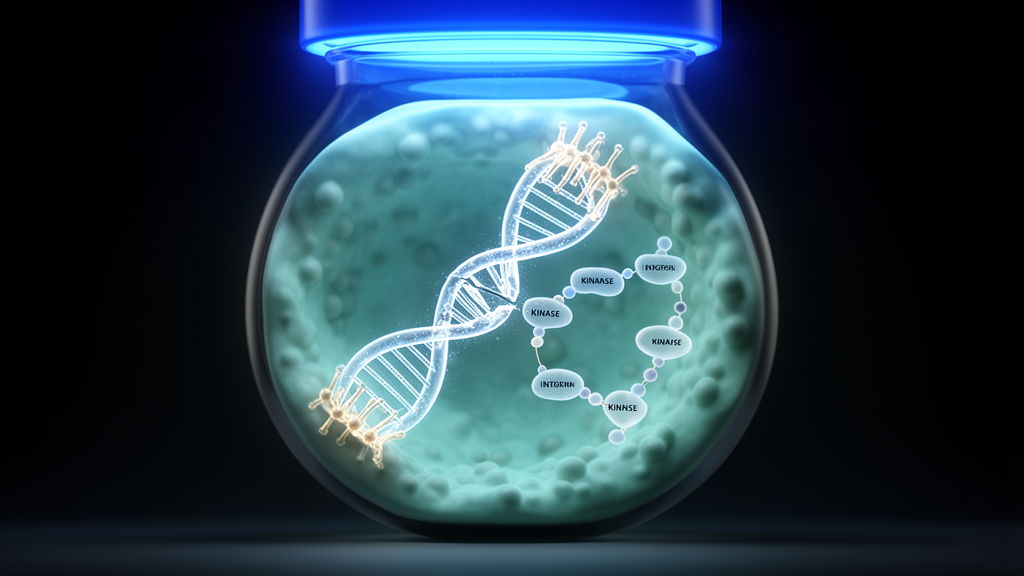
Taken together, the authors conclude that blue light promotes keratinocyte autophagy dysregulation, DNA damage accumulation and inflammatory responses by inducing ROS accumulation, downregulating ITGB3 expression and inhibiting PI3K/AKT signaling pathway activation. The chain — light, oxidative stress, ITGB3 suppression, pathway inhibition, repair failure — offers a testable framework for how visible light might contribute to pigmentation disorders such as melasma.
Several caveats apply. The protective effects of 740 Y-P, NAC and ITGB3 overexpression were demonstrated in vitro, so no clinical benefit in patients is established by this study. The article was shared early as a peer-reviewed, accepted manuscript that remains subject to further edits before the final Version of Record.
Within those limits, the study connects a familiar environmental exposure to specific molecular events in skin cells.
Subject of Research: Mechanisms of blue-light-induced autophagy imbalance and DNA damage repair defects in keratinocytes via ITGB3 and PI3K/AKT signaling, studied in relation to melasma.
Article Title: Blue light induces autophagy imbalance and DNA damage repair disorders in keratinocytes by inhibiting the PI3K/AKT signaling pathway through ITGB3
Article References: Tu, Y., Yang, Z., Zhang, X., Yang, Y., He, L., & Gu, H. (2026). Blue light induces autophagy imbalance and DNA damage repair disorders in keratinocytes by inhibiting the PI3K/AKT signaling pathway through ITGB3. Biology Direct. https://doi.org/10.1186/s13062-026-01020-x
Image Credits: AI Generated
DOI: 10.1186/s13062-026-01020-x
Keywords: blue light, keratinocytes, melasma, autophagy, DNA damage repair, ITGB3, PI3K/AKT, reactive oxygen species, HaCaT cells, skin pigmentation, Biology Direct, Blue
News Source: Drew Townsend. (October 28, 2026). Blue light disrupts DNA repair in skin cells through an ITGB3–PI3K/AKT pathway, study finds. Scienmag.