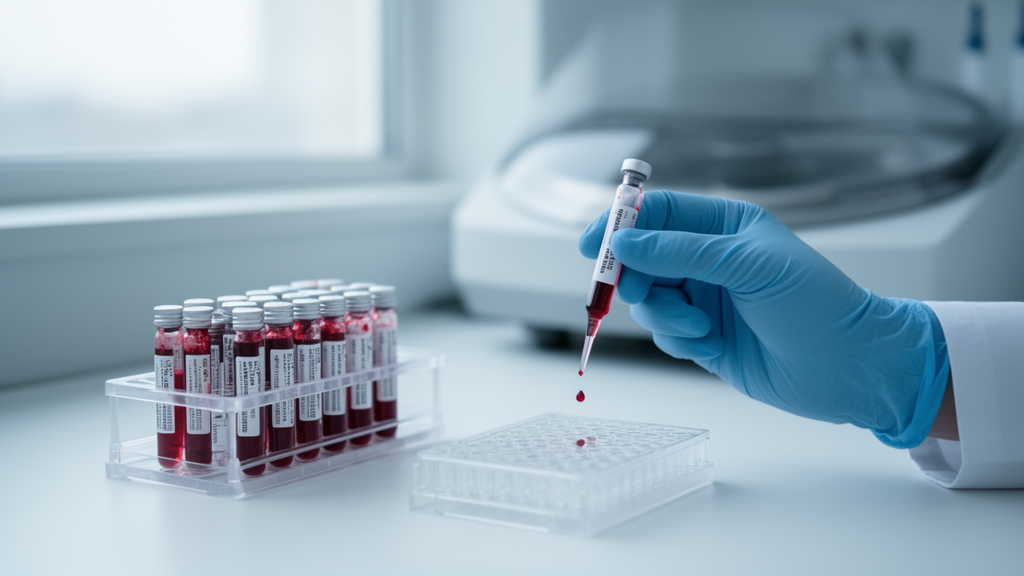
Breast cancer remains one of the most diagnosed malignancies in the world, and while survival has improved dramatically over recent decades, drug resistance continues to undermine treatment for a substantial share of patients. When tumors fail to shrink in response to chemotherapy, clinicians lose precious time and patients endure toxic side effects with little benefit. A new study published in Breast Cancer Research and Treatment suggests that the answer to predicting which patients will respond may be written not in the tumor itself, but in chemical tags scattered across the DNA circulating in a simple blood sample. The research, led by Halime Yildirim and Ender Coskunpinar of Saglik Bilimleri University together with colleagues at Istanbul University, tracked methylation changes in a family of chromatin-regulating genes before and after neoadjuvant chemotherapy, and found distinct epigenetic signatures in patients whose tumors disappeared completely compared with those who achieved only a partial response.
Neoadjuvant chemotherapy, the practice of giving systemic drug therapy before surgery, has become a cornerstone of treatment for many breast cancer subtypes. Shrinking the tumor ahead of an operation can make breast-conserving surgery possible and offers clinicians a live view of how the cancer behaves under drug pressure. The gold standard of success is a pathological complete response, meaning no residual invasive cancer is found in the breast or lymph nodes when pathologists examine the surgical specimen. Patients who reach this milestone have markedly better long-term outcomes. But response rates vary enormously between individuals, and the field has struggled to find reliable biomarkers that reveal, ideally early, whether a particular regimen is working. Prior genome-wide studies have shown that DNA methylation signatures measured before treatment can correlate with pathological complete response, but the specific gene sets involved and their behavior during therapy remain incompletely mapped.
The Turkish team focused on a group of epigenetic regulators with a growing reputation in cancer biology: the KDM5 family of histone demethylases, comprising KDM5A, KDM5B, and KDM5C. These enzymes remove methyl groups from histone H3 at lysine 4, a modification generally associated with active gene transcription. By erasing these marks, KDM5 proteins can silence gene expression programs, and earlier work has implicated them in drug resistance. KDM5A, for example, was previously shown to be genomically amplified in breast cancers that resist chemotherapy, while KDM5B has been linked to proliferation and lineage maintenance in luminal tumors. KDM5C displays a dual personality in breast cancer, promoting both transcriptional activation and repression depending on context, which contributes to tumor growth. The researchers reasoned that methylation of the DNA regions controlling these genes, and of related cofactors, might shift as chemotherapy reshapes the tumor and its microenvironment.
Alongside the KDM5 genes, the study examined four connected players: EZH2, the catalytic engine of the Polycomb repressive complex that writes repressive histone marks; TFAP2C, a transcription factor with well-established roles in breast cancer lineage specification and in collaborating with KDM5B to repress the cell cycle inhibitor p21; ZMYND8, a chromatin reader that partners with KDM5A to recruit nucleosome remodeling machinery to DNA damage sites and has recently been tied to resistance against HER2-targeted antibodies; and SIN3B, a corepressor scaffold that helps protect cancer cells from genotoxic stress, exactly the kind of stress that chemotherapy inflicts. The team analyzed two regions of SIN3B, spanning exons 1 through 2 and exons 19 through 20, to capture different regulatory landscapes within the gene. Taken together, this panel covers a coherent molecular circuit that touches histone modification, transcriptional repression, and DNA damage response, three processes central to how cancer cells survive or perish under chemotherapy.
The study design was deliberately longitudinal. Twenty patients diagnosed with breast cancer at Istanbul Faculty of Medicine provided blood samples twice, once before starting neoadjuvant chemotherapy and once after completing the course, allowing the researchers to observe within-patient methylation dynamics rather than relying solely on comparisons between unrelated individuals. Thirty healthy controls provided baseline reference data. Methylation levels were quantified using methylation-specific PCR, a sensitive technique in which DNA is treated with bisulfite to convert unmethylated cytosines into uracils while methylated cytosines remain unchanged, after which primers specific to methylated or unmethylated sequences amplify the target regions selectively. The proportion of methylated copies then yields a methylation percentage for each gene region. In a complementary arm of the study, the team used Sanger sequencing to scan the KDM5A, KDM5B, and KDM5C gene regions for genetic variants that might predispose patients to particular treatment outcomes.
The results revealed a striking stratification of methylation patterns by pathological response. Among patients who achieved only a pathological partial response, methylation signals stood out in SIN3B exons 19 through 20, KDM5C, EZH2, and TFAP2C. In the subgroup with pathological complete response, the signature broadened considerably: KDM5A, KDM5B, KDM5C, EZH2, TFAP2C, and SIN3B exons 19 through 20 were all prominent. This pattern suggests that the epigenetic state of the chromatin regulatory network is not static during treatment but shifts in ways that track with how completely the tumor is eradicated. Because these measurements were made in blood, the findings also raise the intriguing possibility that a liquid biopsy approach could someday gauge treatment response without repeated tumor biopsies, echoing earlier prospective work showing that chemotherapy itself remodels the leukocyte DNA methylation landscape.
The genotyping arm added a rare genetic dimension to the epigenetic picture. Sanger sequencing identified two variants, rs41308616 and rs971896841, detected in the heterozygous state in the KDM5C gene region of two patients, respectively. Although such single-nucleotide variants were uncommon in this small cohort, their detection in the same gene that showed differential methylation across response groups underscores the layered complexity of KDM5C regulation. Previous research has shown that mutations in KDM5C can trigger multilocus loss of DNA methylation across the genome, meaning genetic and epigenetic alterations in this gene can propagate far beyond its own locus. Whether these variants influence methylation dynamics or treatment sensitivity in breast cancer remains an open question that larger cohorts will need to answer.
What makes the implicated genes biologically compelling is how their functions converge on the chemotherapy response pathway. Anthracyclines and taxanes, the backbone of many neoadjuvant regimens, kill cancer cells largely by inflicting DNA damage and disrupting cell division. SIN3B has been shown to dictate which DNA damage repair pathway cancer cells choose and to shield them from genotoxic stress-induced apoptosis, so its methylation status could plausibly modulate how vulnerable a tumor is to chemotherapy-induced lethal damage. ZMYND8 and KDM5A together promote DNA repair by mobilizing chromatin remodelers to broken DNA ends, and ZMYND8 has been linked to HER2 antibody resistance through lipid-mediated control of interleukin-27 signaling. EZH2, meanwhile, is one of the most intensively pursued epigenetic drug targets in oncology, with inhibitors already in clinical use for lymphoma and ongoing trials exploring its role in breast cancer resistance mechanisms. A methylation signature spanning these nodes could therefore reflect the underlying repair and survival capacity that determines whether a tumor succumbs to treatment.
The authors caution, appropriately, that their findings are preliminary in scale. Twenty patients is a small cohort, and methylation-specific PCR interrogates selected promoter and exon regions rather than surveying the whole methylome. Healthy controls help anchor the baseline but cannot capture the full spectrum of treatment-induced methylation change in cancer patients. Nonetheless, the study’s longitudinal before-and-after design is a genuine strength, because it measures how each patient’s epigenetic landscape moves under drug pressure, and its focus on a mechanistically coherent gene network rather than an unselected genome-wide scan makes the results interpretable. The researchers propose that the methylation percentages and genetic variants they identified could serve as potential biomarkers for developing treatment strategies for breast cancer patients, a claim that will now need validation in independent, larger, and more diverse patient populations.
If confirmed, the implications extend beyond prognosis. Epigenetic therapies are no longer hypothetical: epidrug development targeting chromatin regulators is an active frontier in breast cancer research, and KDM5 inhibitors have entered preclinical and early clinical evaluation in multiple tumor types. A blood test that measures methylation of KDM5 family genes and their cofactors before therapy could help stratify patients toward regimens most likely to produce a pathological complete response, sparing poor responders unnecessary toxicity and prompting earlier escalation to alternative strategies. It could also identify patients whose tumors harbor vulnerabilities in SIN3B-mediated stress protection or ZMYND8-dependent DNA repair, opening the door to rational combination therapies. For a disease diagnosed in millions of women worldwide each year, the prospect that a few chemical tags on DNA, measured before the first infusion and again at treatment’s end, might reveal whether the battle against the tumor has been won remains one of the more quietly transformative ideas in modern oncology, and this study adds a meaningful, gene-specific piece to that emerging epigenetic map.
Subject of Research: DNA methylation of KDM5 family genes and cofactors as biomarkers of response to neoadjuvant chemotherapy in breast cancer
Article Title: Investigation of DNA methylation levels before and after treatment in breast cancer patients receiving neoadjuvant chemotherapy
Article References: Yildirim, H., Coskunpinar, E., Tukenmez, M., Mollavelioglu, B., & Bayram, A. (2026). Investigation of DNA methylation levels before and after treatment in breast cancer patients receiving neoadjuvant chemotherapy. Breast Cancer Research and Treatment, 220(1), Article 2. https://doi.org/10.1007/s10549-026-08101-5
Image Credits: AI Generated
DOI: 10.1007/s10549-026-08101-5
Keywords: breast cancer, DNA methylation, neoadjuvant chemotherapy, KDM5A, KDM5B, KDM5C, EZH2, TFAP2C, SIN3B, ZMYND8, epigenetics, biomarkers
News Source: Nathaniel Bowman. (October 18, 2026). Blood-based DNA methylation patterns track breast cancer response to chemotherapy. Scienmag.