• HOME
  • NEWS
  • EXPLORE
    • CAREER
      • Companies
      • Jobs
    • EVENTS
    • iGEM
      • News
      • Team
    • PHOTOS
    • VIDEO
    • WIKI
  • BLOG
  • COMMUNITY
    • FACEBOOK
    • INSTAGRAM
    • TWITTER
Monday, May 11, 2026
BIOENGINEER.ORG
No Result
View All Result
  • Login
  • HOME
  • NEWS
  • EXPLORE
    • CAREER
      • Companies
      • Jobs
        • Lecturer
        • PhD Studentship
        • Postdoc
        • Research Assistant
    • EVENTS
    • iGEM
      • News
      • Team
    • PHOTOS
    • VIDEO
    • WIKI
  • BLOG
  • COMMUNITY
    • FACEBOOK
    • INSTAGRAM
    • TWITTER
  • HOME
  • NEWS
  • EXPLORE
    • CAREER
      • Companies
      • Jobs
        • Lecturer
        • PhD Studentship
        • Postdoc
        • Research Assistant
    • EVENTS
    • iGEM
      • News
      • Team
    • PHOTOS
    • VIDEO
    • WIKI
  • BLOG
  • COMMUNITY
    • FACEBOOK
    • INSTAGRAM
    • TWITTER
No Result
View All Result
Bioengineer.org
No Result
View All Result
Home NEWS Science News Chemistry

BioSA — Bridging the gap with biodegradable metals

Bioengineer by Bioengineer
July 1, 2019
in Chemistry
Reading Time: 2 mins read
0
IMAGE
Share on FacebookShare on TwitterShare on LinkedinShare on RedditShare on Telegram

IMAGE

Credit: Project BioSA

Millions of patients all over the world undergo surgical procedures related to bone defect repair every year. With an ever-increasing life expectancy and the issues that come with a decaying skeleton, the number of interventions can only increase in the coming years. This is why orthopaedic surgeons are constantly looking for improved medical implants for the treatment of bone repair.

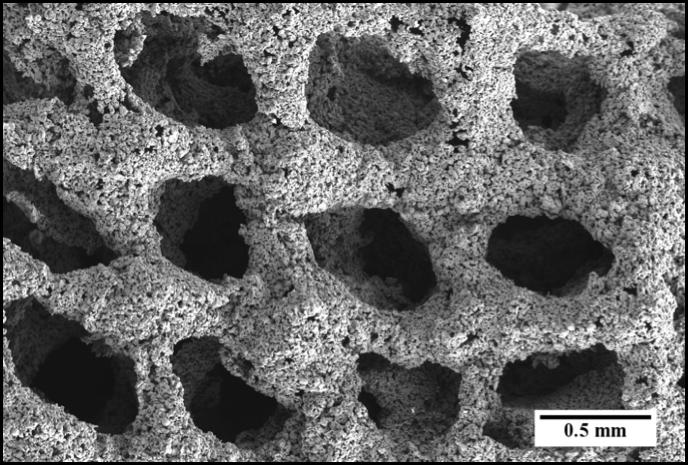
Following certain surgeries and traumatic experiences, like traffic accidents, patients often suffer from significant fractures and losses to the bone, referred to as bone defects. Bone scaffolds are porous implants that are used in order to fill significantly large defects. While the currently available solutions are suitable when implanted in non-load bearing areas, like the face, using a stronger material could result in a more attractive option when filling defects in load-bearing areas, like the bones found in legs.

The University of Malta has teamed up with Mater Dei Hospital to address the shortcomings of current bone scaffolds on the market in a project entitled Biodegradable Iron for Orthopaedic Scaffold Applications – BioSA. The project is being led by Prof. Ing. Joseph Buhagiar, from the Department of Metallurgy and Materials Engineering, and also involves members from the surgical team at the Department of Orthopaedic, Trauma and Sports Medicine at Mater Dei Hospital under the coordination of Mr Ray Gatt M.D., as well as academics from various departments at the University of Malta. The team members are pooling their expertise to develop an improved bone regeneration scaffold design with optimised characteristics.

Despite the fact that ceramic scaffolds are widely used, their tendency to break due to their brittle nature, has made them inadequate for use in bones that are subjected to sudden loading, while polymeric scaffolds lack the mechanical strength to be used in load-bearing applications. Metals, on the other hand, have the potential to exhibit the perfect balance between strength and toughness. The BioSA scaffold is being designed such that it corrodes at a controlled rate within the body, to match the rate at which the bone is healing. This aspect could result in reducing the necessity of a second surgical intervention to remove the implant after bone has healed.

The BioSA team is focused on understanding the corrosion behaviour of such an implant while also studying the effect that such an implant has on cells found in the bone. Through an innovative processing technique, based on the use of metal powders, the team also aims to gain control over the shape of the final scaffold. Accidents can happen to everyone and defects can be bigger than the body can heal naturally. So ideally scaffolds are not designed as one-size-fits-all but can also be custom-made for a specific patient.

###

Project BioSA is being funded by the Malta Council for Science and Technology through FUSION: R&I Technical Development Program (R&I-037-2017).

Media Contact
Christabelle Tonna
[email protected]

Original Source

https://www.um.edu.mt/newspoint/news/features/2019/06/biosa-bridgingthegapwithbiodegradablemetals

Tags: Biomedical/Environmental/Chemical EngineeringBiotechnologyHealth Care Systems/ServicesMaterialsMedicine/HealthOrthopedic MedicineResearch/DevelopmentSurgeryTrauma/Injury
Share12Tweet8Share2ShareShareShare2

Related Posts

Miniature Sensor Uses Light to Detect Touch — Chemistry

Miniature Sensor Uses Light to Detect Touch

May 8, 2026
Iron Minerals Determine Whether Dissolved Organic Matter Fuels Microbes or Becomes Long-Term Carbon Storage — Chemistry

Iron Minerals Determine Whether Dissolved Organic Matter Fuels Microbes or Becomes Long-Term Carbon Storage

May 8, 2026

Kate Evans Appointed Associate Lab Director for Biological and Environmental Systems Science at ORNL

May 8, 2026

Advancing Multiscale Modeling and Overcoming Operational Challenges in Autothermal COâ‚‚-to-Methanol Reactors

May 8, 2026
Please login to join discussion

POPULAR NEWS

  • Research Indicates Potential Connection Between Prenatal Medication Exposure and Elevated Autism Risk

    840 shares
    Share 336 Tweet 210
  • New Study Reveals Plants Can Detect the Sound of Rain

    727 shares
    Share 290 Tweet 181
  • Scientists Investigate Possible Connection Between COVID-19 and Increased Lung Cancer Risk

    68 shares
    Share 27 Tweet 17
  • Salmonella Haem Blocks Macrophages, Boosts Infection

    61 shares
    Share 24 Tweet 15

About

We bring you the latest biotechnology news from best research centers and universities around the world. Check our website.

Follow us

Recent News

Evaluating Digoxin Use in Patients with Symptomatic Rheumatic Heart Disease

Evaluating the Effectiveness and Safety of Digitalis Glycosides in Treating Heart Failure

Urdu Fall Risk Questionnaire Adapted for Elderly

Subscribe to Blog via Email

Success! An email was just sent to confirm your subscription. Please find the email now and click 'Confirm' to start subscribing.

Join 82 other subscribers
  • Contact Us

Bioengineer.org © Copyright 2023 All Rights Reserved.

Welcome Back!

Login to your account below

Forgotten Password?

Retrieve your password

Please enter your username or email address to reset your password.

Log In
No Result
View All Result
  • Homepages
    • Home Page 1
    • Home Page 2
  • News
  • National
  • Business
  • Health
  • Lifestyle
  • Science

Bioengineer.org © Copyright 2023 All Rights Reserved.