Specially designed biochar-based soil amendments can reduce toxic cadmium accumulation in rice by up to 85.4 percent while simultaneously increasing beneficial selenium concentrations by up to 357.5 percent, according to field experiments published in the journal Biochar. The study, conducted by researchers including Pingfan Zhou, Yuanyuan Xu, Jing Guo, Caide Huang, Rong Su, and corresponding author Professor Deyi Hou of Tsinghua University, demonstrates an experimental strategy for managing food safety and crop nutritional quality in agricultural regions characterized by naturally elevated metal concentrations.
Rice serves as a daily staple for billions of people, but agricultural soils in certain geographic zones present chemical hazards to crop safety. In karst landscapes of Southwest China, limestone-derived soils naturally harbor elevated concentrations of both cadmium and selenium. Cadmium is a toxic heavy metal that can accumulate within developing rice grains and enter the human food chain. In contrast, selenium represents an essential nutrient for human health, yet in these soils it frequently remains trapped within the soil matrix and unavailable for uptake by crops.
The researchers noted that this elemental challenge differs fundamentally from pollution caused by industrial activities. Because the elevated levels of cadmium and selenium originate naturally within geological limestone formations, they cannot be eliminated by controlling external contamination sources. Consequently, agricultural production in these areas requires soil management strategies that address the persistent presence of both hazardous contaminants and trapped nutrients occurring together in the native ground.
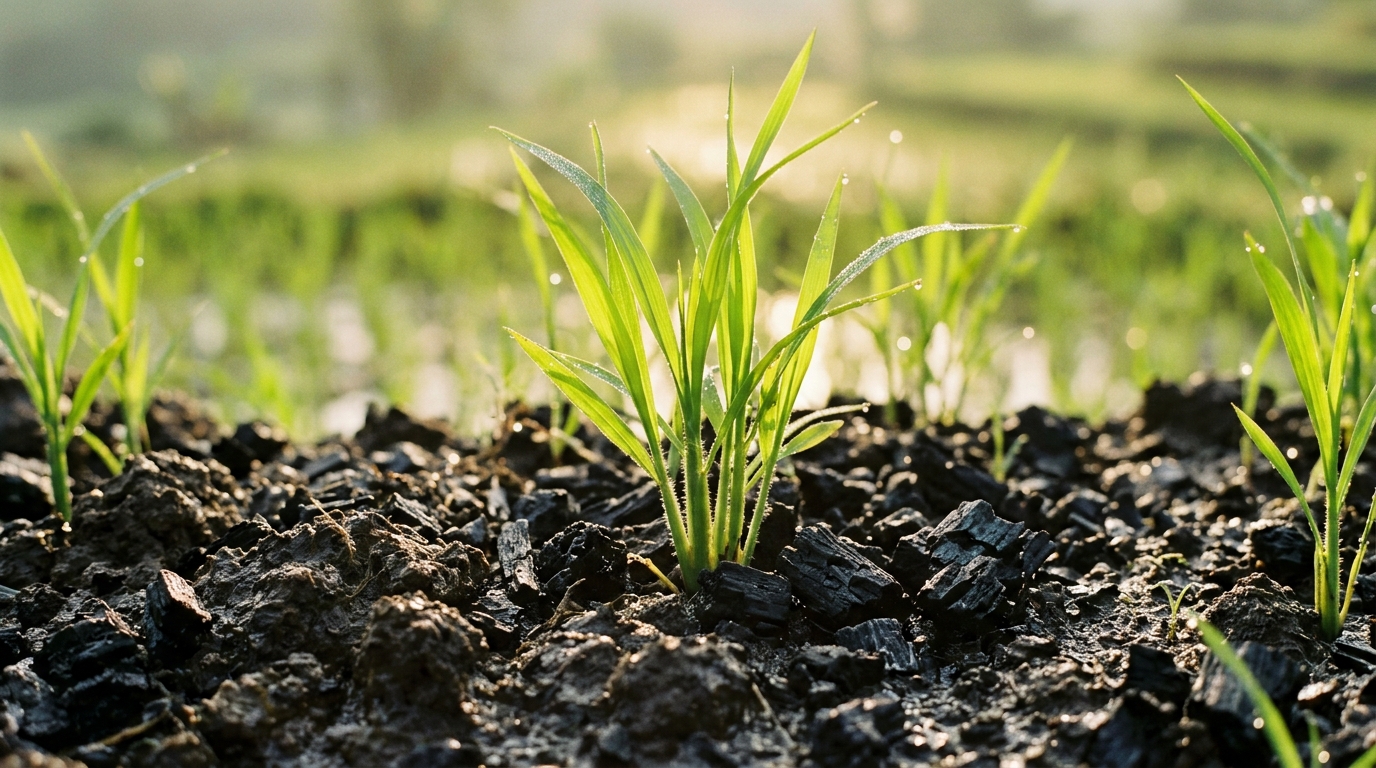
To address this challenge, the research team developed three biochar-based amendments containing clay minerals, cow manure, or zero-valent iron. Biochar is a carbon-rich material produced by heating biomass under limited oxygen conditions. The researchers applied these three functional amendments to rice paddies at varying dosage rates and monitored their effects across two consecutive growing seasons.
The field trial results showed that all three biochar formulations successfully reduced cadmium accumulation while increasing selenium concentrations in harvested rice grains. In addition to regulating metal uptake, the soil amendments improved overall agricultural productivity, with reported rice yield increases ranging from 29.7 percent to 69.2 percent across the monitored growing seasons.
Among the tested treatments, iron-enriched biochar delivered the fastest and most consistent performance. When applied at rates of 10 to 20 tonnes per hectare, the zero-valent iron formulation reduced rice grain cadmium concentrations below China’s national safety threshold of 0.2 milligrams per kilogram during both growing seasons. Meanwhile, the clay-based and cow-manure-based amendments achieved comparable cadmium control during the second growing season, indicating that their effectiveness improves as they interact with the soil over time.
Underlying these changes is a shift in soil chemistry driven by the biochar treatments, which increased soil pH and shifted acidic soils toward more neutral conditions. This neutralisation immobilized cadmium within the soil, making it less available for plant uptake. Simultaneously, the chemical shift increased the mobility and bioavailability of selenium already present in the ground, allowing the crops to absorb the essential nutrient without requiring supplemental selenium fertilizers.
“Our findings suggest that soil management can do more than simply reduce harmful contaminants. By carefully regulating soil chemistry, we can also improve the nutritional value of crops, creating opportunities for safer and healthier food production,” said corresponding author Professor Deyi Hou of Tsinghua University. The study also highlighted practical trade-offs: iron-enriched biochar provides rapid remediation but costs more, whereas clay-based and manure-based alternatives offer potentially more affordable options for large-scale agricultural use. Although the authors emphasized that further research is needed to evaluate long-term performance across different soil types, converting agricultural residues into functional soil amendments represents a promising strategy for safer crop production in geologically challenging environments.
Subject of Research: Biochar soil amendments for cadmium reduction and selenium enhancement in rice
Article Title: Turning contaminated soil into safer rice: Biochar offers a double benefit for food security
Article References: Turning contaminated soil into safer rice: Biochar offers a double benefit for food security. Original publication (Bibliographic details unavailable.)
Image Credits: AI Generated
DOI: Not provided
Keywords: biochar, cadmium, selenium, rice cultivation, soil amendments, food safety, karst soils, heavy metal remediation, Turning, contaminated, soil, safer
News Source: Alan Morgan. (November 5, 2026). Biochar Soil Treatments Reduce Cadmium and Increase Selenium in Rice. Scienmag.