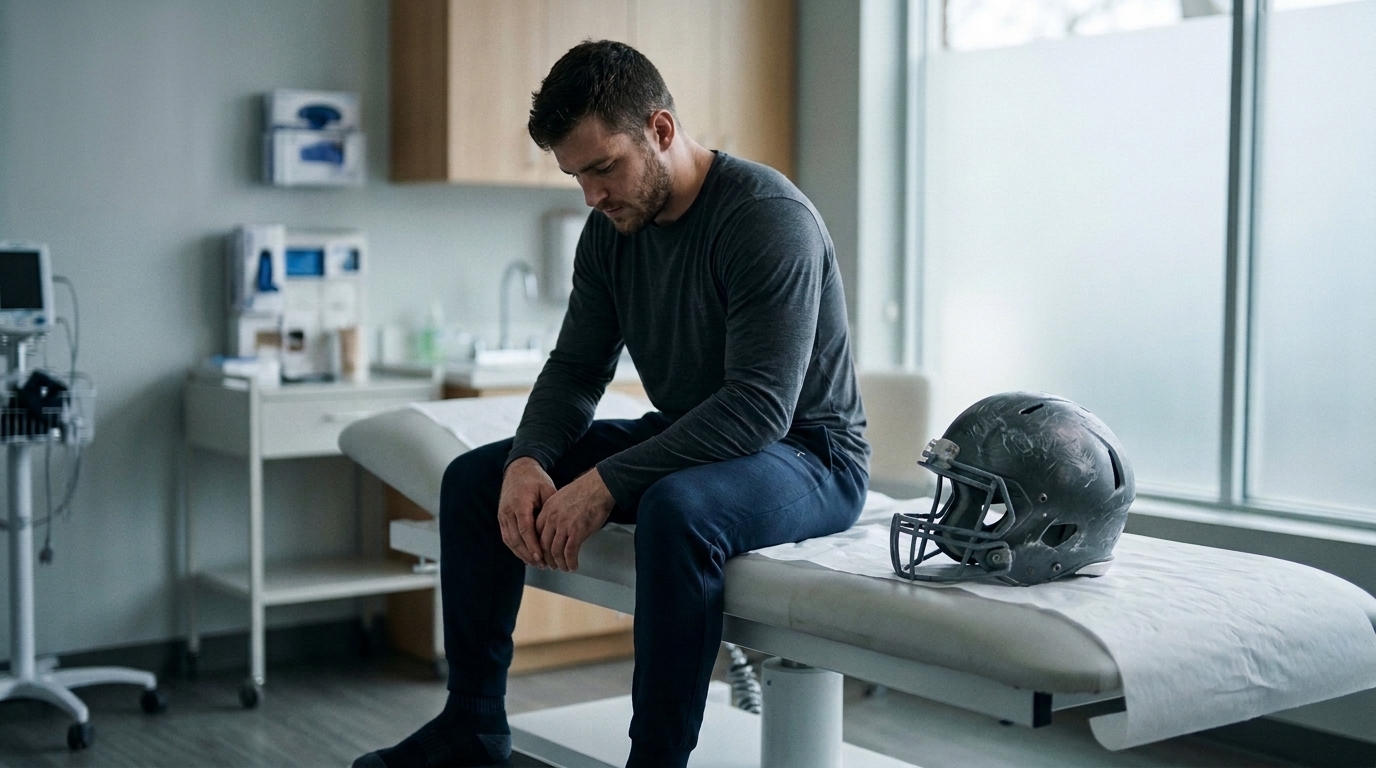
Former athletes with long histories of repetitive head impacts are walking into sports medicine, neurology, and concussion clinics with a question that sounds simple: do I have chronic traumatic encephalopathy? According to a Current Opinion article published in Sports Medicine – Open, the honest answer remains beyond the reach of contemporary clinical neuroscience. CTE, a progressive neurodegenerative disease associated with prior repetitive head impact exposure and defined neuropathologically by the accumulation of hyperphosphorylated tau in a distinctive perivascular distribution, can currently be definitively diagnosed only after death. The article, authored by a team including Shae Datta, Brian S. Im, Geraldine Pagnotta, Mara Sproul, Rebecca D. Folkerth, Enna Selmanovic, and Hector Arciniega, argues that this gap between what patients expect and what science can deliver has fundamentally reshaped the care of athletes with brain injury histories.
The scale of public concern is striking. In a recent study cited by the authors, approximately one-third of former professional American football players reported believing that they had CTE. That belief matters clinically, because CTE has become part of how some athletes interpret their neurological and psychological health. Public awareness has been amplified by extensive media coverage, documentaries, legal proceedings, and personal networks, and the disease has evolved in the public imagination from a neuropathologic diagnosis into a living explanatory framework for persisting cognitive, behavioral, and functional symptoms after repetitive head impacts. The authors note that CTE emerged into public consciousness faster than neuroscience developed reliable methods for identifying the disease during life, creating a widening gap between patient expectations and current clinical capability.
The scientific obstacle is precise. Despite substantial efforts toward biomarker development, no validated in vivo diagnostic framework currently exists, and no imaging or fluid biomarker is validated for diagnosing CTE in individual patients. Consensus research criteria for traumatic encephalopathy syndrome, or TES, have been proposed to characterize the potential clinical manifestations of CTE, but recent clinicopathological evidence has raised concerns about their diagnostic specificity. In a study of 1,038 neurodegenerative brain-bank cases, 25 individuals met TES criteria, yet only six of them, or 24 percent, demonstrated CTE neuropathologic change, with diagnostic performance driven largely by repetitive head impact exposure rather than the proposed clinical features. In a separate community-based cohort of 295 individuals with traumatic brain injury, 33.5 percent met all core clinical features of TES when the repetitive head impact requirement was excluded, with no significant differences between those with and without such exposure. Together, the authors write, these findings raise important concerns about the specificity of the proposed clinical features of TES and reinforce the difficulty of identifying CTE during life.
Substantial uncertainty also remains about how common CTE is across exposed populations and how neuropathological findings relate to clinical manifestations during life. Recent neuropathological investigations have demonstrated the burden of CTE among former professional American football players, with evidence linking advanced CTE pathology to dementia. But the authors caution that greater public awareness does not necessarily translate into accurate understanding of the scientific evidence, and research examining public knowledge of CTE has identified important gaps in understanding. By the time some patients enter the exam room, they may be seeking confirmation of a conclusion they have already reached rather than an open exploration of possible explanations for their symptoms.
The clinical consequences of that collision between diagnostic uncertainty and fixed expectations can be severe. Symptoms presented by former athletes may be influenced by chronic pain, psychiatric illness, sleep disruption, polypharmacy, or traumatic life experiences, and a clinician’s inability to provide definitive answers may be perceived as dismissal or lack of expertise. The encounter becomes burdened not only by neurologic symptoms but also by fear, identity, and prognosis, and frustration can escalate quickly for patients, clinicians, trainees, and staff alike. For many former athletes, concern about CTE extends far beyond whether the disease is present: fear of progressive cognitive decline may influence mental well-being, retirement adjustment, family relationships, employment decisions, and willingness to engage with healthcare.
The fear itself may carry risk. Although suicide has frequently been linked to CTE in public discussions, postmortem research in contact-sport athletes has not identified a significant association between CTE neuropathology and suicide as a cause of death. Depression and anger-control problems, however, can resemble the proposed clinical features of CTE, creating substantial potential for misattribution. Among living former professional football players, those who believed they had CTE were approximately twice as likely to report suicidality, even after accounting for depression and other established predictors. The authors stress that this association does not establish causality, but they argue it underscores the importance of assessing psychological distress and suicidality among athletes worried about CTE. In their framing, the clinical encounter becomes more than a diagnostic evaluation; it becomes an opportunity to acknowledge uncertainty, address fear and misconceptions, provide context for current scientific evidence, and identify evidence-based strategies that support long-term brain health.
The practical response the authors propose begins with a shift in focus. Rather than treating these consultations solely as attempts to confirm or exclude CTE, clinicians can start by identifying the specific concerns motivating the visit, whether current symptoms, fear of future cognitive decline, or uncertainty about the long-term consequences of repetitive head impacts. This distinction allows symptoms that warrant evaluation and treatment to be addressed while separately discussing the substantial uncertainty surrounding an individual’s future risk. Clinical evaluation should prioritize identifying potentially treatable contributors to symptoms: cognitive complaints, mood disturbances, sleep difficulties, headaches, chronic pain, and changes in daily functioning warrant careful assessment rather than being attributed prematurely to an underlying neurodegenerative process. A comprehensive evaluation should consider neurological and psychiatric conditions, medication effects, sleep disorders, and other medical or psychosocial factors that may independently or collectively contribute to the presentation.
Structured tools can help. A lifetime head trauma history capturing both repetitive head impacts and individual traumatic brain injuries across sport and non-sport contexts may help contextualize symptoms, since chronic sequelae of traumatic brain injury can overlap with the proposed clinical features of CTE. When appropriate, neuropsychological assessment and targeted referrals to neurology, psychiatry, sleep medicine, rehabilitation, or other specialties can clarify the nature of these concerns and guide individualized management. The authors urge clinicians to avoid equating a history of repetitive head impacts or the presence of non-specific symptoms with evidence of CTE, and they emphasize that the absence of a validated diagnostic test should not become a barrier to addressing symptoms, treating identifiable conditions, or establishing longitudinal follow-up. Clinicians can also address modifiable risk factors for later-life cognitive decline, including hypertension, physical inactivity, excessive alcohol consumption, hearing loss, social isolation, and depression, while evaluating and treating sleep disorders and other conditions that may contribute to current symptoms.
Communication frameworks matter as much as the workup. Shared decision-making, which integrates the best available scientific evidence with patients’ values, preferences, and individual circumstances, provides a structure for these discussions, and motivational interviewing may further support conversations by helping patients explore concerns, address ambivalence, and identify achievable health-related goals. Family members, with the athlete’s consent, can provide valuable collateral history, clarify shared concerns, and support discussions about ongoing care and future planning, particularly when they have observed changes in cognition, behavior, or daily functioning. Meeting these broader needs often requires care that extends beyond any single specialty, and the authors point to interdisciplinary concussion programs that are expanding to incorporate neuropsychiatric care, longitudinal management strategies, and coordinated approaches to complex neurobehavioral presentations. These efforts, they write, reflect a shift from managing isolated symptoms to providing coordinated, longitudinal care that addresses both clinical symptoms and the uncertainty surrounding their underlying causes.
The stakes extend beyond former athletes. Concerns about CTE may also shape encounters with athletes still active in contact and collision sports, and among tactical populations exposed to repetitive head impacts, influencing decisions about continued participation, recovery following concussion, and return-to-sport. The authors argue that return-to-sport decisions after concussion should remain grounded in current consensus recommendations, clinical recovery, and individualized assessment rather than assumptions about the presence or future development of CTE, while decisions about continued participation may require broader discussion of cumulative exposure, uncertain long-term risks, and the athlete’s personal priorities and risk tolerance. They are candid about the limits of their own recommendations: evidence regarding the effectiveness of these communication and care strategies specifically among athletes concerned about CTE remains limited, and future research should examine how such strategies influence psychological distress, healthcare engagement, and suicidality. How medicine responds to the question of whether an athlete has CTE, they conclude, may shape not only the future of brain injury care but also how clinicians navigate diseases whose cultural visibility has outpaced diagnostic certainty.
Subject of Research: Clinical challenges in evaluating athletes concerned about chronic traumatic encephalopathy, a tau-related neurodegenerative disease that can currently be diagnosed only after death
Article Title: When Athletes Ask About Chronic Traumatic Encephalopathy
Article References: Datta, S., Im, B. S., Pagnotta, G., Sproul, M., Folkerth, R. D., Selmanovic, E., & Arciniega, H. (2026). When Athletes Ask About Chronic Traumatic Encephalopathy. Sports Medicine – Open, 12(1), Article 162. https://doi.org/10.1186/s40798-026-01138-2
Image Credits: AI Generated
DOI: 10.1186/s40798-026-01138-2
Keywords: chronic traumatic encephalopathy, repetitive head impacts, traumatic encephalopathy syndrome, concussion, sports medicine, biomarkers, hyperphosphorylated tau, shared decision-making, suicidality, American football, diagnostic uncertainty, interdisciplinary care
News Source: Ophelia Keating. (November 5, 2026). Athletes Fear CTE. Doctors Still Cannot Diagnose It While They Are Alive. Scienmag.