


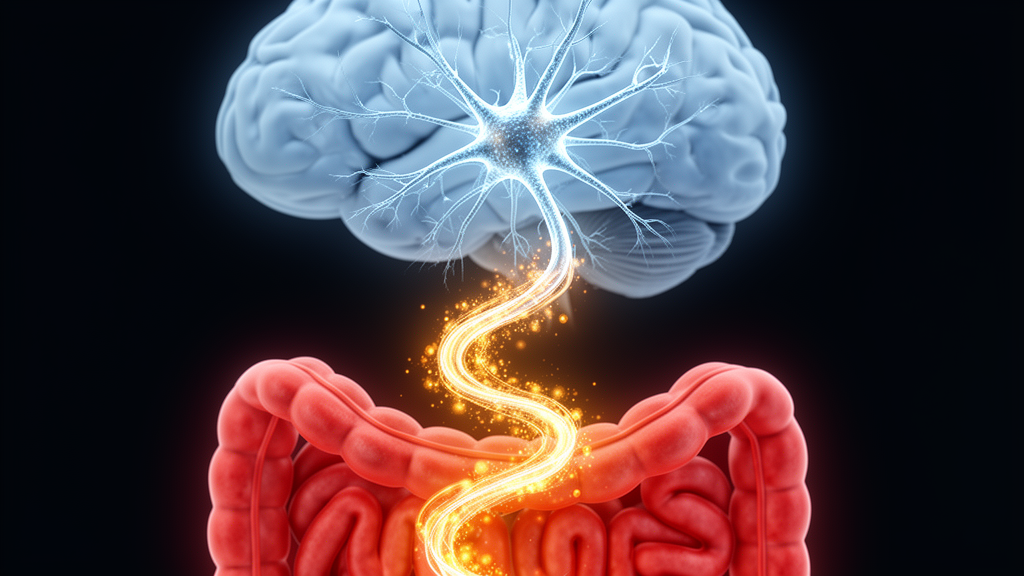
The paper, authored by Jiahao Wu, Runyi Guo, Cong Gai, Die Hu and colleagues, is an open-access review article rather than a laboratory study, meaning it synthesises and interprets existing evidence rather than presenting new experimental data. Its central claim is framed cautiously: astrocytes might bridge the gap that the classical gut-brain axis framework has left open, because no specific molecular or cellular mediator connecting peripheral intestinal inflammation to central mood dysfunction has yet been identified.
The authors start from a well-documented clinical observation. In patients with inflammatory bowel disease, a high prevalence of comorbid major depressive disorder has been recorded, and the two conditions appear to exacerbate each other bidirectionally. According to the review, gut dysbiosis and peripheral inflammation in IBD propagate signals to the brain along humoral, neural and endocrine pathways. These incoming signals, the authors argue, may promote astrocytic reactivity, potentially shifting the cells toward a reactive state with A1-like features, a profile associated in the review with complement component 3.
The mechanistic core of the review describes what such reactive astrocytes may lose. The authors outline impaired glutamate clearance, compromised blood-brain barrier integrity, disrupted energy support, diminished neurotrophic factor secretion and sustained neuroinflammation as candidate deficits. These changes, they suggest, could lead to excitotoxicity, synaptic dysfunction and destabilisation of mood-regulating circuits, thereby contributing to depressive-like behaviors. The graphical abstract adds that altered glutamate homeostasis and energy support may affect synaptic and neuronal function relevant to depressive pathology, while efferent autonomic and hypothalamic-pituitary-adrenal axis signaling may feed back onto intestinal inflammation.
The review also extends the proposed role of astrocytes beyond the brain. It suggests that astrocytes may influence intestinal processes through the release of extracellular vesicles and through interactions with enteric glial cells, the glial population of the gut’s own nervous system. This bidirectional communication, the authors write, could contribute to a self-reinforcing gut-brain-gut cycle in which intestinal inflammation and mood dysfunction perpetuate one another. The hypothalamic-pituitary-adrenal axis and autonomic efferent signaling are positioned as the routes by which the brain, in turn, may influence the inflamed gut.
The authors are explicit about the status of this framework. The review synthesises current evidence on astrocyte-mediated mechanisms in IBD and MDD comorbidity and outlines a framework for the bidirectional relationship, rather than demonstrating a causal pathway experimentally. Much of the language throughout is deliberately hedged, with astrocytes described as possibly bridging the gap and reactive states described as potential shifts. Readers should therefore treat the A1-like reactive astrocyte profile, the glutamate and barrier deficits and the gut-brain-gut cycle as hypotheses grounded in emerging evidence, awaiting direct testing in the context of IBD-related depression. The article was published on 29 September 2026 and is available under open access.
Subject of Research: Astrocyte-mediated mechanisms proposed to link inflammatory bowel disease with comorbid major depressive disorder
Article Title: The Role of Astrocytes in Inflammatory Bowel Disease and Co-occurring Depression: Mechanisms and Perspectives
Article References: Wu, J., Guo, R., Guo, Z., Zhu, H., Li, H., Pan, H., Gai, C., & Hu, D. (2026). The Role of Astrocytes in Inflammatory Bowel Disease and Co-occurring Depression: Mechanisms and Perspectives. Cellular and Molecular Neurobiology. https://doi.org/10.1007/s10571-026-01831-6
Image Credits: AI Generated
DOI: 10.1007/s10571-026-01831-6
Keywords: astrocytes, inflammatory bowel disease, major depressive disorder, gut-brain axis, neuroinflammation, glutamate, blood-brain barrier, enteric glial cells, A1-like reactivity, extracellular vesicles, HPA axis, review
News Source: Glenn Wilkins. (October 30, 2026). Astrocytes May Link Gut Inflammation in IBD to Depression, Review Suggests. Scienmag.



