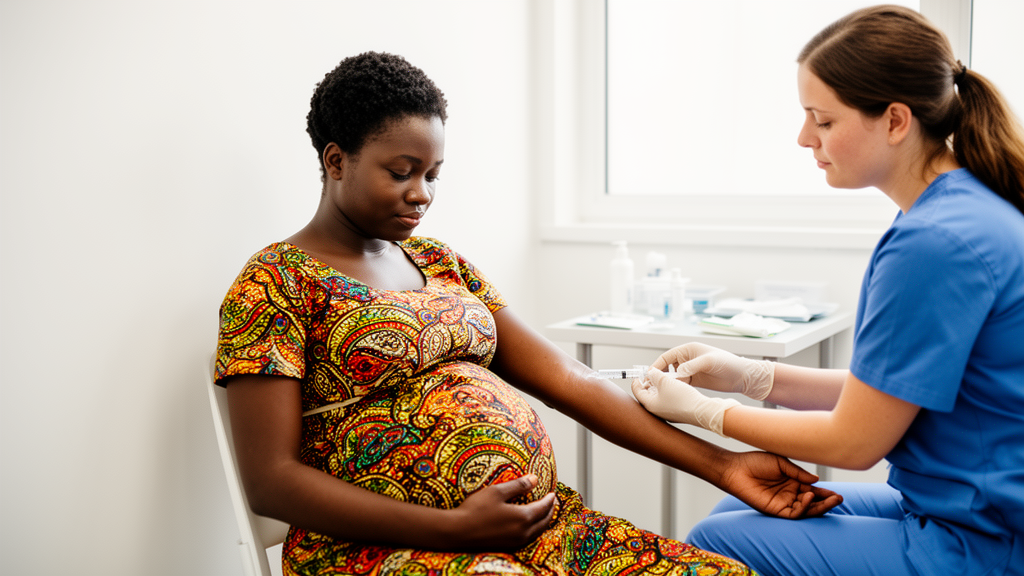
A systematic review and meta-analysis of 19 observational studies identified 13 factors statistically associated with hepatitis B virus infection among pregnant women in Africa. The analysis covered 20 eligible factors and reported pooled adjusted odds ratios, with the strongest observed association for HIV infection. These findings describe statistical associations in the included studies and do not demonstrate that the identified factors caused infection.
Researchers searched PubMed/MEDLINE, Scopus, Advanced Google Scholar, the Cochrane Library and African Journals Online for observational studies published from July 18, 2013, to July 18, 2023. Eligible studies reported adjusted effect estimates for factors associated with HBV infection among pregnant women. The investigators assessed methodological quality with the Newcastle-Ottawa Scale. Separate random-effects meta-analyses using the DerSimonian–Laird method pooled adjusted odds ratios and 95% confidence intervals for each factor reported by at least two studies. Factors whose exposure categories or reference groups differed substantially across studies were synthesized narratively, while statistical heterogeneity was evaluated with the I² statistic.
The reported analysis found statistically significant associations for history of abortion, with a pooled adjusted odds ratio of 3.08 (95% confidence interval, 1.58–4.58), and multiple sexual partners, at 5.33 (2.50–8.17). Associations were also reported for blood transfusion, at 2.64 (1.38–3.90); hospital admission, at 3.28 (2.02–4.53); surgery, at 2.48 (1.04–3.92); HIV infection, at 9.22 (2.39–16.05); tattooing, at 2.53 (1.26–3.80); and female genital mutilation, at 2.48 (2.02–2.94). Other significant associations were identified for dental procedures, at 2.30 (1.16–3.44); family history of HBV infection, at 3.37 (1.94–4.80); contact with jaundiced patients, at 4.18 (2.09–6.27); tonsillectomy, at 4.87 (3.36–6.37); and sharing sharp materials, at 2.87 (2.47–3.27).
As an evidence synthesis of observational research, the review cannot establish causation or determine whether every association is consistent across African settings. Interpretation is also limited by differences in study populations, exposure definitions and comparison groups, as well as the need to synthesize some factors narratively. Although heterogeneity was assessed with I², the results reported in the available abstract do not provide numerical heterogeneity estimates for each pooled factor. The review addresses associated factors rather than the effectiveness of screening, vaccination, risk assessment or linkage-to-care interventions, so it does not establish the clinical benefit of any intervention. The article is presented as an early version of the peer-reviewed paper and notes that further edits may accompany the final version of record.
Subject of Research: Factors statistically associated with hepatitis B virus infection among pregnant women in Africa
Article Title: Associated factors of hepatitis B virus infection among pregnant women in Africa: an extension of a previous systematic review and meta-analysis on prevalence
Article References: Larebo, Y. M., Argago, Z. D., Anshebo, A. A., Behera, S. K., & Gopalan, N. (2026). Associated factors of hepatitis B virus infection among pregnant women in Africa: an extension of a previous systematic review and meta-analysis on prevalence. BMC Infectious Diseases. https://doi.org/10.1186/s12879-026-14509-7
Image Credits: AI Generated
DOI: 10.1186/s12879-026-14509-7
Keywords: hepatitis B virus, pregnant women, Africa, systematic review, meta-analysis, adjusted odds ratios, observational studies, HIV infection, risk factors, antenatal care, Associated, factors
News Source: Kristina Jarvis. (October 20, 2026). Associated factors of hepatitis B virus infection among pregnant women in Africa: an extension of a previous systematic review and meta-analysis on prevalence. Scienmag.