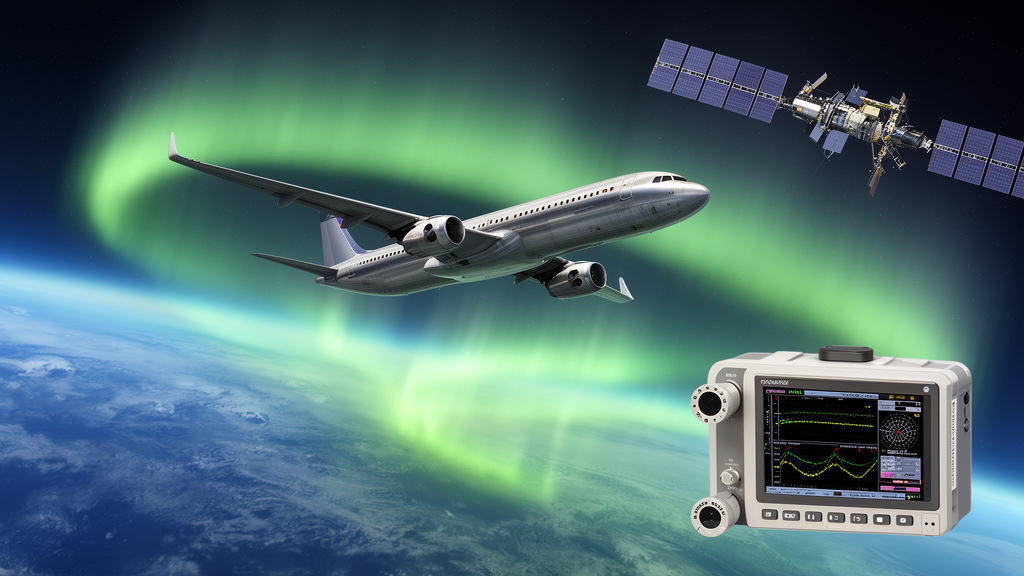
A rare X5-class solar flare produced the largest Ground Level Enhancement (GLE) observed in almost 20 years, and a coordinated study has assembled an unusually comprehensive dataset on atmospheric radiation during the event. Researchers combined measurements from ground-based neutron monitors across the United Kingdom, detectors aboard transatlantic passenger aircraft, and radiation monitors carried by weather balloons launched from the United Kingdom and the Netherlands. The observations showed that radiation levels above the UK varied substantially with location and altitude, providing new evidence about the scale of the aviation-radiation issue during a major solar radiation storm.
The event occurred on 11 November 2025, when an intense burst of radiation particles from the Sun penetrated Earth’s atmosphere and reached ground level. The study, published in the peer-reviewed journal Space Weather, examined observations from the largest GLE observed in nearly two decades. Its ground-monitoring network extended from Cornwall to Shetland, while balloon launches were conducted in collaboration with the Met Office from sites including Camborne and Lerwick. The project involved the Met Office, the Royal Netherlands Meteorological Institute, Lancaster University and other international partners. Together, the systems sampled radiation from the ground, through the atmosphere and along a transatlantic passenger route.
Altitude-dependent measurements revealed marked differences in radiation conditions. Weather balloons launched from Lerwick recorded radiation levels above the International Civil Aviation Organisation’s “moderate” advisory threshold at business-jet altitudes, which are higher than commercial-jet altitudes, several hours after the storm peaked. At still greater altitudes associated with supersonic flight, measurements exceeded the ICAO’s “severe” threshold. These results indicate that radiation conditions changed markedly with altitude during the event and that a single level of the atmosphere could not represent the exposure experienced by every aircraft. One London-to-New York flight that departed during the storm recorded a 46 per cent increase in radiation exposure compared with normal background conditions.
The study emphasizes the importance of combining direct atmospheric observations with the forecasting models used to assess aviation radiation risk during extreme solar radiation events. Current international advisory systems mainly rely on model outputs informed by ground- and space-based observations. The coordinated dataset did not constitute a model validation exercise, but it supplied detailed measurements for improving the scientific understanding on which forecasting depends. Study co-leads Ben Clewer and Fraser Baird said the operation of ground sensors, aircraft detectors and weather balloons provided the clearest picture yet obtained of this type of event and demonstrated the potential value of coordinated monitoring for aviation-radiation forecasting.
Met Office Space Weather Manager Krista Hammond said that collecting radiation data throughout the atmosphere during a space-weather event in this way represented a major advance in scientific understanding. The study also marked the first time the United Kingdom had monitored a major solar radiation storm with a nationwide operational network of neutron monitors spanning Cornwall to Shetland. Researchers noted that no such operational sensor network existed in the United Kingdom a decade earlier. The findings could support future improvements in atmospheric radiation monitoring as airlines increasingly rely on sensitive electronic systems and as more flights operate on high-latitude routes, where radiation exposure is highest. Because the study concerns one GLE and a specific combination of monitoring platforms, its observations provide a rare baseline rather than establishing how radiation patterns will vary during future solar storms.
Subject of Research: Atmospheric radiation measurements during a rare Ground Level Enhancement and implications for aviation monitoring
Article Title: Rare solar radiation storm gives scientists clearest picture yet of flight risks
Article References: Rare solar radiation storm gives scientists clearest picture yet of flight risks. Original publication (Bibliographic details unavailable.)
Image Credits: AI Generated
DOI: Not provided
Keywords: solar radiation storm, Ground Level Enhancement, aviation radiation, space weather, neutron monitors, weather balloons, aircraft radiation, atmospheric monitoring, radiation forecasting, Rare, solar, radiation
News Source: Denise Maddox. (October 20, 2026). Solar storm measurements reveal variable aviation radiation risks. Scienmag.